
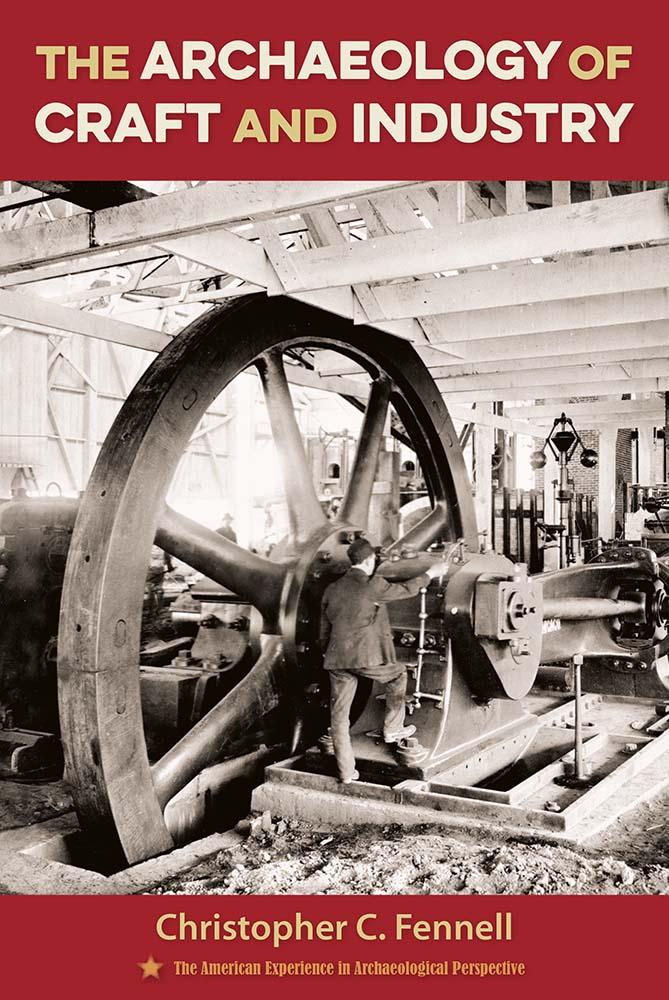
In this expansive yet concise survey, Christopher Fennell discusses archaeological research from sites across the United States that once manufactured, harvested, or processed commodities. Through studies of craft enterprise and the Industrial Revolution, this book uncovers key insights into American history from the seventeenth through the nineteenth centuries.
Exploring evidence from textile mills, glassworks, cutlery manufacturers, and tanneries, Fennell describes the complicated transition from skilled manual work to mechanized production methods, and he offers examples of how artisanal skill remained important in many factory contexts. Fennell also traces the distribution and transportation of goods along canals and railroads. He delves into sites of extraction, such as lumber mills, copper mines, and coal fields, and reviews diverse methods for smelting and shaping iron. The book features an in-depth case study of Edgefield, South Carolina, a town that pioneered the production of alkaline-glazed stoneware pottery.
Fennell outlines shifts within the field of industrial archaeology over the past century that have culminated in the recognition that these locations of remarkable energy, tumult, and creativity represent the lives and ingenuity of many people. In addition, he points to ways the field can help inform sustainable strategies for industrial enterprises in the present day.
Pay easily by card, Klarna, Apple Pay or Google Pay. Not happy? You always have a 14-day money-back guarantee. Read more in our terms. If you have any questions, email us at hello@memmo.org.
Memmo makes studying easier – wherever you are in the world. We bring your course books and smart study tools together in one place: summaries, quizzes, podcasts and flashcards. Plus Ted, your study buddy who answers anything you wonder. Over 75,000 students already study here – built to help you learn faster and stress less.