
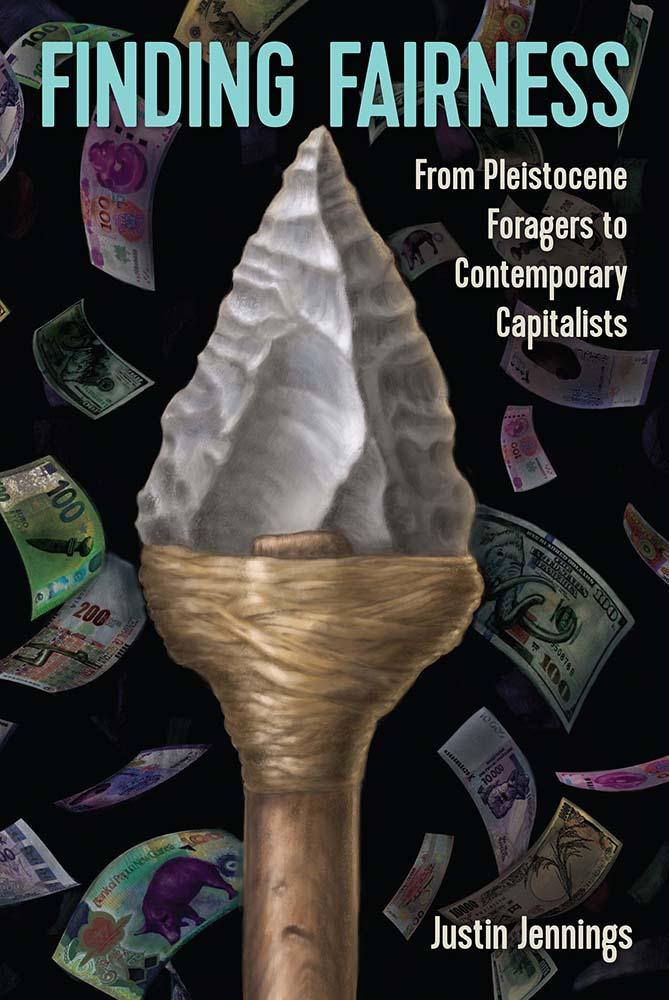
In this ambitious work, Justin Jennings explores the origins, endurance, and elasticity of ideas about fairness and how these ideas have shaped the development of societies at critical moments over the last 20,000 years. He argues that humans have an innate expectation for fairness, a disposition that evolved during the Pleistocene era as a means of adapting to an unpredictable and often cruel climate. This deep-seated desire to do what felt right then impacted how our species transitioned into smaller territories, settled into villages, formed cities, expanded empires, and navigated capitalism. Paradoxically, the predilection to find fair solutions often led to entrenched inequities over time as cooperative groups grew in size, duration, and complexity.
Using case studies ranging from Japanese hunter-gatherers to North African herders to protestors on Wall Street, this book offers a broad comparative reflection on the endurance of a universal human trait amidst radical social change. Jennings makes the case that if we acknowledge fairness as a guiding principle of society, we can better understand that the solutions to yesterday’s problems remain relevant to the global challenges that we face today.
Finding Fairness is a sweeping, archaeologically grounded view of human history with thought-provoking implications for the contemporary world.
Pay easily by card, Klarna, Apple Pay or Google Pay. Not happy? You always have a 14-day money-back guarantee. Read more in our terms. If you have any questions, email us at hello@memmo.org.
Memmo makes studying easier – wherever you are in the world. We bring your course books and smart study tools together in one place: summaries, quizzes, podcasts and flashcards. Plus Ted, your study buddy who answers anything you wonder. Over 75,000 students already study here – built to help you learn faster and stress less.