
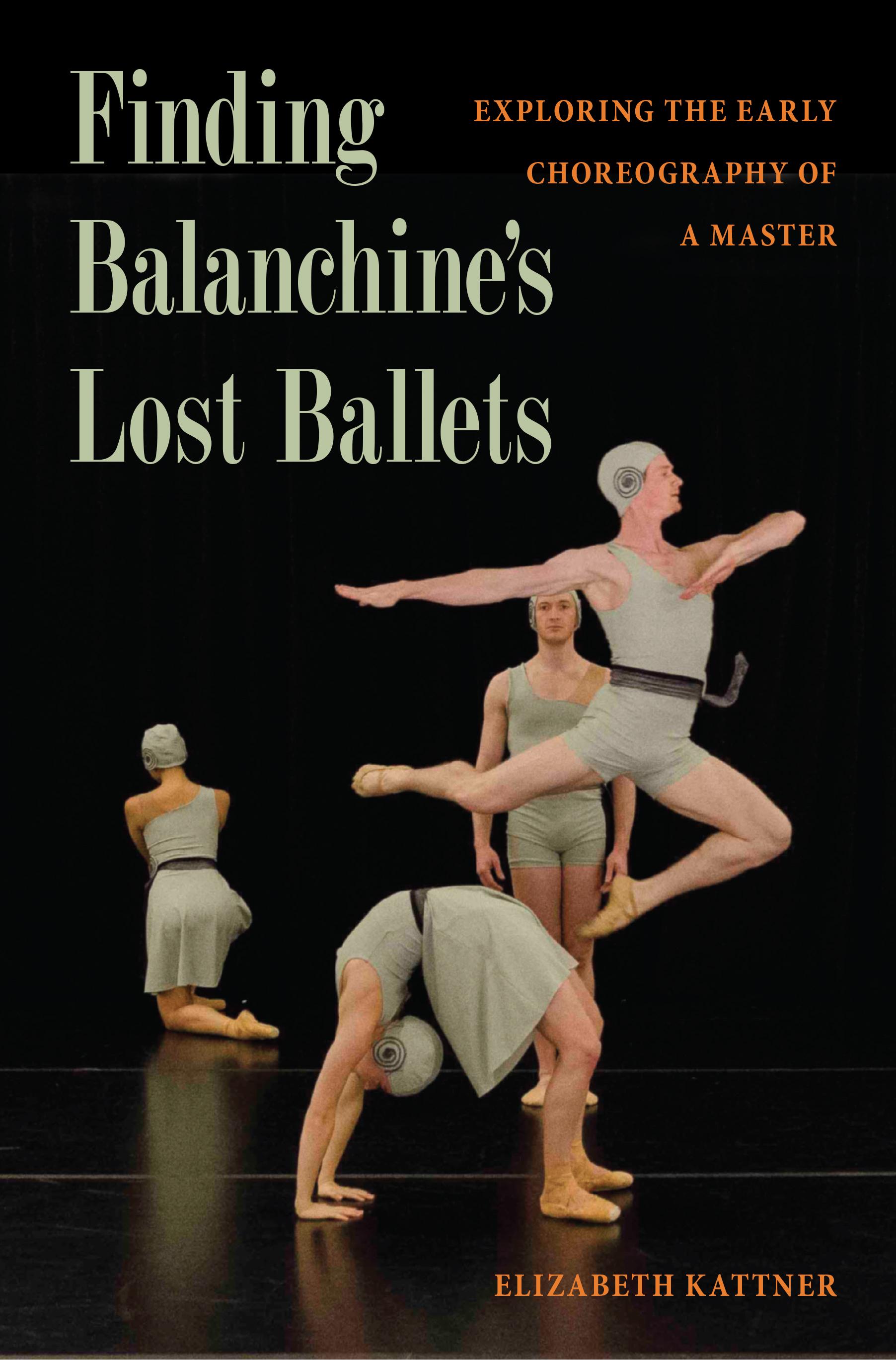
Ever since George Balanchine arrived on the American dance scene in 1933, his revolutionary, fleet-footed repertoire has been immortalized in the ballet canon. Yet most of the works he created in Russia as a budding choreographer have been lost to history—until now. In the first book to focus exclusively on Balanchine’s Russian ballets, Elizabeth Kattner offers new insights into the artistic evolution of a legend through her reconstruction of his first group ballet, Funeral March.
Drawing on more than a decade of research conducted in archives in the United States and Europe, Kattner synthesizes textual descriptions, photographs, musical scores, and the comparative study of other early Balanchine ballets in order to re-create this forgotten work. By interpreting and building upon these historical findings in the studio and in performance, this project enables dance history to be experienced kinesthetically. Addressing the controversy surrounding whether unrecorded dances should be reconstructed in the first place, Kattner meticulously describes her research methodologies, providing a valuable resource for other scholars seeking to revive history in this way.
Finding Balanchine’s Lost Ballets enriches our understanding of Balanchine’s development as a choreographer through its ambitious, original approach to the subject. Kattner argues for the importance of dance reconstruction, when correctly approached, as a tool for reimagining the past and charting the future possibilities of dance history research.
Pay easily by card, Klarna, Apple Pay or Google Pay. Not happy? You always have a 14-day money-back guarantee. Read more in our terms. If you have any questions, email us at hello@memmo.org.
Memmo makes studying easier – wherever you are in the world. We bring your course books and smart study tools together in one place: summaries, quizzes, podcasts and flashcards. Plus Ted, your study buddy who answers anything you wonder. Over 75,000 students already study here – built to help you learn faster and stress less.