
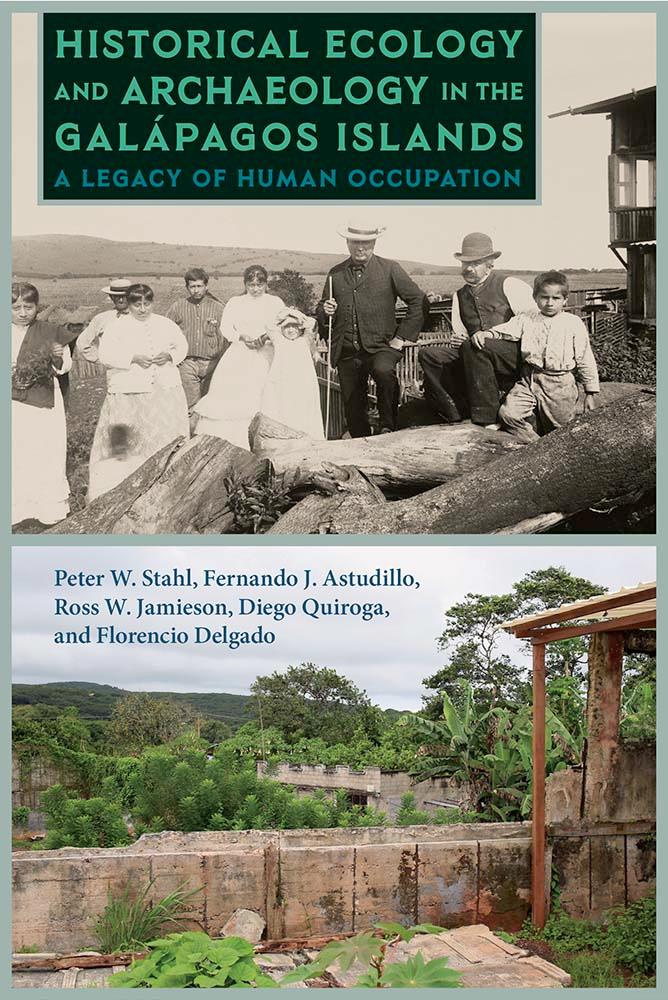
The Galápagos Islands are one of the world’s premiere nature attractions, home to unique ecosystems widely thought to be untouched and pristine. Historical Ecology and Archaeology in the Galápagos Islands reveals that the archipelago is not as isolated as many imagine, examining how centuries of human occupation have transformed its landscape.
This book shows that the island chain has been a part of global networks since its discovery in 1535 and traces the changes caused by human colonization. Central to this history is the sugar plantation Hacienda El Progreso on San Cristóbal Island. Here, zooarchaeological and archaeobotanical evidence documents the introduction of exotic species and landscape transformations, and material evidence attests that inhabitants maintained connections to the outside world for consumer goods.
Beyond illuminating the human history of the islands, the authors also look at the impact of visitors to Galápagos National Park today, raising questions about tourism’s role in biological conservation, preservation, and restoration.
A volume in the series Society and Ecology in Island and Coastal Archaeology, edited by Victor D. Thompson
Pay easily by card, Klarna, Apple Pay or Google Pay. Not happy? You always have a 14-day money-back guarantee. Read more in our terms. If you have any questions, email us at hello@memmo.org.
Memmo makes studying easier – wherever you are in the world. We bring your course books and smart study tools together in one place: summaries, quizzes, podcasts and flashcards. Plus Ted, your study buddy who answers anything you wonder. Over 75,000 students already study here – built to help you learn faster and stress less.
You might also like
Buy the book0