
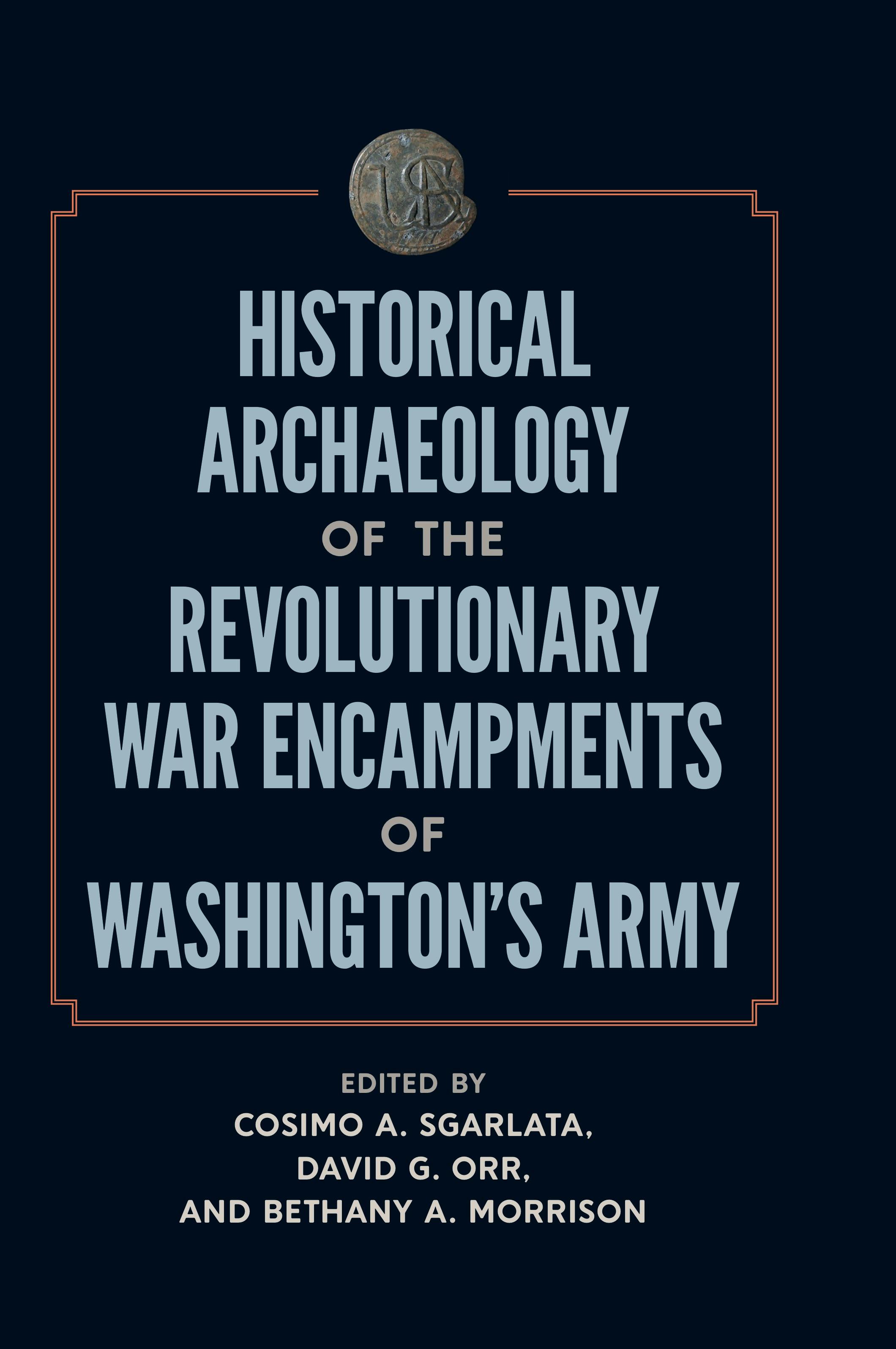
This volume presents recent archaeological and ethnohistorical research on the encampments, trails, and support structures of the Continental Army during the American Revolutionary War. These sites illuminate the daily lives of soldiers, officers, and camp followers away from the more well-known military campaigns and battles.
The research featured here includes previously unpublished findings from the winter encampments at Valley Forge, Pennsylvania, as well as work from sites in Redding, Connecticut, and Morristown, New Jersey. Topics range from excavations of a special dining cabin constructed for General George Washington to ballistic analysis of a target range established by General von Steuben. Contributors use experimental archaeology to learn how soldiers constructed their log hut quarters, and they reconstruct Rochambeau’s marching route through Connecticut on his way to help Washington defeat the British at Yorktown. They also describe the underrecognized roles of African descendants, Native peoples, and women who lived and worked at the camps.
Showing how archaeology can contribute insights into the American Revolution beyond what historical records convey, this volume calls for protection of and further research into non-conflict sites that were crucial to this formative struggle in the history of the United States.
Pay easily by card, Klarna, Apple Pay or Google Pay. Not happy? You always have a 14-day money-back guarantee. Read more in our terms. If you have any questions, email us at hello@memmo.org.
Memmo makes studying easier – wherever you are in the world. We bring your course books and smart study tools together in one place: summaries, quizzes, podcasts and flashcards. Plus Ted, your study buddy who answers anything you wonder. Over 75,000 students already study here – built to help you learn faster and stress less.