
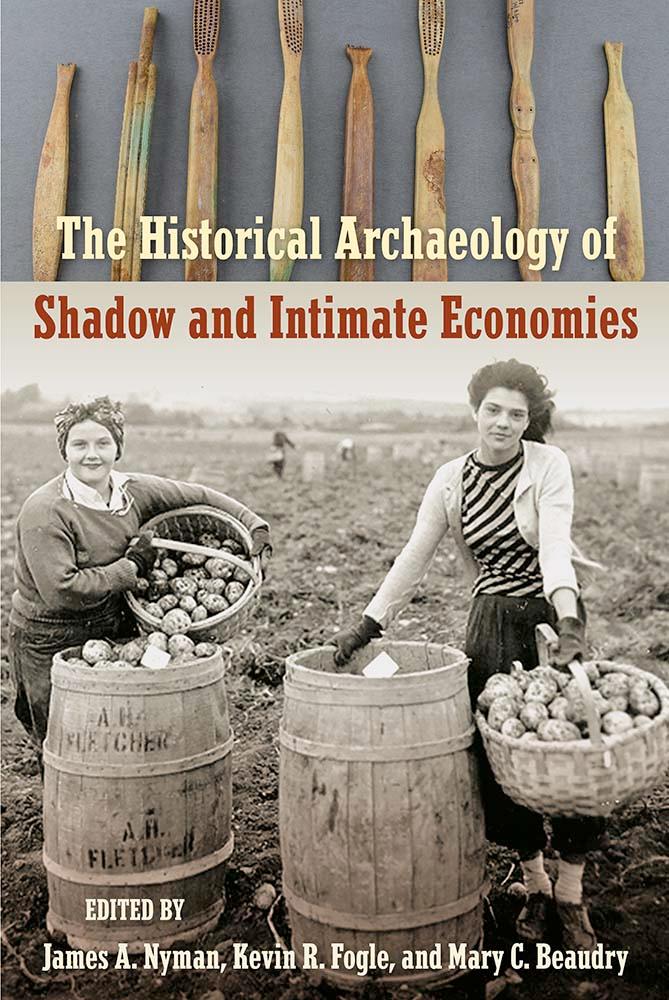
Emphasizing the important social relationships that form among people who participate in small-scale economic transactions, contributors to this volume explore often-overlooked networks of intimate and shadow economies—terms used to describe trade that takes place outside formal market systems.
Case studies from a variety of historical contexts around the world reveal the ways such transactions created community and identity, subverted class and power relations, and helped people adapt to new social realities. In Maine, woven baskets sold by Native American artisans to Euroamerican consumers supported Native strategies for cultural survival and agency. Alcohol exchanged by Scandinavian merchants for furs and skins enabled their indigenous trading partners to expand social webs that contested colonialism. Moonshine production in Appalachia was an integral part of economic exchanges in isolated mountain communities. Caribbean and American plantations contain evidence of interactions, exchanges, and attachments between enslaved communities and poor whites that defied established racial boundaries.
From brothel workers in Boston to seal hunters in Antarctica, the examples in this volume show how historical archaeologists can use the concept of intimate economies to uncover deeply meaningful connections that exist beyond the traditional framework of global capitalism.
Pay easily by card, Klarna, Apple Pay or Google Pay. Not happy? You always have a 14-day money-back guarantee. Read more in our terms. If you have any questions, email us at hello@memmo.org.
Memmo makes studying easier – wherever you are in the world. We bring your course books and smart study tools together in one place: summaries, quizzes, podcasts and flashcards. Plus Ted, your study buddy who answers anything you wonder. Over 75,000 students already study here – built to help you learn faster and stress less.
You might also like
Buy the book0