
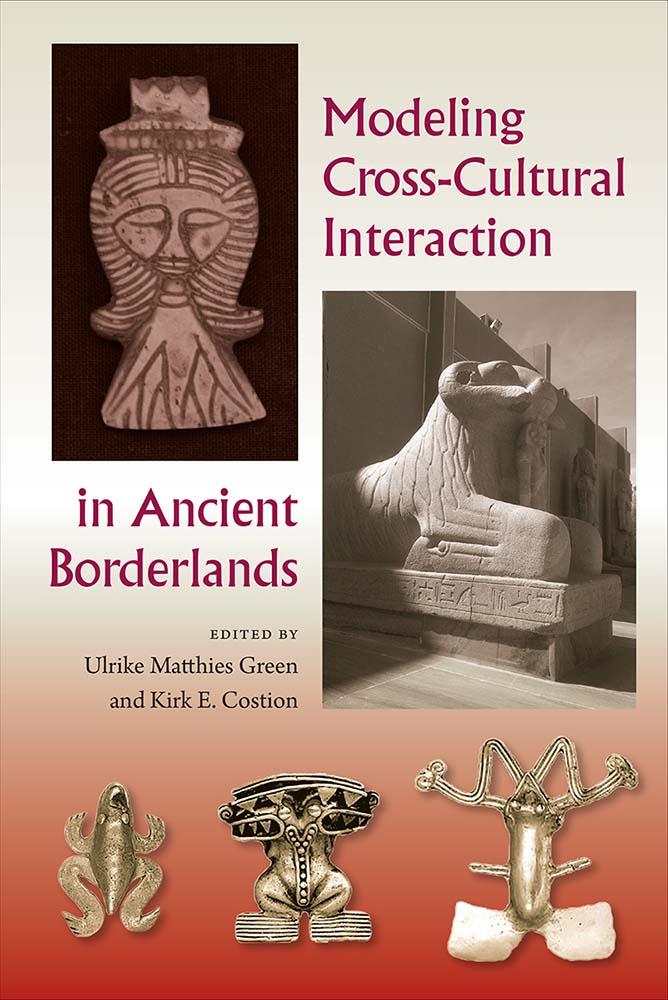
This volume introduces the Cross-Cultural Interaction Model (CCIM), a visual tool for studying the exchanges that take place between different cultures in borderland areas or across long distances. The model helps researchers untangle complex webs of connections among people, landscapes, and artifacts, and can be used to support multiple theoretical viewpoints.
Through case studies, contributors apply the CCIM to various regions and time periods, including Roman Europe, the Greek province of Thessaly in the Late Bronze Age, the ancient Egyptian-Nubian frontier, colonial Greenland in the eighteenth and nineteenth centuries, the Mississippian realm of Cahokia, ancient Costa Rica and Panama, and the Moquegua Valley of Peru in the early Middle Horizon period. They adapt the model to best represent their data, successfully plotting connections in many different dimensions, including geography, material culture, religion and spirituality, and ideology. The model enables them to expose what motivates people to participate in cultural exchange, as well as the influences that people reject in these interactions.
These results demonstrate the versatility and analytical power of the CCIM. Bridging the gap between theory and data, this tool can prompt users to rethink previous interpretations of their research, leading to new ideas, new theories, and new directions for future study.
Contributors: Meghan E. Buchanan | Michele R. Buzon | Kirk Costion | Bryan Feuer | Ulrike Matthies Green | Scott Palumbo | Stuart Tyson Smith | Peter Andreas Toft | Peter S. WellsPay easily by card, Klarna, Apple Pay or Google Pay. Not happy? You always have a 14-day money-back guarantee. Read more in our terms. If you have any questions, email us at hello@memmo.org.
Memmo makes studying easier – wherever you are in the world. We bring your course books and smart study tools together in one place: summaries, quizzes, podcasts and flashcards. Plus Ted, your study buddy who answers anything you wonder. Over 75,000 students already study here – built to help you learn faster and stress less.