
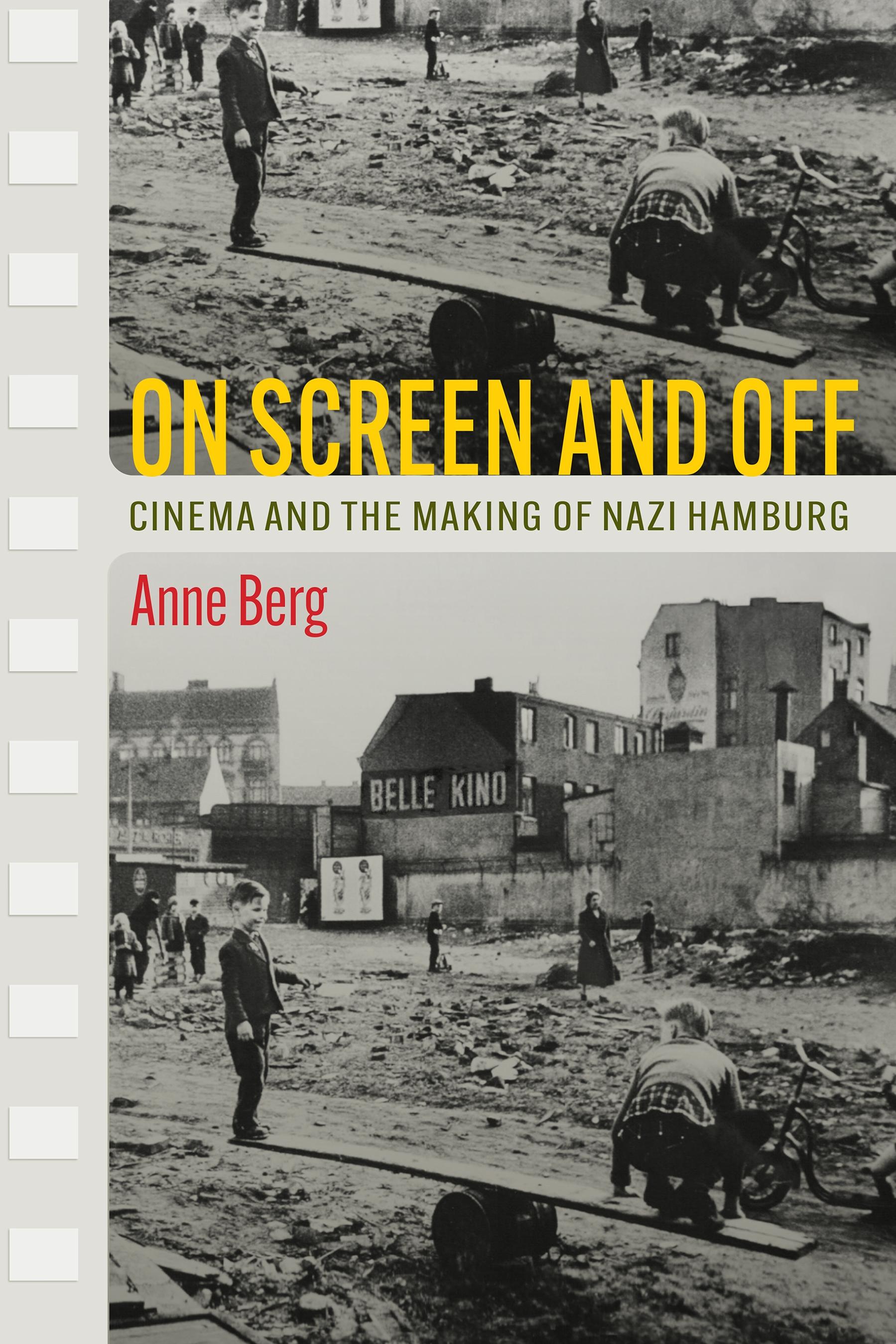
On Screen and Off shows that the making of Nazism was a local affair and the Nazi city a product of more than models and plans emanating from Berlin. In Hamburg, film was key in turning this self-styled "Gateway to the World" into a "Nazi city." The Nazi regime imagined film as a powerful tool to shape National Socialist subjects. In Hamburg, those very subjects chanced upon film culture as a seemingly apolitical opportunity to articulate their own ideas about how Nazism ought to work. Tracing discourses around film production and film consumption in the city, On Screen and Off illustrates how Nazi ideology was envisaged, imagined, experienced, and occasionally even fought over.
Local authorities in Hamburg, from the governor Karl Kaufmann to youth wardens and members of the Hamburg Film Club, used debates over cinema to define the reach and practice of National Socialism in the city. Film thus engendered a political space in which local activists, welfare workers, cultural experts, and administrators asserted their views about the current state of affairs, articulated criticism and praise, performed their commitment to the regime, and policed the boundaries of the Volksgemeinschaft. Of all the championed "people's products," film alone extended the promise of economic prosperity and cultural preeminence into the war years and beyond the city's destruction. From the ascension of the Nazi regime through the smoldering rubble, going to the movies grounded normalcy in the midst of rupture.
Pay easily by card, Klarna, Apple Pay or Google Pay. Not happy? You always have a 14-day money-back guarantee. Read more in our terms. If you have any questions, email us at hello@memmo.org.
Memmo makes studying easier – wherever you are in the world. We bring your course books and smart study tools together in one place: summaries, quizzes, podcasts and flashcards. Plus Ted, your study buddy who answers anything you wonder. Over 50,000 students already study here – built to help you learn faster and stress less.