
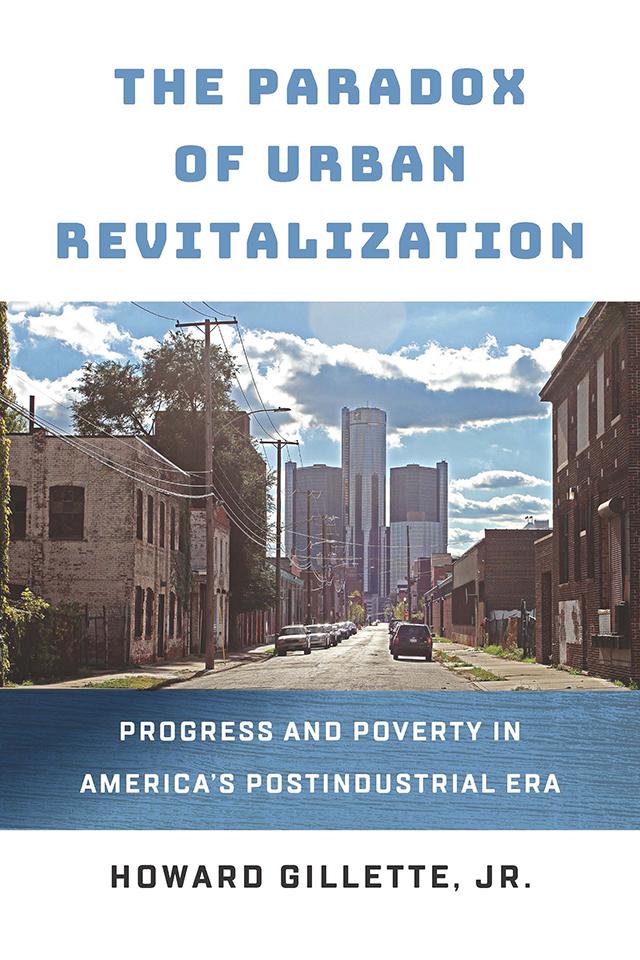
In the twenty-first century, cities in the United States that had suffered most the shift to a postindustrial era entered a period widely proclaimed as an urban renaissance. From Detroit to Newark to Oakland and elsewhere commentators saw cities rising again. Yet revitalization generated a second urban crisis marked by growing inequality and civil unrest reminiscent of the upheavals associated with the first urban crisis in the mid-twentieth century. The urban poor and residents of color have remained very much at a disadvantage in the face of racially biased capital investments, narrowing options for affordable housing, and mass incarceration. In profiling nine cities grappling with challenges of the twenty-first century, author Howard Gillette, Jr. evaluates the uneven efforts to secure racial and class equity as city fortunes have risen. Charting the tension between the practice of corporate subsidy and efforts to assure social justice, The Paradox of Urban Revitalization assesses the course of urban politics and policy over the past half century, before the COVID-19 pandemic upended everything, and details prospects for achieving greater equity in the years ahead.
Pay easily by card, Klarna, Apple Pay or Google Pay. Not happy? You always have a 14-day money-back guarantee. Read more in our terms. If you have any questions, email us at hello@memmo.org.
Memmo makes studying easier – wherever you are in the world. We bring your course books and smart study tools together in one place: summaries, quizzes, podcasts and flashcards. Plus Ted, your study buddy who answers anything you wonder. Over 50,000 students already study here – built to help you learn faster and stress less.
You might also like
Buy the book0