
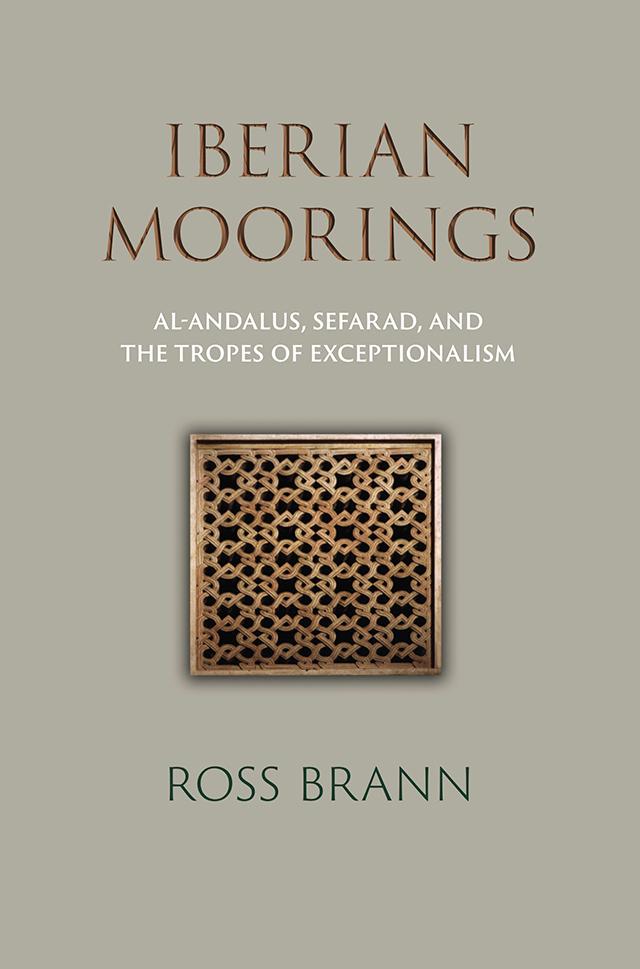
To Christians the Iberian Peninsula was Hispania, to Muslims al-Andalus, and to Jews Sefarad. As much as these were all names given to the same real place, the names also constituted ideas, and like all ideas, they have histories of their own. To some, al-Andalus and Sefarad were the subjects of conventional expressions of attachment to and pride in homeland of the universal sort displayed in other Islamic lands and Jewish communities; but other Muslim and Jewish political, literary, and religious actors variously developed the notion that al-Andalus or Sefarad, its inhabitants, and their culture were exceptional and destined to play a central role in the history of their peoples.
In Iberian Moorings Ross Brann traces how al-Andalus and Sefarad were invested with special political, cultural, and historical significance across the Middle Ages. This is the first work to analyze the tropes of Andalusi and Sefardi exceptionalism in comparative perspective. Brann focuses on the social power of these tropes in Andalusi Islamic and Sefardi Jewish cultures from the tenth through the twelfth century and reflects on their enduring influence and its expressions in scholarship, literature, and film down to the present day.
Pay easily by card, Klarna, Apple Pay or Google Pay. Not happy? You always have a 14-day money-back guarantee. Read more in our terms. If you have any questions, email us at hello@memmo.org.
Memmo makes studying easier – wherever you are in the world. We bring your course books and smart study tools together in one place: summaries, quizzes, podcasts and flashcards. Plus Ted, your study buddy who answers anything you wonder. Over 50,000 students already study here – built to help you learn faster and stress less.