
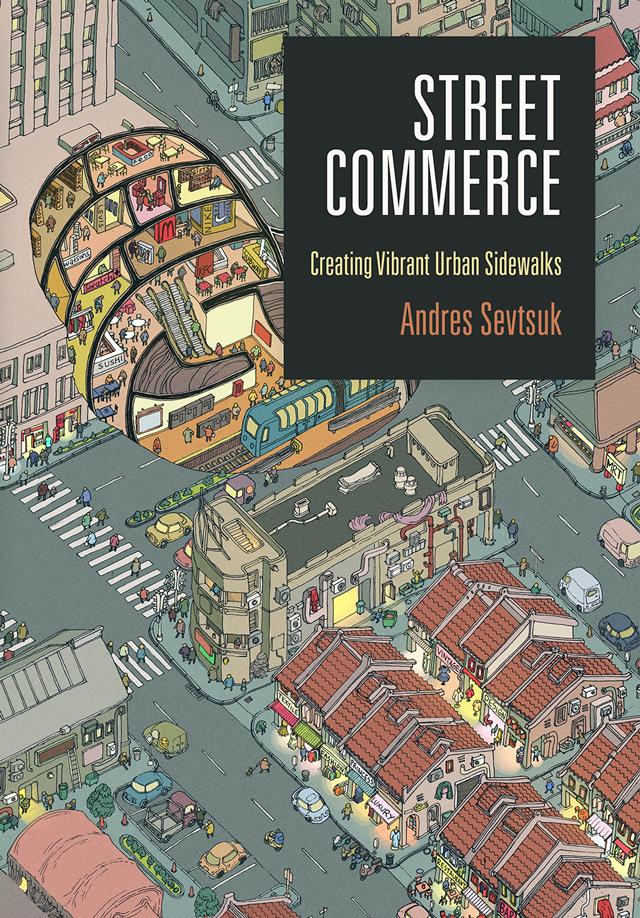
A comprehensive analysis of the issues involved in planning for and facilitating successful street commerce
Street commerce has gained prominence in urban areas, where demographic shifts such as increasing numbers of single people and childless "empty nesters," along with technological innovations enabling greater flexibility of work locations and hours, have changed how people shop and dine out. Contemporary city dwellers are demanding smaller-scale stores located in public spaces that are accessible on foot or by public transit. At the same time, the emergence of online retail undermines both the dominance and viability of big-box discount businesses and drives brick and mortar stores to focus as much on the experience of shopping as on the goods and services sold. Meanwhile, in many developing countries, the bulk of urban retail activity continues to take place on the street, even as new car-oriented shopping centers are on the rise. In light of such trends, street commerce will play an important role in twenty-first-century cities, particularly in producing far-reaching benefits for the environment and local communities.
Although street commerce is deeply intertwined with myriad contemporary urban visions and planning goals—walkability, quality of life, inclusion, equity, and economic resilience—it has rarely been the focus of systematic research and informed practice. In Street Commerce, Andres Sevtsuk presents a comprehensive analysis of the issues involved in implementing successful street commerce. Drawing on economic theory, urban design principles, regulatory policies, and merchant organization models, he conceptualizes key problems and offers innovative solutions. He provides a range of examples from around the world to detail how different cities and communities have bolstered and reinvigorated their street commerce. According to Sevtsuk, successful street commerce can only be achieved when the private sector, urban policy makers, planners, and the public are equipped with the relevant knowledge and tools to plan and regulate it.
Pay easily by card, Klarna, Apple Pay or Google Pay. Not happy? You always have a 14-day money-back guarantee. Read more in our terms. If you have any questions, email us at hello@memmo.org.
Memmo makes studying easier – wherever you are in the world. We bring your course books and smart study tools together in one place: summaries, quizzes, podcasts and flashcards. Plus Ted, your study buddy who answers anything you wonder. Over 50,000 students already study here – built to help you learn faster and stress less.