
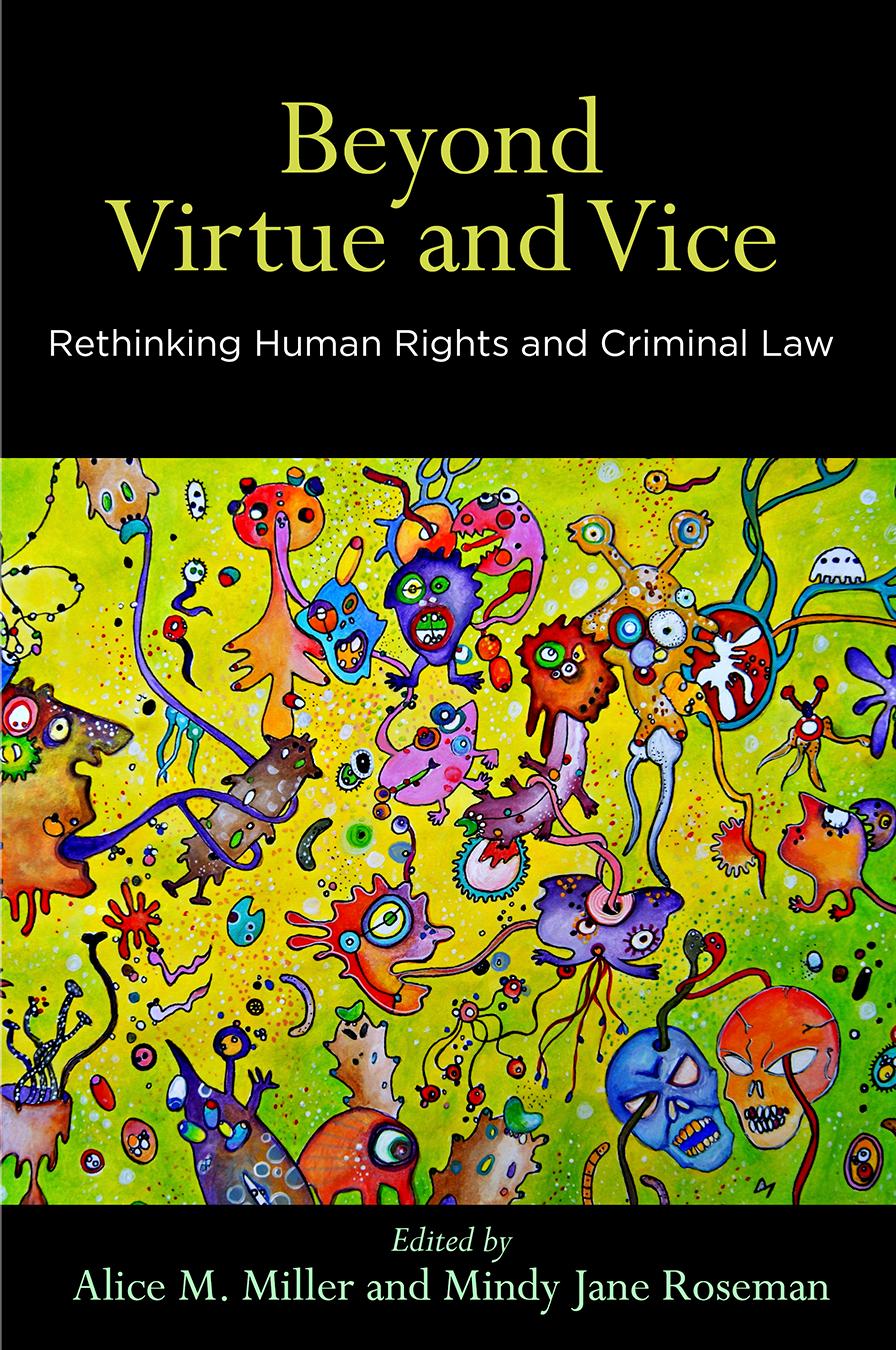
Over the past two decades, human rights as legal doctrine and practice has shifted its engagement with criminal law from a near exclusive condemnation of it as a source of harm toward increasingly invoking it as a necessary remedy for abuses. These shifts are most visible in the context of sexuality, reproduction, and gender. Criminal law appears in modern states as a tool for societies to define forbidden acts (crimes) and prescribe punishments. It authorizes the state to use force as an aspect of expressing and establishing norms—societal expectations for acceptable behavior which when breached permit individuals to be excluded and stigmatized as unfit for inclusion. But the core principles of human rights oppose exclusion and stigma and embrace the equality and dignity of all. Therefore there is an insuperable tension when human rights actors invoke criminal law to protect and vindicate human rights violations.
Beyond Virtue and Vice examines the ways in which recourse to the criminal law features in work by human rights advocates regarding sexuality, gender, and reproduction and presents a framework for considering if, when, and under what conditions, recourse to criminal law is compatible with human rights. Contributors from a wide range of disciplinary fields and geographic locations offer historical and contemporary perspectives, doctrinal cautionary tales, and close readings of advocacy campaigns on the use of criminal law in cases involving abortion and reproductive rights, HIV/AIDS, sex work and prostitution law, human trafficking, sexual violence across genders, child rights and adolescent sexuality, and LGBT issues. The volume offers specific values and approaches of possible use to advocates, activists, policy makers, legislators, scholars, and students in their efforts to craft dialogue and engagement to move beyond state practices that compromise human rights in the name of restraining vice and extolling virtue.
Contributors: Aziza Ahmed, Widney Brown, Sealing Cheng, Sonia Corrêa, Joanna N. Erdman, Janet Halley, Alli Jernow, Maria Lucia Karam, Ae-Ryung Kim, Scott Long, Vrinda Marwah, Alice M. Miller, Geetanijali Misra, Rasha Moumneh, Wanja Muguongo, Oliver Phillips, Zain Rizvi, Mindy Jane Roseman, Esteban Restrepo Saldarriaga, Tara Zivkovic.
Pay easily by card, Klarna, Apple Pay or Google Pay. Not happy? You always have a 14-day money-back guarantee. Read more in our terms. If you have any questions, email us at hello@memmo.org.
Memmo makes studying easier – wherever you are in the world. We bring your course books and smart study tools together in one place: summaries, quizzes, podcasts and flashcards. Plus Ted, your study buddy who answers anything you wonder. Over 50,000 students already study here – built to help you learn faster and stress less.