
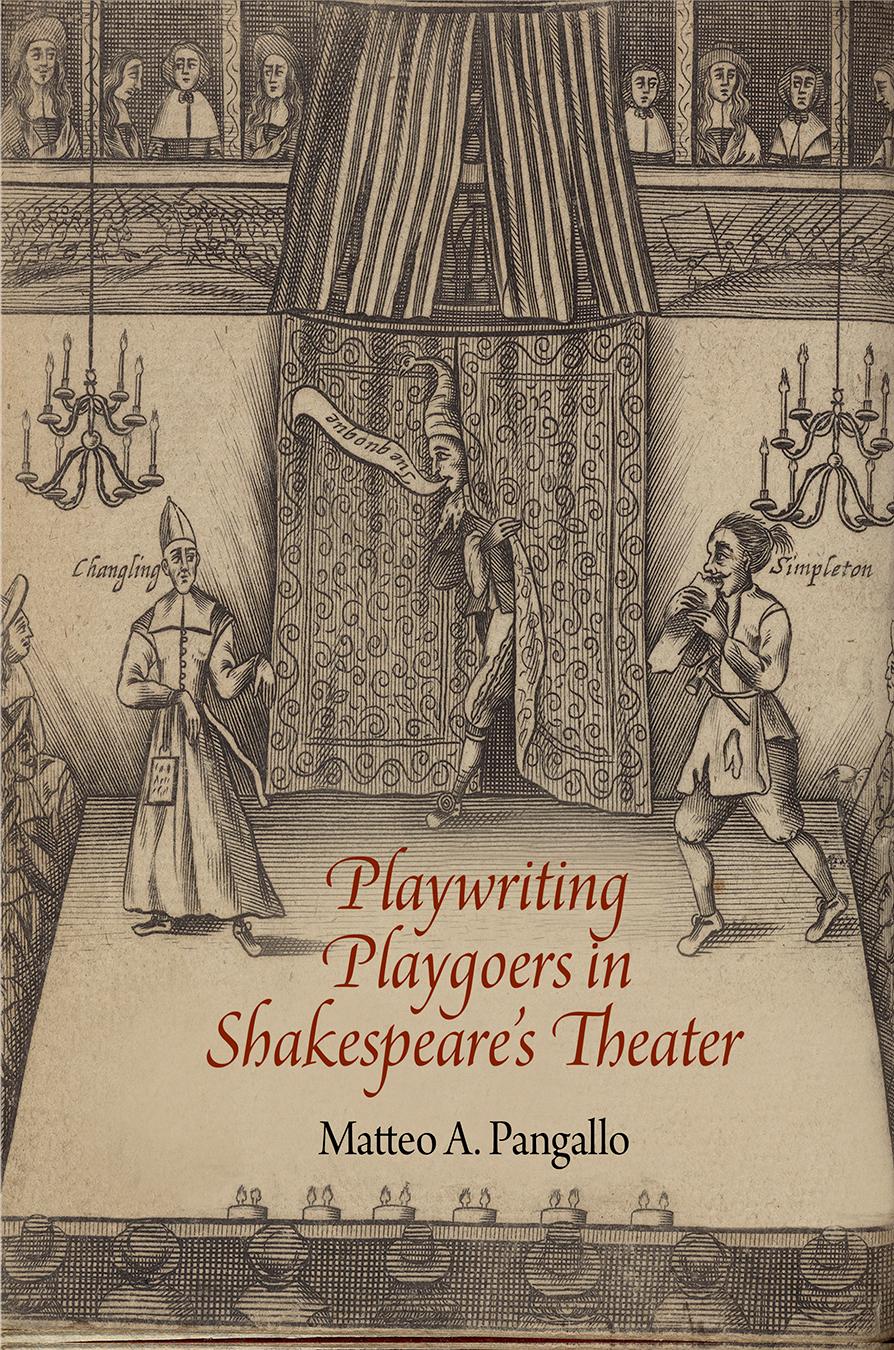
Among the dramatists who wrote for the professional playhouses of early modern London was a small group of writers who were neither members of the commercial theater industry writing to make a living nor aristocratic amateurs dipping their toes in theatrical waters for social or political prestige. Instead, they were largely working- and middle-class amateurs who had learned most of what they knew about drama from being members of the audience.
Using a range of familiar and lesser-known print and manuscript plays, as well as literary accounts and documentary evidence, Playwriting Playgoers in Shakespeare's Theater shows how these playgoers wrote and revised to address what they assumed to be the needs of actors, readers, and the Master of the Revels; how they understood playhouse materials and practices; and how they crafted poetry for theatrical effects. The book also situates them in the context of the period's concepts of, and attitudes toward, playgoers' participation in the activity of playmaking.
Plays by playgoers such as the rogue East India Company clerk Walter Mountfort or the highwayman John Clavell invite us into the creative imaginations of spectators, revealing what certain audience members wanted to see and how they thought actors might stage it. By reading Shakespeare's theater through these playgoers' works, Matteo Pangallo contributes a new category of evidence to our understanding of the relationships between the early modern stage, its plays, and its audiences. More broadly, he shows how the rise of England's first commercialized culture industry also gave rise to the first generation of participatory consumers and their attempts to engage with mainstream culture by writing early modern "fan fiction."
Pay easily by card, Klarna, Apple Pay or Google Pay. Not happy? You always have a 14-day money-back guarantee. Read more in our terms. If you have any questions, email us at hello@memmo.org.
Memmo makes studying easier – wherever you are in the world. We bring your course books and smart study tools together in one place: summaries, quizzes, podcasts and flashcards. Plus Ted, your study buddy who answers anything you wonder. Over 75,000 students already study here – built to help you learn faster and stress less.