
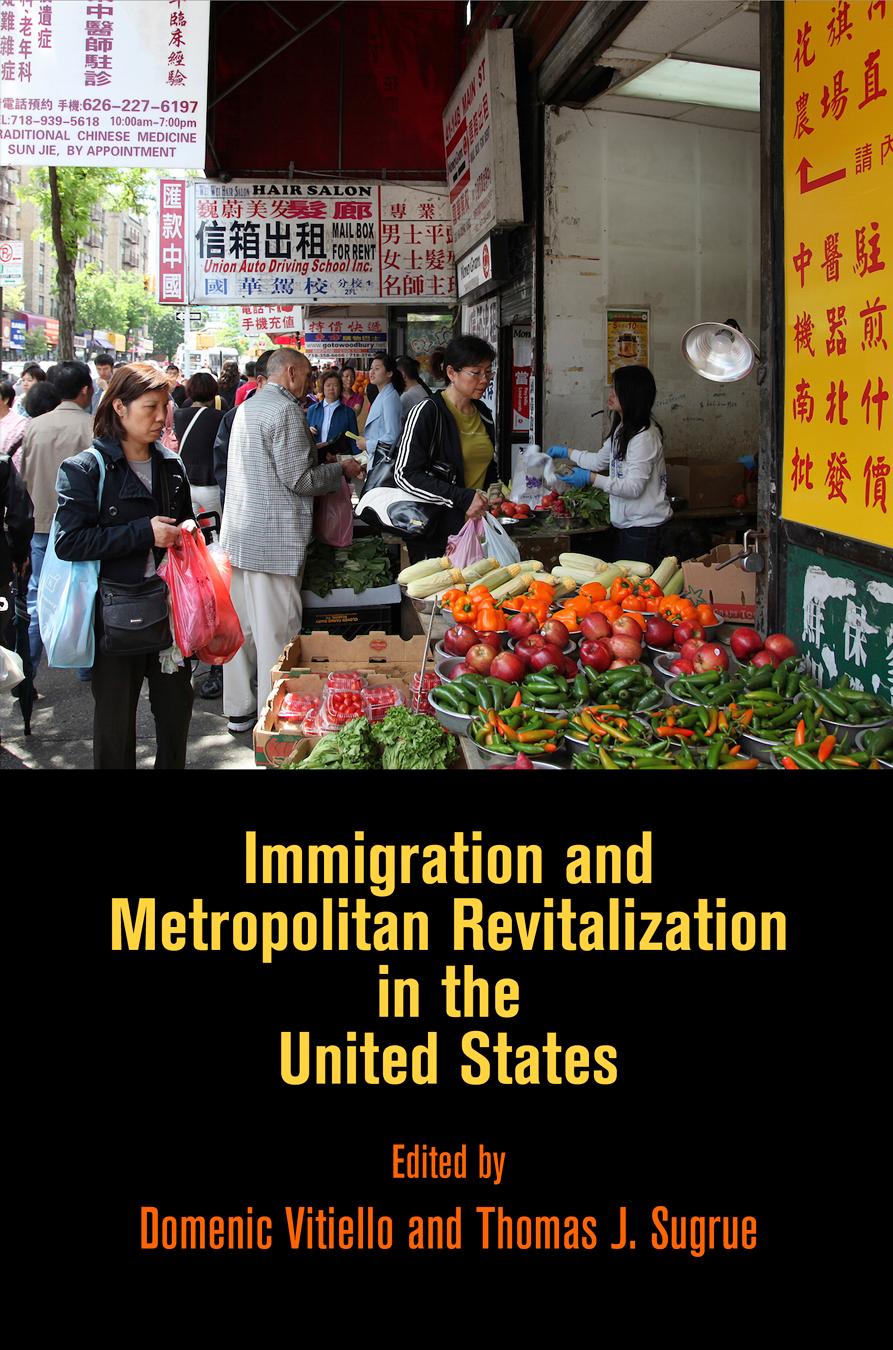
In less than a generation, the dominant image of American cities has transformed from one of crisis to revitalization. Poverty, violence, and distressed schools still make headlines, but central cities and older suburbs are attracting new residents and substantial capital investment. In most accounts, native-born empty nesters, their twentysomething children, and other educated professionals are credited as the agents of change. Yet in the past decade, policy makers and scholars across the United States have come to understand that immigrants are driving metropolitan revitalization at least as much and belong at the center of the story. Immigrants have repopulated central city neighborhoods and older suburbs, reopening shuttered storefronts and boosting housing and labor markets, in every region of the United States.
Immigration and Metropolitan Revitalization in the United States is the first book to document immigrant-led revitalization, with contributions by leading scholars across the social sciences. Offering radically new perspectives on both immigration and urban revitalization and examining how immigrants have transformed big cities such as New York, Chicago, and Los Angeles, as well as newer destinations such as Nashville and the suburbs of Boston and New Jersey, the volume's contributors challenge traditional notions of revitalization, often looking at working-class communities. They explore the politics of immigration and neighborhood change, demolishing simplistic assumptions that dominate popular debates about immigration. They also show how immigrants have remade cities and regions in Latin America, Africa, and other places from which they come, linking urbanization in the United States and other parts of the world.
Contributors: Kenneth Ginsburg, Marilynn S. Johnson, Michael B. Katz, Gary Painter, Robert J. Sampson, Gerardo Francisco Sandoval, A.K. Sandoval-Strausz, Thomas J. Sugrue, Rachel Van Tosh, Jacob L. Vigdor, Domenic Vitiello, Jamie Winders.
Pay easily by card, Klarna, Apple Pay or Google Pay. Not happy? You always have a 14-day money-back guarantee. Read more in our terms. If you have any questions, email us at hello@memmo.org.
Memmo makes studying easier – wherever you are in the world. We bring your course books and smart study tools together in one place: summaries, quizzes, podcasts and flashcards. Plus Ted, your study buddy who answers anything you wonder. Over 50,000 students already study here – built to help you learn faster and stress less.