
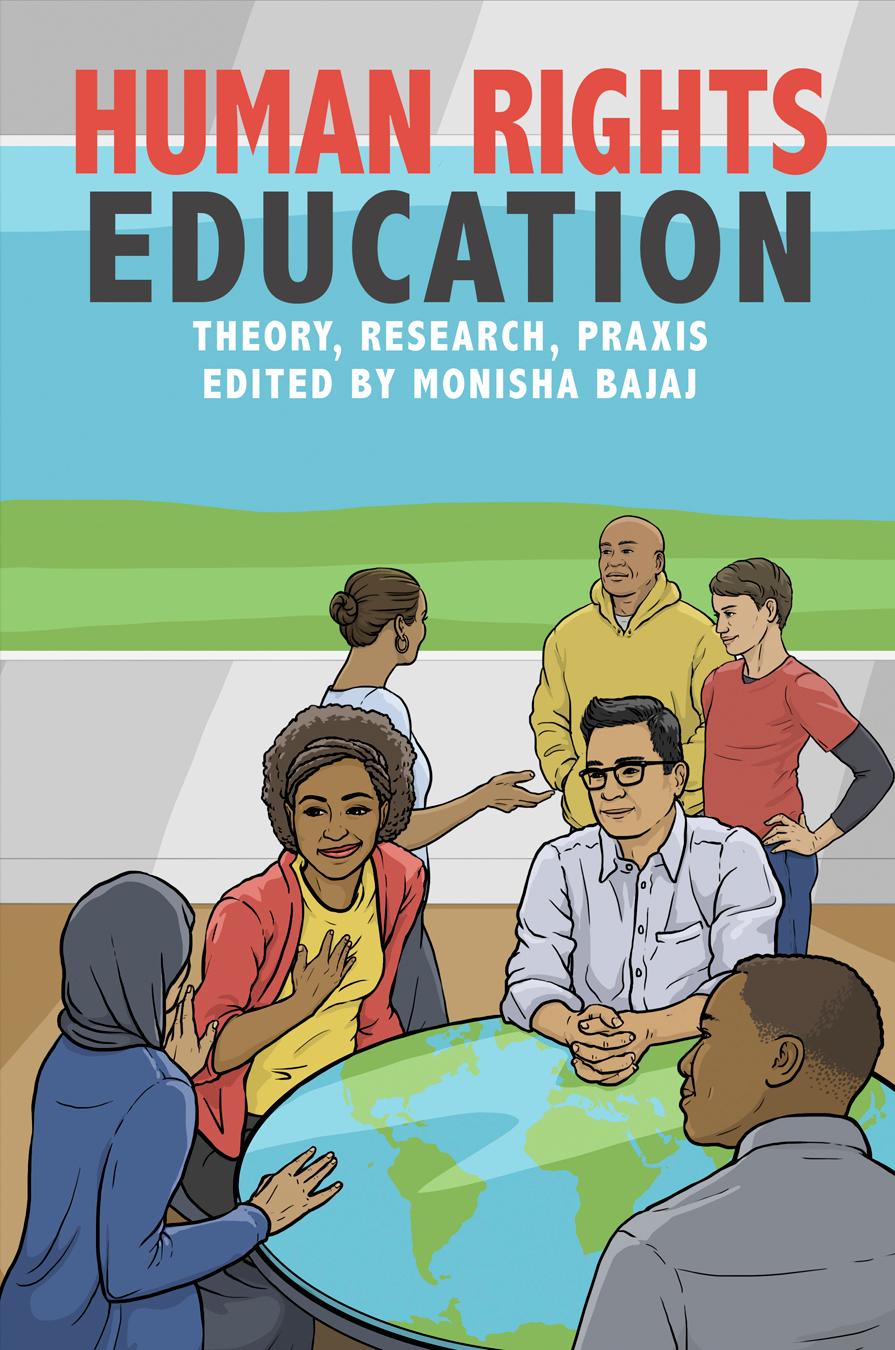
Over the past seven decades, human rights education has blossomed into a global movement. A field of scholarship that utilizes teaching and learning processes, human rights education addresses basic rights and broadens the respect for the dignity and freedom of all peoples. Since the founding of the United Nations and the adoption of the Universal Declaration of Human Rights in 1948, human rights education has worked toward ensuring that schools and non-formal educational spaces become sites of promise and equity.
Bringing together the voices of leaders and researchers deeply engaged in understanding the politics and possibilities of human rights education as a field of inquiry, Monisha Bajaj's Human Rights Education shapes our understanding of the practices and processes of the discipline and demonstrates the ways in which it has evolved into a meaningful constellation of scholarship, policy, curricular reform, and pedagogy. Contributions by pioneers in the field, as well as emerging scholars, constitute this foundational textbook, which charts the field's rise, outlines its conceptual frameworks and models, and offers case studies from Africa, Asia, Latin America, Europe, the Middle East, and the United States. The volume analyzes how human rights education has been locally tailored to diverse contexts and looks at the tensions and triumphs of such efforts.
Historicizing human rights education while offering concrete grounding for those who seek entry into this dynamic field of scholarship and practice, Human Rights Education is essential reading for students, educators, researchers, advocates, activists, practitioners, and policy makers.
Contributors: Monisha Bajaj, Ben Cislaghi, Nancy Flowers, Melissa Leigh Gibson, Diane Gillespie, Carl A. Grant, Tracey Holland, Megan Jensen, Peter G. Kirchschlaeger, Gerald Mackie, J. Paul Martin, Sam Mejias, Chrissie Monaghan, Audrey Osler, Oren Pizmony-Levy, Susan Garnett Russell, Carol Anne Spreen, David Suárez, Felisa Tibbitts, Rachel Wahl, Chalank Yahya, Michalinos Zembylas.
Pay easily by card, Klarna, Apple Pay or Google Pay. Not happy? You always have a 14-day money-back guarantee. Read more in our terms. If you have any questions, email us at hello@memmo.org.
Memmo makes studying easier – wherever you are in the world. We bring your course books and smart study tools together in one place: summaries, quizzes, podcasts and flashcards. Plus Ted, your study buddy who answers anything you wonder. Over 50,000 students already study here – built to help you learn faster and stress less.