
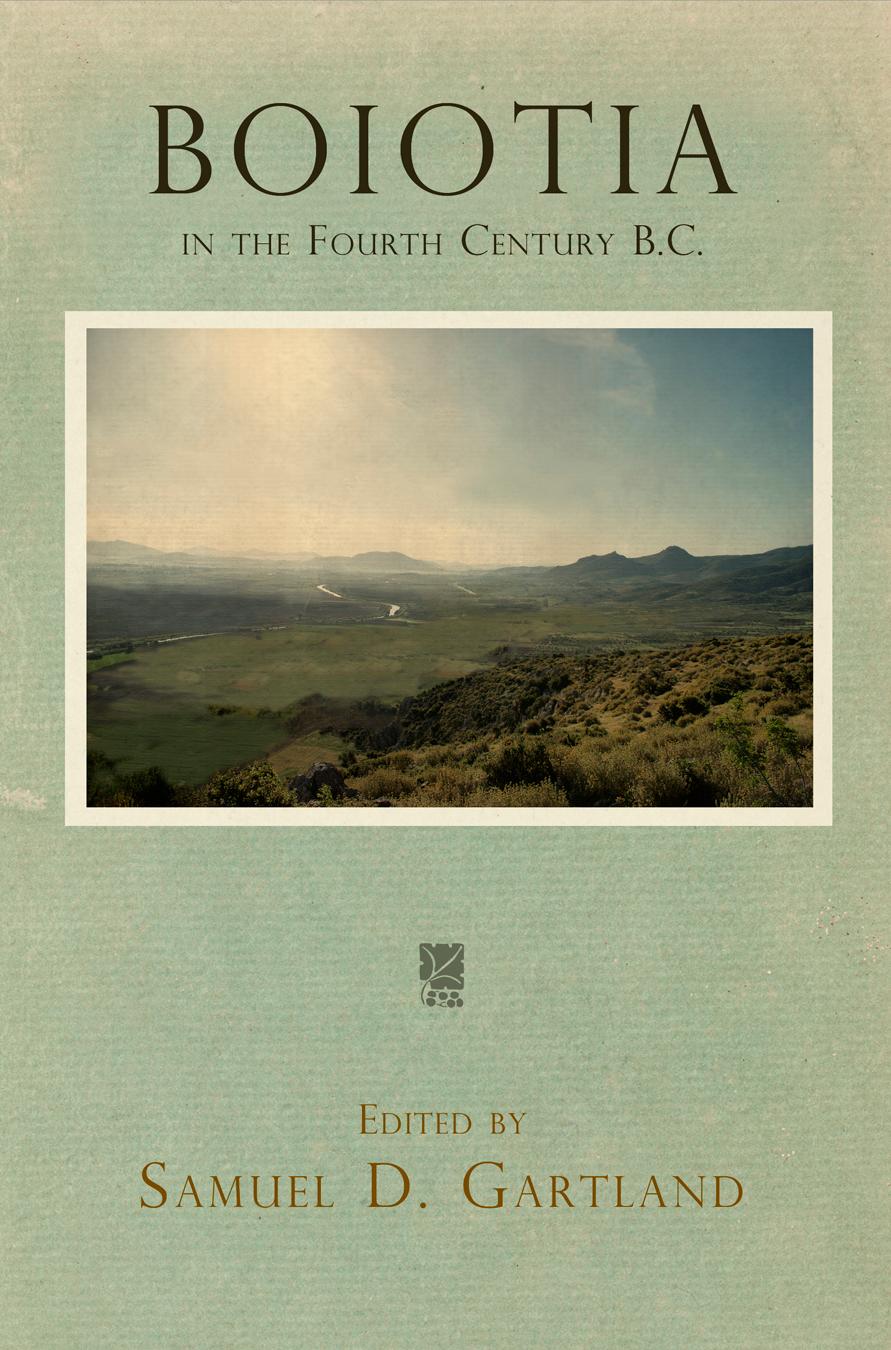
The region of Boiotia was one of the most powerful regions in Greece between the Peloponnesian War and the rise of Macedonian power under Philip II and Alexander the Great. Its influence stretched across most of the Greek mainland and, at times, across the Aegean; its fourth-century leaders were of legendary ability. But the Boiotian hegemony over Greece was short lived, and less than four decades after the Boiotians defeated the Spartans at the battle of Leuktra in 371 B.C., Alexander the Great destroyed Thebes, Boiotia's largest city, and left the fabric of Boiotian power in tatters.
Boiotia in the Fourth Century B.C. works from the premise that the traditional picture of hegemony and great men tells only a partial story, one that is limited in the diversity of historical experience. The breadth of essays in this volume is designed to give a picture of the current state of scholarship and to provide a series of in-depth studies of particular evidence, experience, and events. These studies present exciting new perspectives based on recent archaeological work and the discovery of new material evidence. And rather than turning away from the region following the famous Macedonian victory at Chaironeia in 338 B.C., or the destruction of Thebes three years later, the scholars cover the entire span of the century, and the questions posed are as diverse as the experiences of the Boiotians: How free were Boiotian communities, and how do we explain their demographic resilience among the catastrophes? Is the exercise of power visible in the material evidence, and how did Boiotians fare outside the region? How did experience of widespread displacement and exile shape Boiotian interactivity at the end of the century? By posing these and other questions, the book offers a new historical vision of the region in the period during which it was of greatest consequence to the wider Greek world.
Contributors: Samuel D. Gartland, John Ma, Robin Osborne, Nikolaos Papazarkadas, P. J. Rhodes, Thom Russell, Albert Schachter, Michael Scott, Anthony Snodgrass.
Pay easily by card, Klarna, Apple Pay or Google Pay. Not happy? You always have a 14-day money-back guarantee. Read more in our terms. If you have any questions, email us at hello@memmo.org.
Memmo makes studying easier – wherever you are in the world. We bring your course books and smart study tools together in one place: summaries, quizzes, podcasts and flashcards. Plus Ted, your study buddy who answers anything you wonder. Over 75,000 students already study here – built to help you learn faster and stress less.