
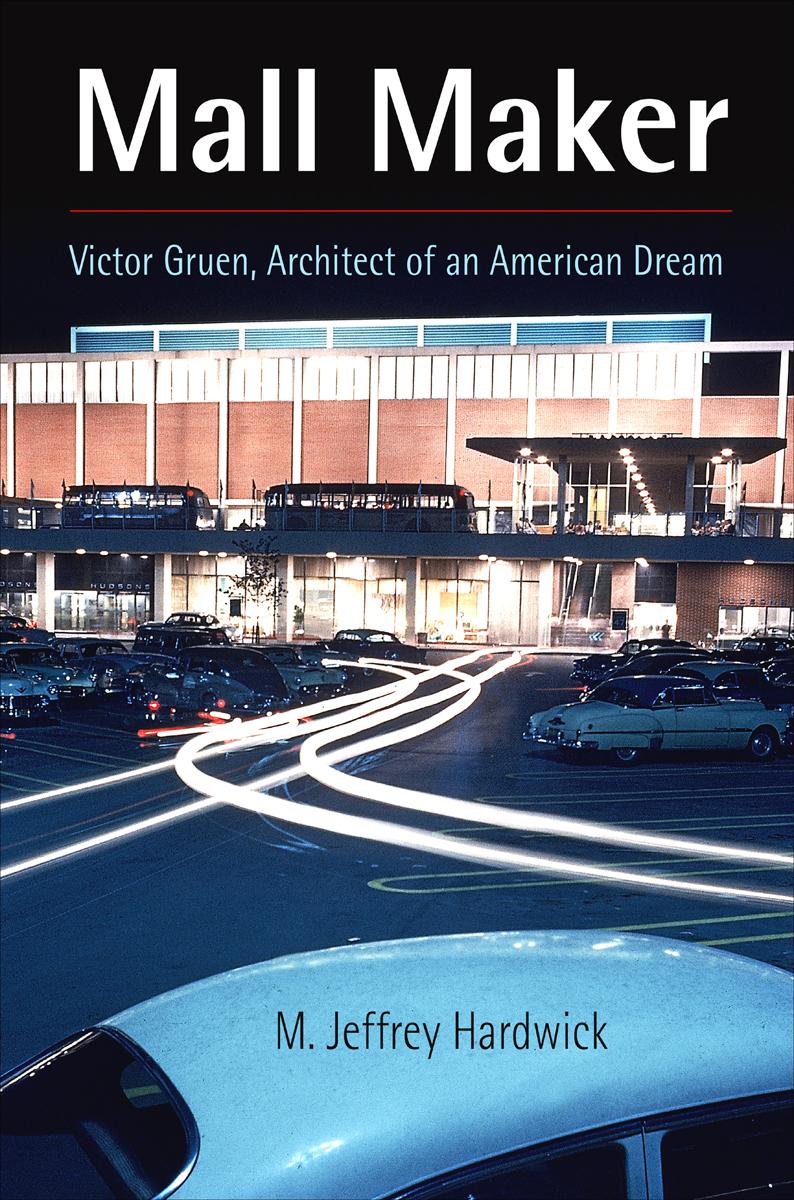
The shopping mall is both the most visible and the most contentious symbol of American prosperity. Despite their convenience, malls are routinely criticized for representing much that is wrong in America—sprawl, conspicuous consumption, the loss of regional character, and the decline of Mom and Pop stores. So ubiquitous are malls that most people would be suprised to learn that they are the brainchild of a single person, architect Victor Gruen.
An immigrant from Austria who fled the Nazis in 1938, Gruen based his idea for the mall on an idealized America: the dream of concentrated shops that would benefit the businessperson as well as the consumer and that would foster a sense of shared community. Modernist Philip Johnson applauded Gruen for creating a true civic art and architecture that enriched Americans' daily lives, and for decades he received praise from luminaries such as Lewis Mumford, Winthrop Rockefeller, and Lady Bird Johnson. Yet, in the end, Gruen returned to Europe, thoroughly disillusioned with his American dream.
In Mall Maker, the first biography of this visionary spirit, M. Jeffrey Hardwick relates Gruen's successes and failures—his work at the 1939 World's Fair, his makeover of New York's Fifth Avenue boutiques, his rejected plans for reworking entire communities, such as Fort Worth, Texas, and his crowning achievement, the enclosed shopping mall. Throughout Hardwick illuminates the dramatic shifts in American culture during the mid-twentieth century, notably the rise of suburbia and automobiles, the death of downtown, and the effect these changes had on American life. Gruen championed the redesign of suburbs and cities through giant shopping malls, earnestly believing that he was promoting an American ideal, the ability to build a community. Yet, as malls began covering the landscape and downtowns became more depressed, Gruen became painfully aware that his dream of overcoming social problems through architecture and commerce was slipping away. By the tumultuous year of 1968, it had disappeared.
Victor Gruen made America depend upon its shopping malls. While they did not provide an invigorated sense of community as he had hoped, they are enduring monuments to the lure of consumer culture.
Pay easily by card, Klarna, Apple Pay or Google Pay. Not happy? You always have a 14-day money-back guarantee. Read more in our terms. If you have any questions, email us at hello@memmo.org.
Memmo makes studying easier – wherever you are in the world. We bring your course books and smart study tools together in one place: summaries, quizzes, podcasts and flashcards. Plus Ted, your study buddy who answers anything you wonder. Over 50,000 students already study here – built to help you learn faster and stress less.