
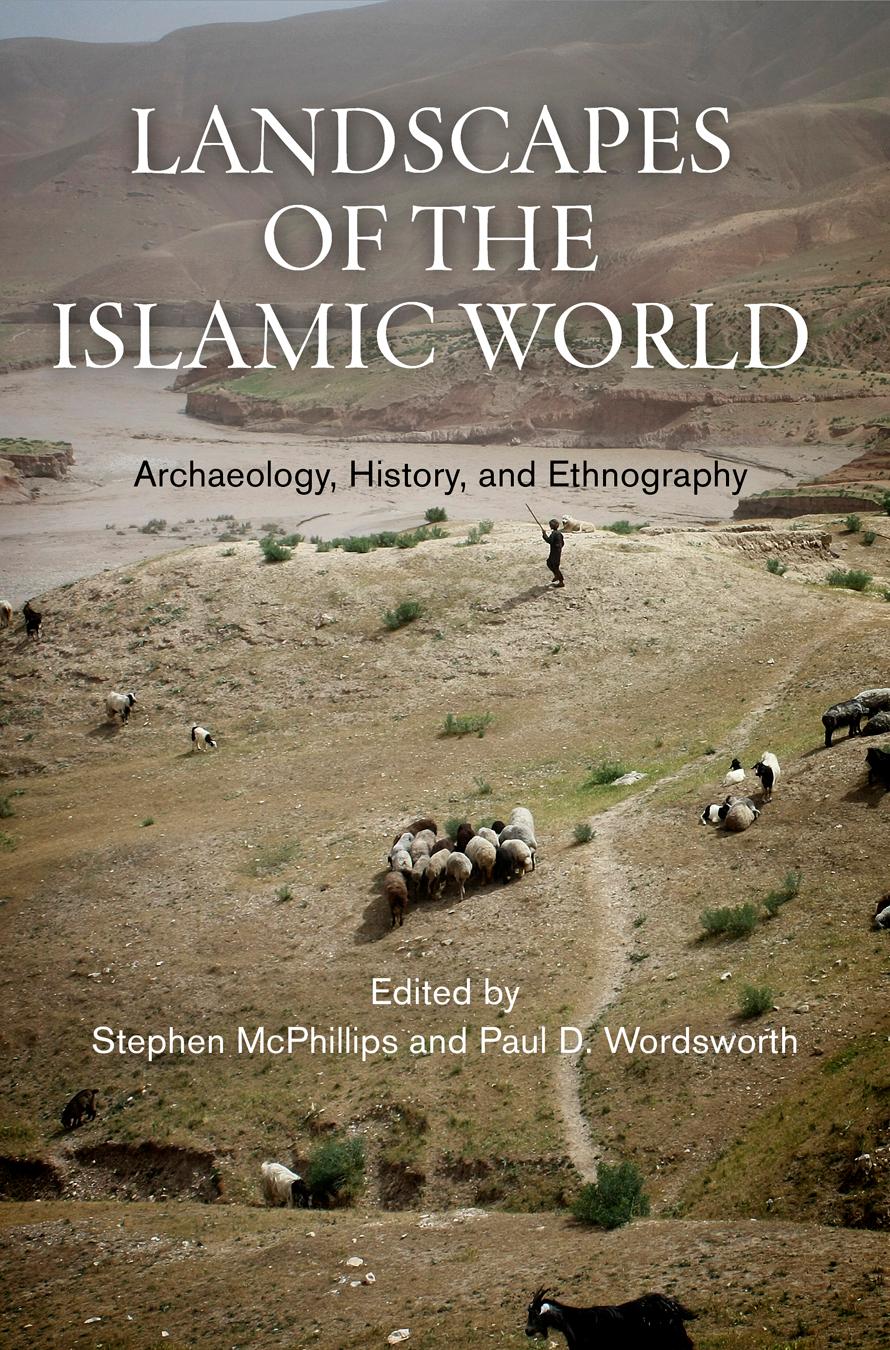
Islamic societies of the past have often been characterized as urban, with rural and other extra-urban landscapes cast in a lesser or supporting role in the studies of Islamic history and archaeology. Yet throughout history, the countryside was frequently an engine of economic activity, the setting for agricultural and technological innovation, and its inhabitants were frequently agents of social and political change. The Islamic city is increasingly viewed in the context of long and complex processes of urban development. Archaeological evidence calls for an equally nuanced reading of shifting cultural and religious practices in rural areas after the middle of the seventh century.
Landscapes of the Islamic World presents new work by twelve authors on the archaeology, history, and ethnography of the Islamic world in the Middle East, the Arabian Peninsula, and Central Asia. The collection looks beyond the city to engage with the predominantly rural and pastoral character of premodern Islamic society. Editors Stephen McPhillips and Paul D. Wordsworth group the essays into four thematic sections: harnessing and living with water; agriculture, pastoralism, and rural subsistence; commerce, production, and the rural economy; and movement and memory in the rural landscape. Each contribution addresses aspects of extra-urban life in challenging new ways, blending archaeological material culture, textual sources, and ethnography to construct holistic studies of landscapes.
Modern agrarian practices and population growth have accelerated the widespread destruction of vast tracts of ancient, medieval, and early modern landscapes, highlighting the urgency of scholarship in this field. This book makes an original and important contribution to a growing subject area, and represents a step toward a more inclusive understanding of the historical landscapes of Islam.
Contributors: Pernille Bangsgaard, Karin Bartl, Jennie N. Bradbury, Robin M. Brown, Alison L. Gascoigne, Ian W. N. Jones, Phillip G. Macumber, Daniel Mahoney, Stephen McPhillips, Astrid Meier, David C. Thomas, Bethany J. Walker, Alan Walmsley, Tony J. Wilkinson, Paul D. Wordsworth, Lisa Yeomans.
Pay easily by card, Klarna, Apple Pay or Google Pay. Not happy? You always have a 14-day money-back guarantee. Read more in our terms. If you have any questions, email us at hello@memmo.org.
Memmo makes studying easier – wherever you are in the world. We bring your course books and smart study tools together in one place: summaries, quizzes, podcasts and flashcards. Plus Ted, your study buddy who answers anything you wonder. Over 75,000 students already study here – built to help you learn faster and stress less.