
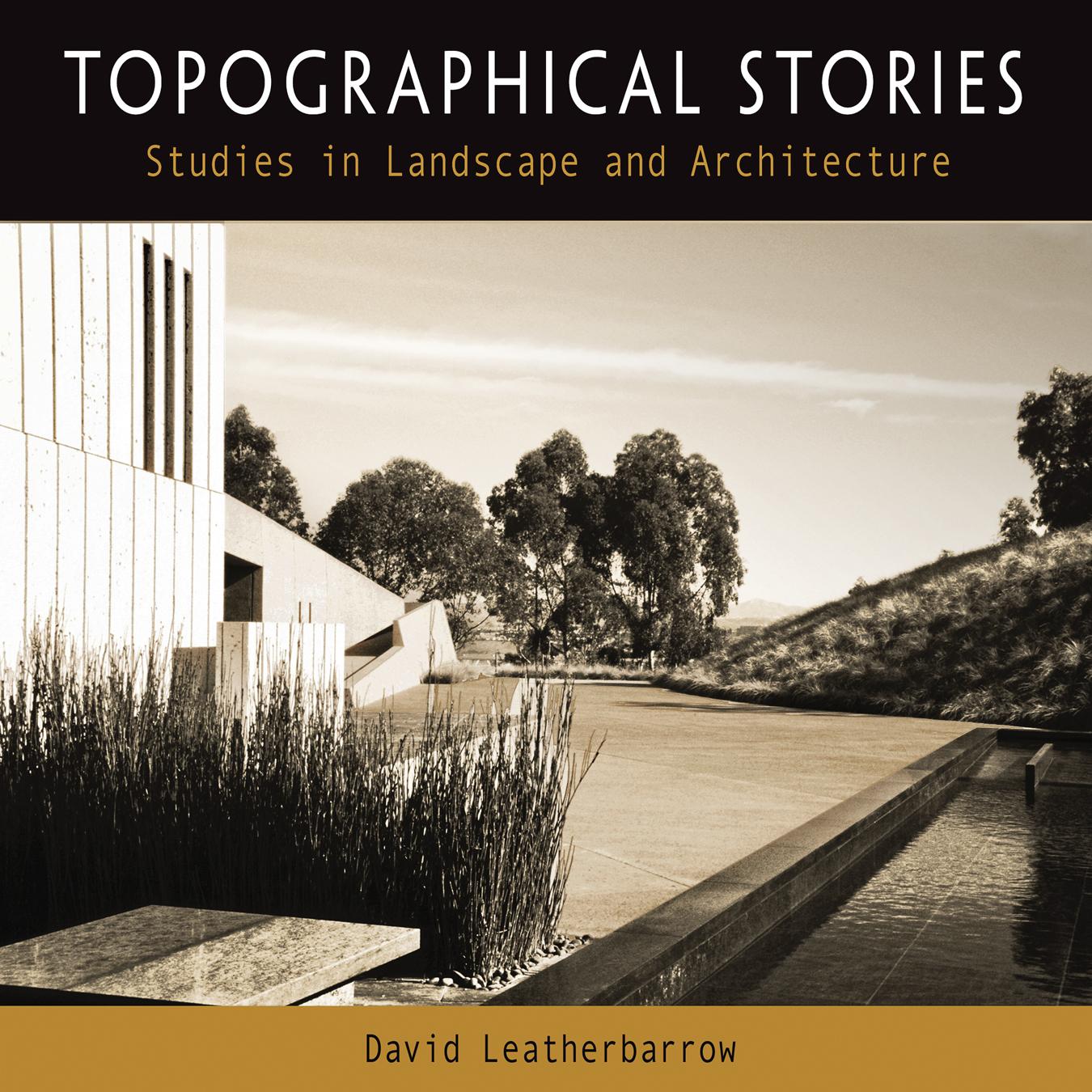
Landscape architecture and architecture are two fields that exist in close proximity to one another. Some have argued that the two are, in fact, one field. Others maintain that the disciplines are distinct. These designations are a subject of continual debate by theorists and practitioners alike.
Here, David Leatherbarrow offers an entirely new way of thinking of architecture and landscape architecture. Moving beyond partisan arguments, he shows how the two disciplines rely upon one another to form a single framework of cultural meaning. Leatherbarrow redefines landscape architecture and architecture as topographical arts, the shared task of which is to accommodate and express the patterns of our lives. Topography, in his view, incorporates terrain, built and unbuilt, but also traces of practical affairs, by means of which culture preserves and renews its typical situations and institutions.
This rigorous argument is supported by nearly 100 illustrations, as well as examples of topography from the sixteenth, eighteenth, and nineteenth centuries, through the heroic period of early modernism, to more recent offerings. A number of these studies revise existing accounts of decisive moments in the history of these disciplines, particularly the birth of the informal garden, the emergence of continuous space in the landscapes and architecture of the modern period, and the new significance of landform or earthwork in contemporary architecture. For readers not directly involved with either of these professions, this book shows how over the centuries our lives have been shaped and enriched by landscape and architecture.
Topographical Stories provides a new paradigm for theorizing and practicing landscape and architecture.
Pay easily by card, Klarna, Apple Pay or Google Pay. Not happy? You always have a 14-day money-back guarantee. Read more in our terms. If you have any questions, email us at hello@memmo.org.
Memmo makes studying easier – wherever you are in the world. We bring your course books and smart study tools together in one place: summaries, quizzes, podcasts and flashcards. Plus Ted, your study buddy who answers anything you wonder. Over 50,000 students already study here – built to help you learn faster and stress less.