
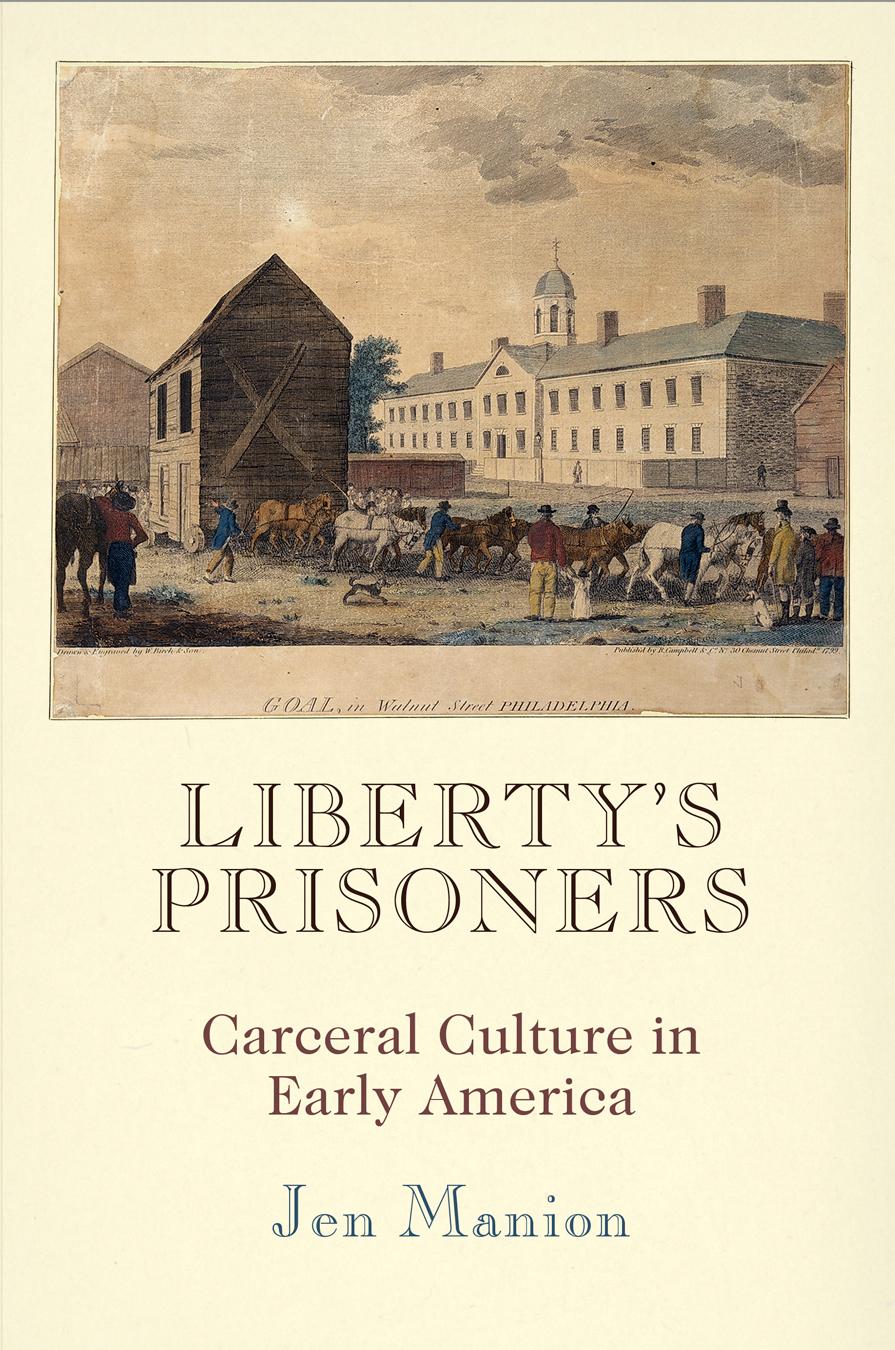
Liberty's Prisoners examines how changing attitudes about work, freedom, property, and family shaped the creation of the penitentiary system in the United States. The first penitentiary was founded in Philadelphia in 1790, a period of great optimism and turmoil in the Revolution's wake. Those who were previously dependents with no legal standing—women, enslaved people, and indentured servants—increasingly claimed their own right to life, liberty, and happiness. A diverse cast of women and men, including immigrants, African Americans, and the Irish and Anglo-American poor, struggled to make a living. Vagrancy laws were used to crack down on those who visibly challenged longstanding social hierarchies while criminal convictions carried severe sentences for even the most trivial property crimes.
The penitentiary was designed to reestablish order, both behind its walls and in society at large, but the promise of reformative incarceration failed from its earliest years. Within this system, women served a vital function, and Liberty's Prisoners is the first book to bring to life the e xperience of African American, immigrant, and poor white women imprisoned in early America. Always a minority of prisoners, women provided domestic labor within the institution and served as model inmates, more likely to submit to the authority of guards, inspectors, and reformers. White men, the primary targets of reformative incarceration, challenged authorities at every turn while African American men were increasingly segregated and denied access to reform.
Liberty's Prisoners chronicles how the penitentiary, though initially designed as an alternative to corporal punishment for the most egregious of offenders, quickly became a repository for those who attempted to lay claim to the new nation's promise of liberty.
Pay easily by card, Klarna, Apple Pay or Google Pay. Not happy? You always have a 14-day money-back guarantee. Read more in our terms. If you have any questions, email us at hello@memmo.org.
Memmo makes studying easier – wherever you are in the world. We bring your course books and smart study tools together in one place: summaries, quizzes, podcasts and flashcards. Plus Ted, your study buddy who answers anything you wonder. Over 50,000 students already study here – built to help you learn faster and stress less.