
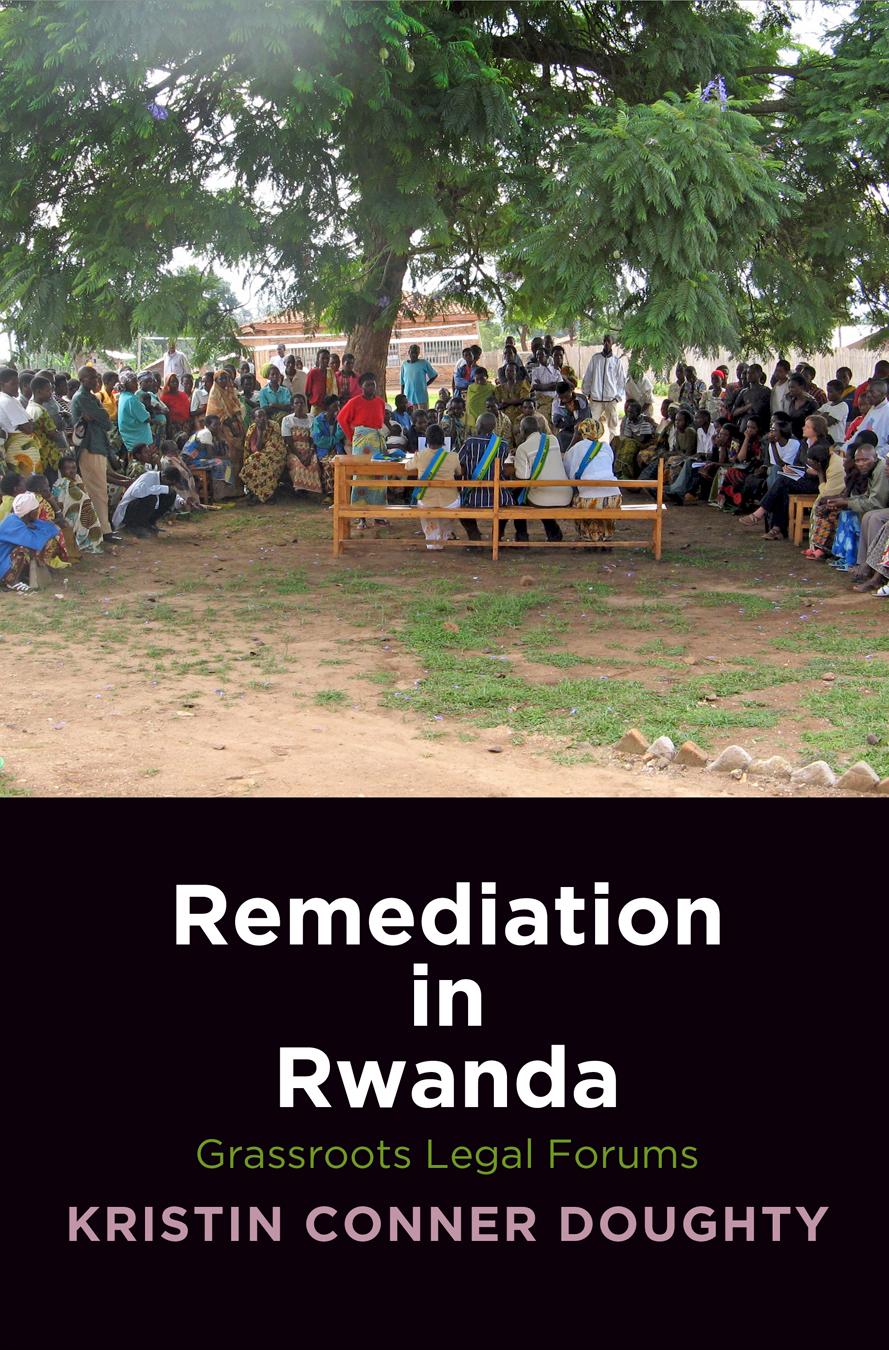
Kristin Conner Doughty examines how Rwandans navigated the combination of harmony and punishment in grassroots courts purportedly designed to rebuild the social fabric in the wake of the 1994 genocide. Postgenocide Rwandan officials developed new local courts ostensibly modeled on traditional practices of dispute resolution as part of a broader national policy of unity and reconciliation. The three legal forums at the heart of Remediation in Rwanda—genocide courts called inkiko gacaca, mediation committees called comite y'abunzi, and a legal aid clinic—all emphasized mediation based on principles of compromise and unity, brokered by third parties with the authority to administer punishment. Doughty demonstrates how exhortations to unity in legal forums served as a form of cultural control, even as people rebuilt moral community and conceived alternative futures through debates there. Investigating a broad range of disputes, she connects the grave disputes about genocide to the ordinary frictions people endured living in its aftermath.
Remediation in Rwanda is therefore about not only national reconstruction but also a broader narrative of how the embrace of law, particularly in postconflict contexts, influences people's lives. Though law-based mediation is framed as benign—and is often justified as a purer form of culturally rooted dispute resolution, both by national governments such as Rwanda's, and in the transitional justice movement more broadly—its implementation, as Doughty reveals, involves coercion and accompanying resistance. Yet in grassroots legal forums that are deeply contextualized, law-based mediation can open up spaces in which people negotiate the micropolitics of reconciliation.
Pay easily by card, Klarna, Apple Pay or Google Pay. Not happy? You always have a 14-day money-back guarantee. Read more in our terms. If you have any questions, email us at hello@memmo.org.
Memmo makes studying easier – wherever you are in the world. We bring your course books and smart study tools together in one place: summaries, quizzes, podcasts and flashcards. Plus Ted, your study buddy who answers anything you wonder. Over 50,000 students already study here – built to help you learn faster and stress less.