
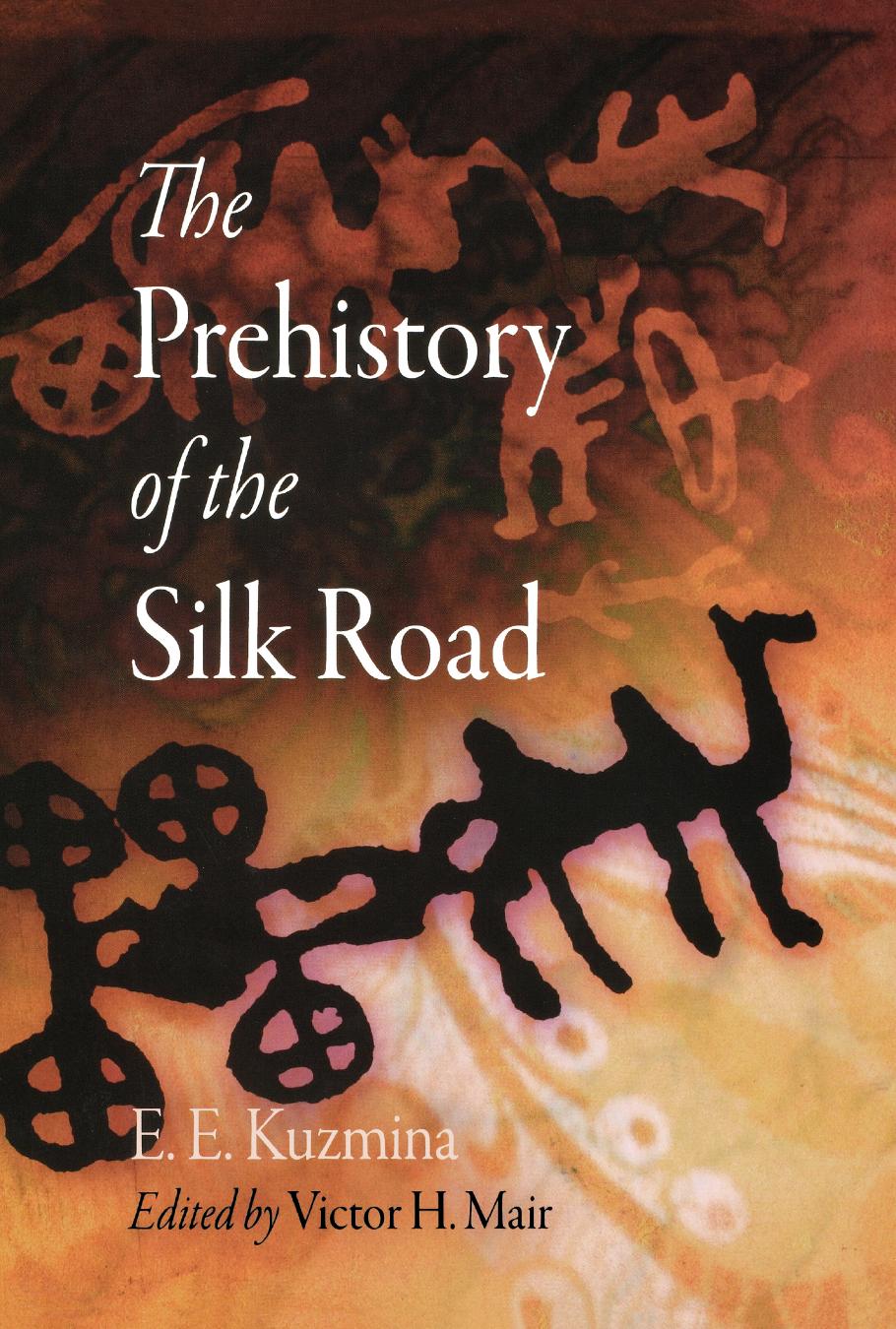
In ancient and medieval times, the Silk Road was of great importance to the transport of peoples, goods, and ideas between the East and the West. A vast network of trade routes, it connected the diverse geographies and populations of China, the Eurasian Steppe, Central Asia, India, Western Asia, and Europe. Although its main use was for importing silk from China, traders moving in the opposite direction carried to China jewelry, glassware, and other exotic goods from the Mediterranean, jade from Khotan, and horses and furs from the nomads of the Steppe. In both directions, technology and ideologies were transmitted. The Silk Road brought together the achievements of the different peoples of Eurasia to advance the Old World as a whole.
The majority of the Silk Road routes passed through the Eurasian Steppe, whose nomadic people were participants and mediators in its economic and cultural exchanges. Until now, the origins of these routes and relationships have not been examined in great detail. In The Prehistory of the Silk Road, E. E. Kuzmina, renowned Russian archaeologist, looks at the history of this crucial area before the formal establishment of Silk Road trade and diplomacy. From the late Neolithic period to the early Bronze Age, Kuzmina traces the evolution of the material culture of the Steppe and the contact between civilizations that proved critical to the development of the widespread trade that would follow, including nomadic migrations, the domestication and use of the horse and the camel, and the spread of wheeled transport.
The Prehistory of the Silk Road combines detailed research in archaeology with evidence from physical anthropology, linguistics, and other fields, incorporating both primary and secondary sources from a range of languages, including a vast accumulation of Russian-language scholarship largely untapped in the West. The book is complemented by an extensive bibliography that will be of great use to scholars.
Pay easily by card, Klarna, Apple Pay or Google Pay. Not happy? You always have a 14-day money-back guarantee. Read more in our terms. If you have any questions, email us at hello@memmo.org.
Memmo makes studying easier – wherever you are in the world. We bring your course books and smart study tools together in one place: summaries, quizzes, podcasts and flashcards. Plus Ted, your study buddy who answers anything you wonder. Over 75,000 students already study here – built to help you learn faster and stress less.