
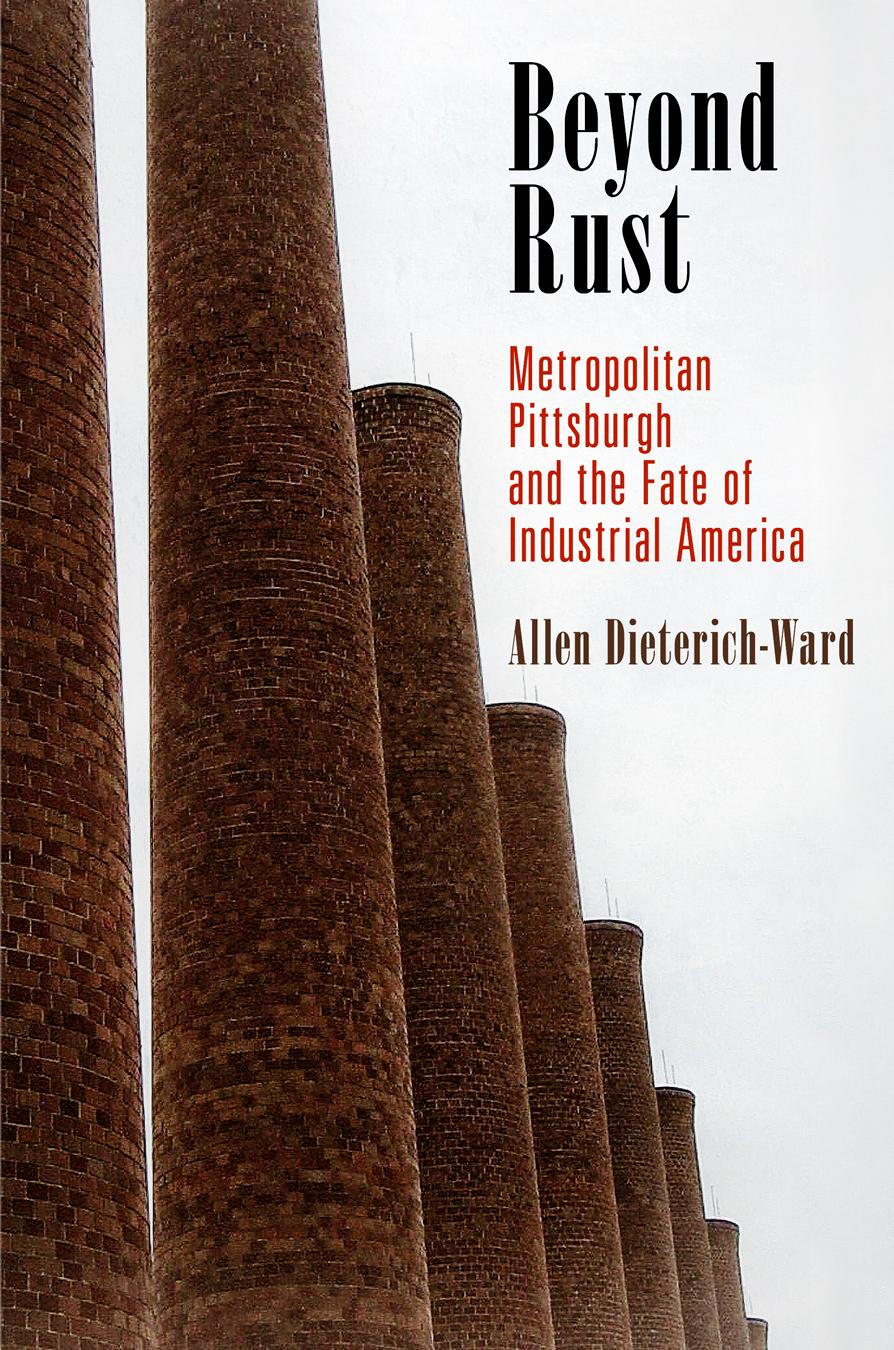
Beyond Rust chronicles the rise, fall, and rebirth of metropolitan Pittsburgh, an industrial region that once formed the heart of the world's steel production and is now touted as a model for reviving other hard-hit cities of the Rust Belt. Writing in clear and engaging prose, historian and area native Allen Dieterich-Ward provides a new model for a truly metropolitan history that integrates the urban core with its regional hinterland of satellite cities, white-collar suburbs, mill towns, and rural mining areas.
Pittsburgh reached its industrial heyday between 1880 and 1920, as vertically integrated industrial corporations forged a regional community in the mountainous Upper Ohio River Valley. Over subsequent decades, metropolitan population growth slowed as mining and manufacturing employment declined. Faced with economic and environmental disaster in the 1930s, Pittsburgh's business elite and political leaders developed an ambitious program of pollution control and infrastructure development. The public-private partnership behind the "Pittsburgh Renaissance," as advocates called it, pursued nothing less than the selective erasure of the existing social and physical environment in favor of a modernist, functionally divided landscape: a goal that was widely copied by other aging cities and one that has important ramifications for the broader national story. Ultimately, the Renaissance vision of downtown skyscrapers, sleek suburban research campuses, and bucolic regional parks resulted in an uneven transformation that tore the urban fabric while leaving deindustrializing river valleys and impoverished coal towns isolated from areas of postwar growth.
Beyond Rust is among the first books of its kind to continue past the collapse of American manufacturing in the 1980s by exploring the diverse ways residents of an iconic industrial region sought places for themselves within a new economic order.
Pay easily by card, Klarna, Apple Pay or Google Pay. Not happy? You always have a 14-day money-back guarantee. Read more in our terms. If you have any questions, email us at hello@memmo.org.
Memmo makes studying easier – wherever you are in the world. We bring your course books and smart study tools together in one place: summaries, quizzes, podcasts and flashcards. Plus Ted, your study buddy who answers anything you wonder. Over 50,000 students already study here – built to help you learn faster and stress less.