
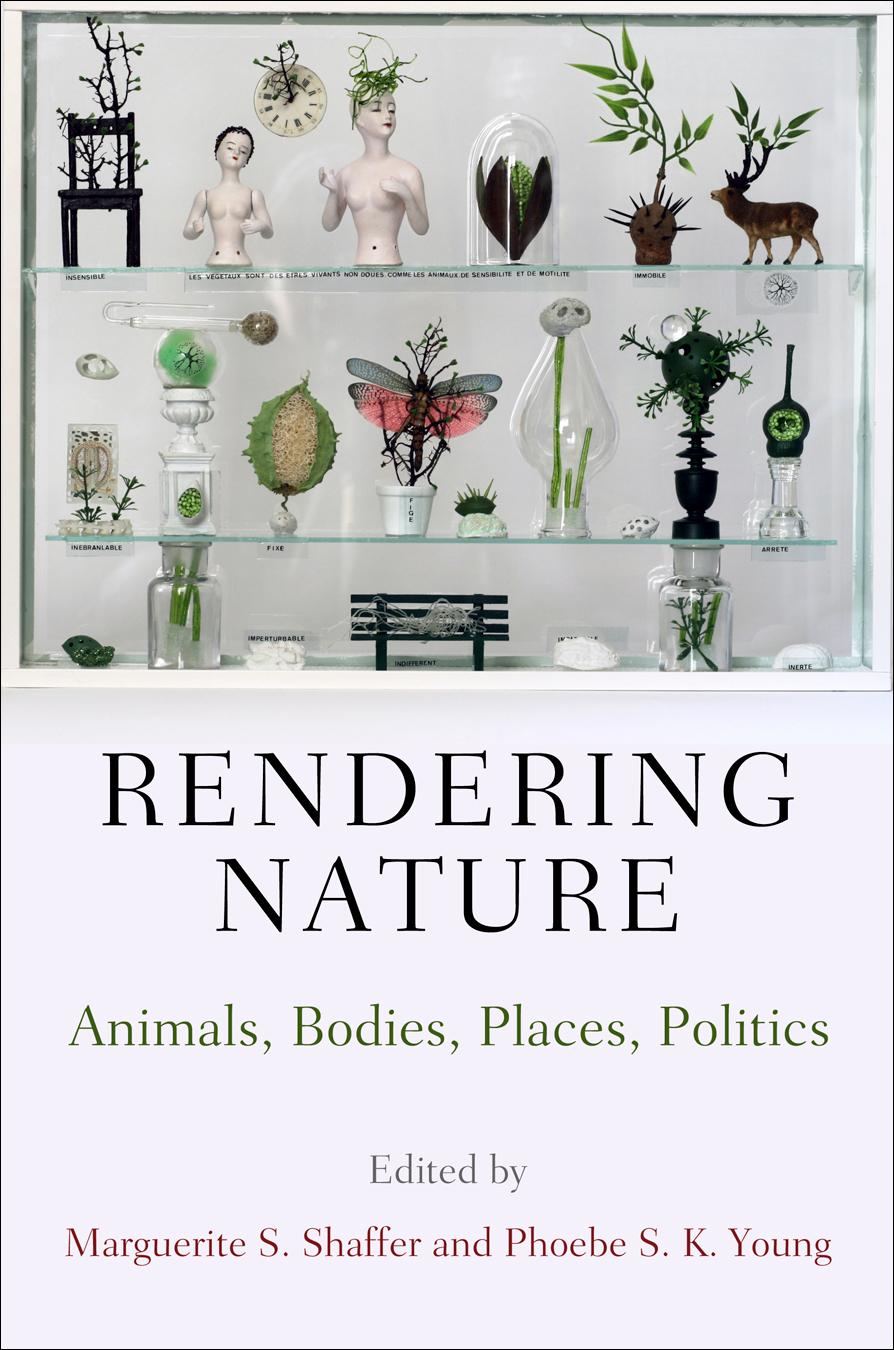
We exist at a moment during which the entangled challenges facing the human and natural worlds confront us at every turn, whether at the most basic level of survival—health, sustenance, shelter—or in relation to our comfort-driven desires. As demand for resources both necessary and unnecessary increases, understanding how nature and culture are interconnected matters more than ever.
Bridging the fields of environmental history and American studies, Rendering Nature examines the surprising interconnections between nature and culture in distinct places, times, and contexts over the course of American history. Divided into four themes—animals, bodies, places, and politics—the essays span a diverse array of locations and periods: from antebellum slave society to atomic testing sites, from gorillas in Central Africa to river runners in the Grand Canyon, from white sun-tanning enthusiasts to Japanese American incarcerees, from taxidermists at the 1893 World's Fair to tents on Wall Street in 2011. Together they offer new perspectives and conceptual tools that can help us better understand the historical realities and current paradoxes of our environmental predicament.
Contributors: Thomas G. Andrews, Connie Y. Chiang, Catherine Cocks, Annie Gilbert Coleman, Finis Dunaway, John Herron, Andrew Kirk, Frieda Knobloch, Susan A. Miller, Brett Mizelle, Marguerite S. Shaffer, Phoebe S. K. Young.
Pay easily by card, Klarna, Apple Pay or Google Pay. Not happy? You always have a 14-day money-back guarantee. Read more in our terms. If you have any questions, email us at hello@memmo.org.
Memmo makes studying easier – wherever you are in the world. We bring your course books and smart study tools together in one place: summaries, quizzes, podcasts and flashcards. Plus Ted, your study buddy who answers anything you wonder. Over 50,000 students already study here – built to help you learn faster and stress less.