
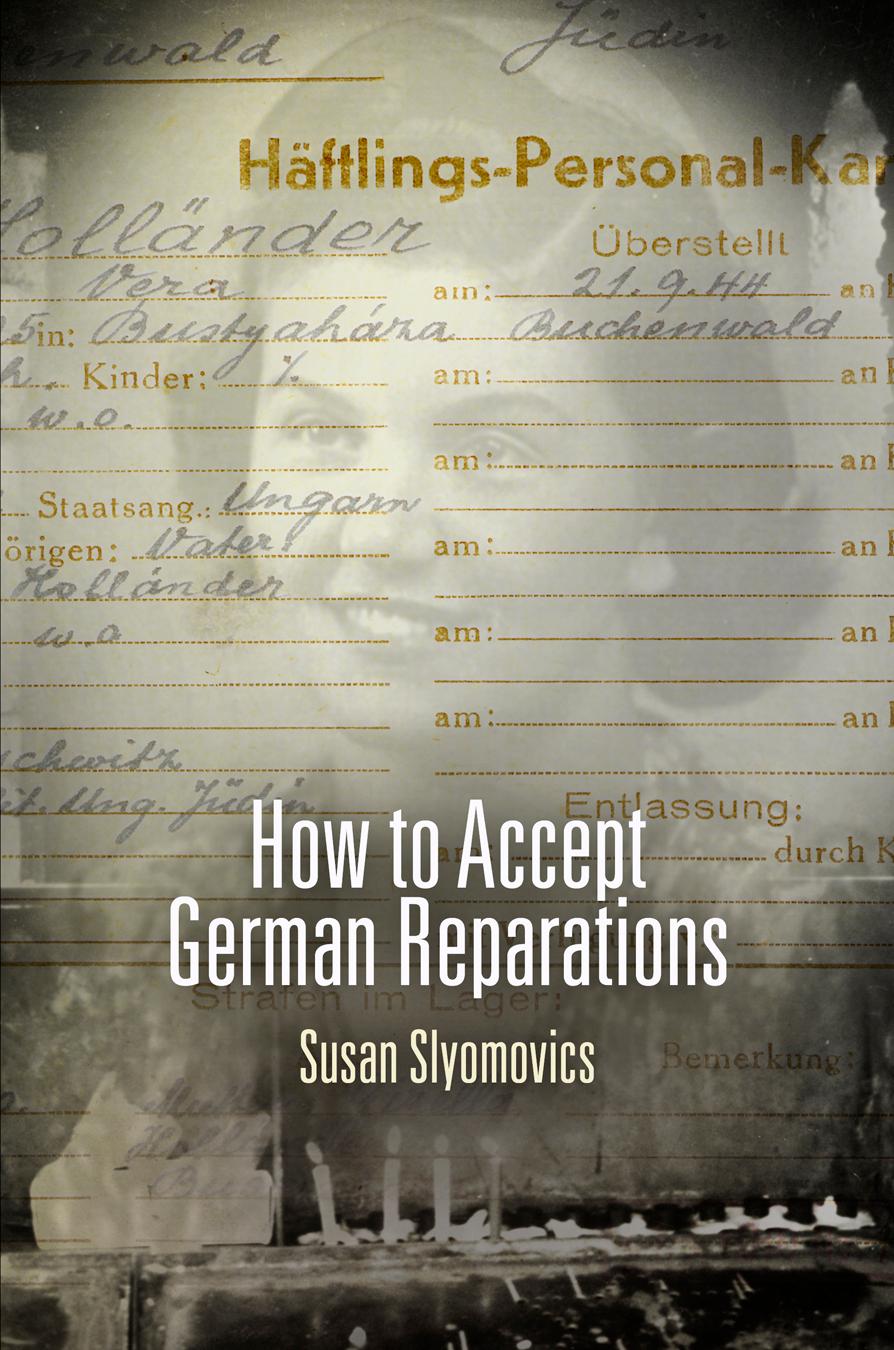
In a landmark process that transformed global reparations after the Holocaust, Germany created the largest sustained redress program in history, amounting to more than $60 billion. When human rights violations are presented primarily in material terms, acknowledging an indemnity claim becomes one way for a victim to be recognized. At the same time, indemnifications provoke a number of difficult questions about how suffering and loss can be measured: How much is an individual life worth? How much or what kind of violence merits compensation? What is "financial pain," and what does it mean to monetize "concentration camp survivor syndrome"?
Susan Slyomovics explores this and other compensation programs, both those past and those that might exist in the future, through the lens of anthropological and human rights discourse. How to account for variation in German reparations and French restitution directed solely at Algerian Jewry for Vichy-era losses? Do crimes of colonialism merit reparations? How might reparations models apply to the modern-day conflict in Israel and Palestine? The author points to the examples of her grandmother and mother, Czechoslovakian Jews who survived the Auschwitz, Plaszow, and Markkleeberg camps together but disagreed about applying for the post-World War II Wiedergutmachung ("to make good again") reparation programs. Slyomovics maintains that we can use the legacies of German reparations to reconsider approaches to reparations in the future, and the result is an investigation of practical implications, complicated by the difficult legal, ethnographic, and personal questions that reparations inevitably prompt.
Pay easily by card, Klarna, Apple Pay or Google Pay. Not happy? You always have a 14-day money-back guarantee. Read more in our terms. If you have any questions, email us at hello@memmo.org.
Memmo makes studying easier – wherever you are in the world. We bring your course books and smart study tools together in one place: summaries, quizzes, podcasts and flashcards. Plus Ted, your study buddy who answers anything you wonder. Over 50,000 students already study here – built to help you learn faster and stress less.