
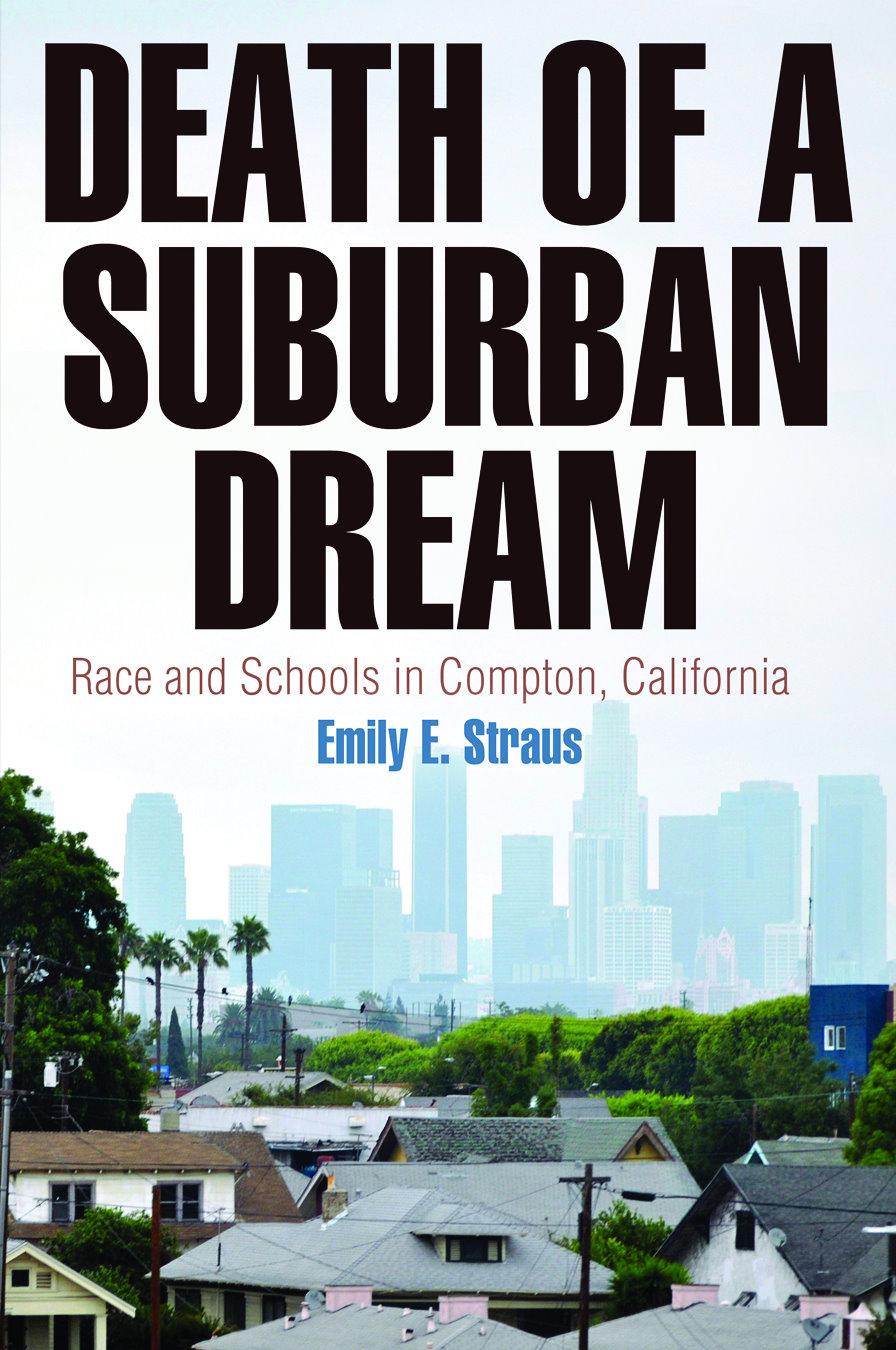
Compton, California, is often associated in the public mind with urban America's toughest problems, including economic disinvestment, gang violence, and failing public schools. Before it became synonymous with inner-city decay, however, Compton's affordability, proximity to manufacturing jobs, and location ten miles outside downtown Los Angeles made it attractive to aspiring suburbanites seeking single-family homes and quality schools. As Compton faced challenges in the twentieth century, and as the majority population shifted from white to African American and then to Latino, the battle for control over the school district became symbolic of Compton's economic, social, and political crises.
Death of a Suburban Dream explores the history of Compton from its founding in the late nineteenth century to the present, taking on three critical issues—the history of race and educational equity, the relationship between schools and place, and the complicated intersection of schooling and municipal economies—as they shaped a Los Angeles suburb experiencing economic and demographic transformation. Emily E. Straus carefully traces the roots of antagonism between two historically disenfranchised populations, blacks and Latinos, as these groups resisted municipal power sharing within a context of scarcity. Using archival research and oral histories, this complex narrative reveals how increasingly racialized poverty and violence made Compton, like other inner-ring suburbs, resemble a troubled urban center. Ultimately, the book argues that Compton's school crisis is not, at heart, a crisis of education; it is a long-term crisis of development.
Avoiding simplistic dichotomies between urban and suburban, Death of a Suburban Dream broadens our understanding of the dynamics connecting residents and institutions of the suburbs, as well as the changing ethnic and political landscape in metropolitan America.
Pay easily by card, Klarna, Apple Pay or Google Pay. Not happy? You always have a 14-day money-back guarantee. Read more in our terms. If you have any questions, email us at hello@memmo.org.
Memmo makes studying easier – wherever you are in the world. We bring your course books and smart study tools together in one place: summaries, quizzes, podcasts and flashcards. Plus Ted, your study buddy who answers anything you wonder. Over 50,000 students already study here – built to help you learn faster and stress less.