
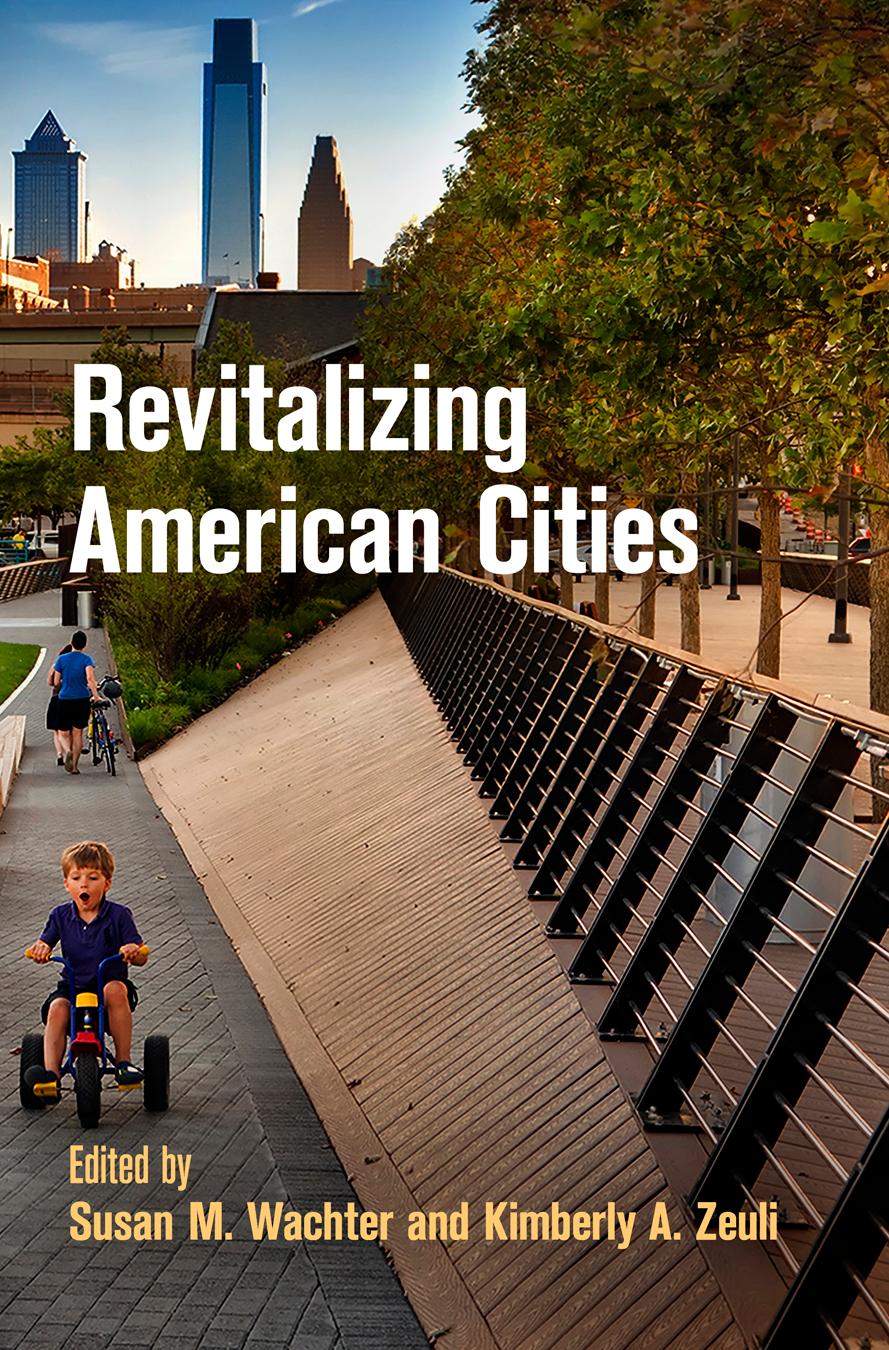
Small and midsized cities played a key role in the Industrial Revolution in the United States as hubs for the shipping, warehousing, and distribution of manufactured products. But as the twentieth century brought cheaper transportation and faster communication, these cities were hit hard by population losses and economic decline. In the twenty-first century, many former industrial hubs—from Springfield to Wichita, from Providence to Columbus—are finding pathways to reinvention. With innovative urban policies and design, once-declining cities are becoming the unlikely pioneers of postindustrial urban revitalization.
Revitalizing American Cities explores the historical, regional, and political factors that have allowed some industrial cities to regain their footing in a changing economy. The volume discusses national patterns and drivers of growth and decline, presents case studies and comparative analyses of decline and renewal, considers approaches to the problems that accompany the vacant land and blight common to many of the country's declining cities, and examines tactics that cities can use to prosper in a changing economy. Featuring contributions from scholars and experts of urban planning, economic development, public policy, and education, Revitalizing American Cities provides a detailed, illuminating look at past and possible reinventions of resilient American cities.
Contributors: Frank S. Alexander, Eugenie L. Birch, Paul C. Brophy, Steven Cochrane, Gilles Duranton, Sean Ellis, Kyle Fee, Edward Glaeser, Daniel Hartley, Yolanda K. Kodrzycki, Sophia Koropeckyj, Alan Mallach, Ana Patricia Muñoz, Jeremy Nowak, Laura W. Perna, Aaron Smith, Catherine Tumber, Susan M. Wachter, Kimberly A. Zeuli.
Pay easily by card, Klarna, Apple Pay or Google Pay. Not happy? You always have a 14-day money-back guarantee. Read more in our terms. If you have any questions, email us at hello@memmo.org.
Memmo makes studying easier – wherever you are in the world. We bring your course books and smart study tools together in one place: summaries, quizzes, podcasts and flashcards. Plus Ted, your study buddy who answers anything you wonder. Over 50,000 students already study here – built to help you learn faster and stress less.