
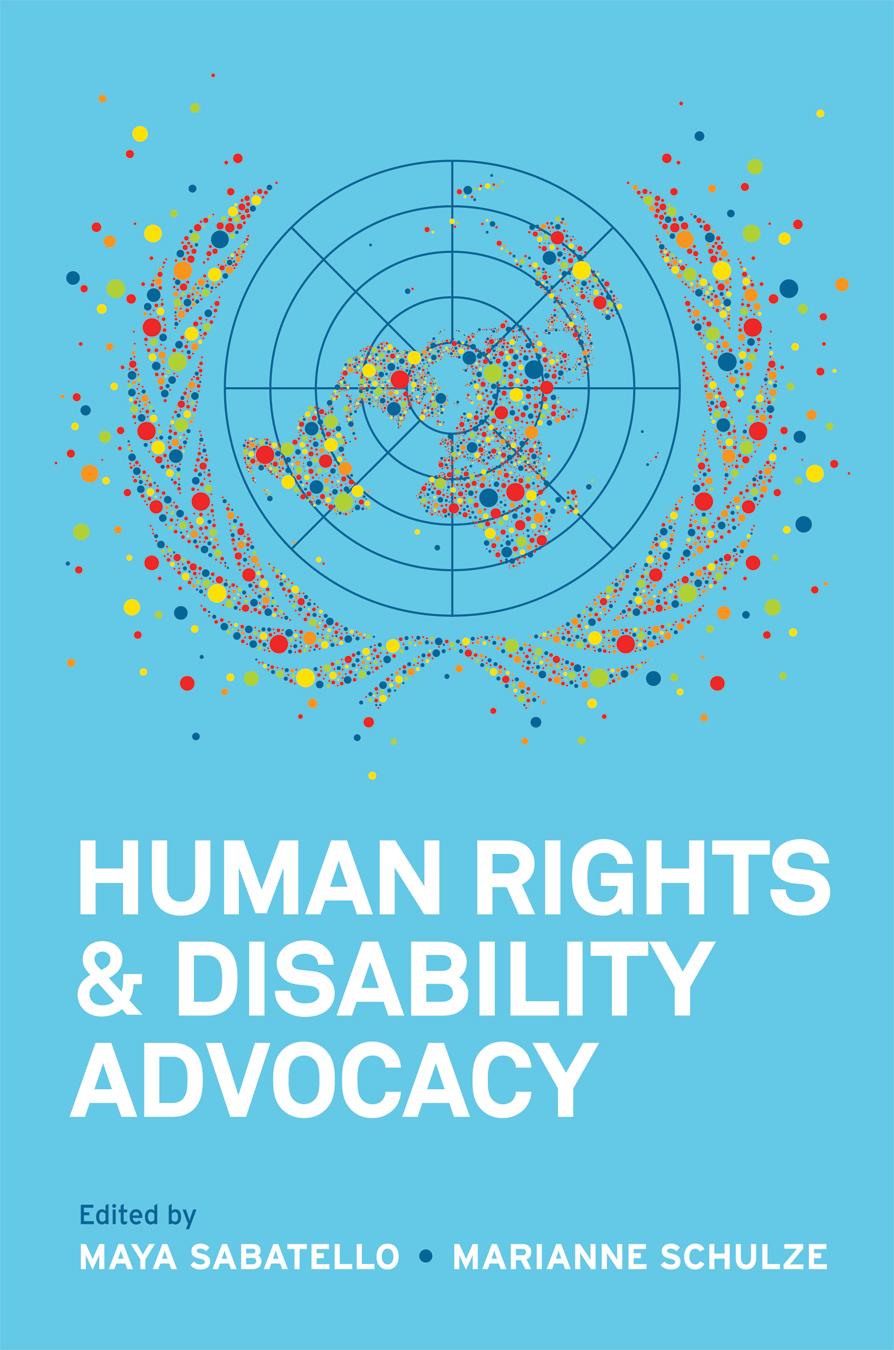
The United Nations adoption of the Convention on the Rights of Persons with Disabilities (CRPD) constituted a paradigm shift in attitudes and approaches to disability rights, marking the first time in law-making history that persons with disabilities participated as civil society representatives and contributed to the drafting of an international treaty. On the way, they brought a new kind of diplomacy forward: empowering nongovernmental stakeholders, including persons with disabilities, within human rights discourse. This landmark treaty provides an opportunity to consider what it means to involve members of a global civil society in UN-level negotiations.
Human Rights and Disability Advocacy brings together perspectives from individual representatives of the Disabled People's Organizations (DPOs), nongovernmental organizations (NGOs), indigenous peoples' organizations, states, and national institutions that played leading roles in the Convention's drafting process. The contributors provide vivid and personal accounts of the paths to victory, including stumbling blocks—not all of which were overcome—and offer a unique look into the politics of civil society organizations both from within and in its interaction with governments. Each essay describes the nonnegotiable key issues for which they advocated; the extent of success in reaching their goals; and insights into the limitations they faced. Through the plurality of voices and insider perspectives, Human Rights and Disability Advocacy presents fresh perspectives on the shift toward a new diplomacy and explores the implication of this model for human rights advocacy more generally.
Contributors: Andrew Byrnes, Heidi Forrest, Phillip French, Lex Grandia, Huhana Hickey, Markku Jokinen, Liisa Kauppinen, Mi Yeon Kim, Gerison Lansdown, Connie Laurin-Bowie, Tirza Leibowitz, Don MacKay, Anna MacQuarrie, Ronald C. McCallum AO, Tara J. Melish, Pamela Molina Toledo, Maya Sabatello, Marianne Schulze, Belinda Shaw.
Pay easily by card, Klarna, Apple Pay or Google Pay. Not happy? You always have a 14-day money-back guarantee. Read more in our terms. If you have any questions, email us at hello@memmo.org.
Memmo makes studying easier – wherever you are in the world. We bring your course books and smart study tools together in one place: summaries, quizzes, podcasts and flashcards. Plus Ted, your study buddy who answers anything you wonder. Over 50,000 students already study here – built to help you learn faster and stress less.