
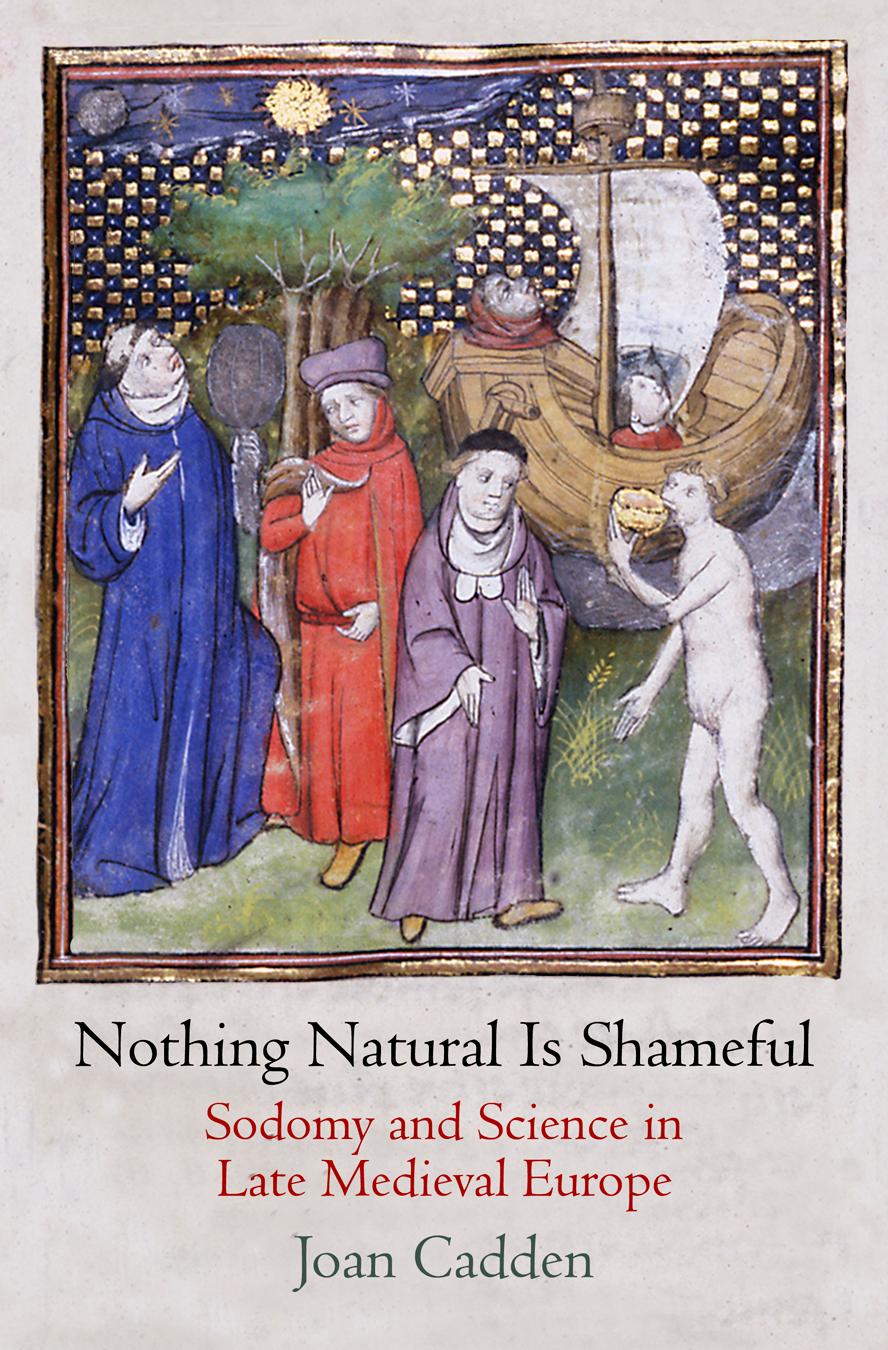
In his Problemata, Aristotle provided medieval thinkers with the occasion to inquire into the natural causes of the sexual desires of men to act upon or be acted upon by other men, thus bringing human sexuality into the purview of natural philosophers, whose aim it was to explain the causes of objects and events in nature. With this philosophical justification, some late medieval intellectuals asked whether such dispositions might arise from anatomy or from the psychological processes of habit formation. As the fourteenth-century philosopher Walter Burley observed, "Nothing natural is shameful." The authors, scribes, and readers willing to "contemplate base things" never argued that they were not vile, but most did share the conviction that they could be explained.
From the evidence that has survived in manuscripts of and related to the Problemata, two narratives emerge: a chronicle of the earnest attempts of medieval medical theorists and natural philosophers to understand the cause of homosexual desires and pleasures in terms of natural processes, and an ongoing debate as to whether the sciences were equipped or permitted to deal with such subjects at all. Mining hundreds of texts and deciphering commentaries, indices, abbreviations, and marginalia, Joan Cadden shows how European scholars deployed a standard set of philosophical tools and a variety of rhetorical strategies to produce scientific approaches to sodomy.
Pay easily by card, Klarna, Apple Pay or Google Pay. Not happy? You always have a 14-day money-back guarantee. Read more in our terms. If you have any questions, email us at hello@memmo.org.
Memmo makes studying easier – wherever you are in the world. We bring your course books and smart study tools together in one place: summaries, quizzes, podcasts and flashcards. Plus Ted, your study buddy who answers anything you wonder. Over 50,000 students already study here – built to help you learn faster and stress less.