
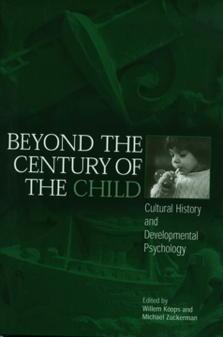
In 1900, Ellen Key wrote the international bestseller The Century of the Child. In this enormously influential book, she proposed that the world's children should be the central work of society during the twentieth century. Although she never thought that her "century of the child" would become a reality, in fact it had much more resonance than she could have imagined.
The idea of the child as a product of a protective and coddling society has given rise to major theories and arguments since Key's time. For the past half century, the study of the child has been dominated by two towering figures, the psychologist Jean Piaget and the historian Philippe Ariès. Interest in the subject has been driven in large measure by Ariès's argument that adults failed even to have a concept of childhood before the thirteenth century, and that from the thirteenth century to the seventeenth there was an increasing "childishness" in the representations of children and an increasing separation between the adult world and that of the child. Piaget proposed that children's logic and modes of thinking are entirely different from those of adults. In the twentieth century this distance between the spheres of children and adults made possible the distinctive study of child development and also specific legislation to protect children from exploitation, abuse, and neglect. Recent students of childhood have challenged the ideas those titans promoted; they ask whether the distancing process has gone too far and has begun to reverse itself.
In a series of essays, Beyond the Century of the Child considers the history of childhood from the Middle Ages to modern times, from America and Europe to China and Japan, bringing together leading psychologists and historians to question whether we unnecessarily infantilized children and unwittingly created a detrimental wall between the worlds of children and adults. Together these scholars address the question whether, a hundred years after Ellen Key wrote her international sensation, the century of the child has in fact come to an end.
Pay easily by card, Klarna, Apple Pay or Google Pay. Not happy? You always have a 14-day money-back guarantee. Read more in our terms. If you have any questions, email us at hello@memmo.org.
Memmo makes studying easier – wherever you are in the world. We bring your course books and smart study tools together in one place: summaries, quizzes, podcasts and flashcards. Plus Ted, your study buddy who answers anything you wonder. Over 50,000 students already study here – built to help you learn faster and stress less.