
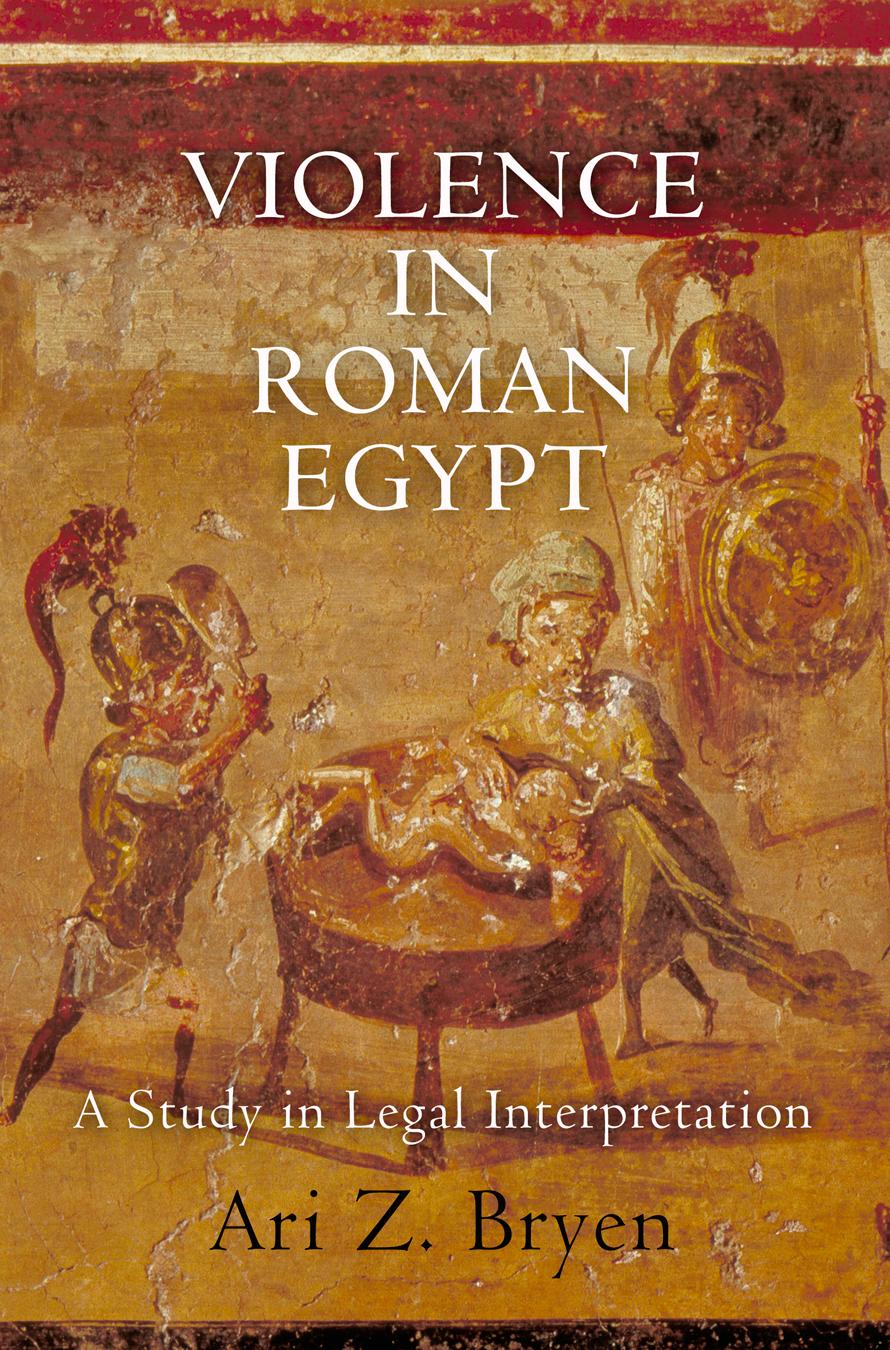
What can we learn about the world of an ancient empire from the ways that people complain when they feel that they have been violated? What role did law play in people's lives? And what did they expect their government to do for them when they felt harmed and helpless?
If ancient historians have frequently written about nonelite people as if they were undifferentiated and interchangeable, Ari Z. Bryen counters by drawing on one of our few sources of personal narratives from the Roman world: over a hundred papyrus petitions, submitted to local and imperial officials, in which individuals from the Egyptian countryside sought redress for acts of violence committed against them. By assembling these long-neglected materials (also translated as an appendix to the book) and putting them in conversation with contemporary perspectives from legal anthropology and social theory, Bryen shows how legal stories were used to work out relations of deference within local communities.
Rather than a simple force of imperial power, an open legal system allowed petitioners to define their relationships with their local adversaries while contributing to the body of rules and expectations by which they would live in the future. In so doing, these Egyptian petitioners contributed to the creation of Roman imperial order more generally.
Pay easily by card, Klarna, Apple Pay or Google Pay. Not happy? You always have a 14-day money-back guarantee. Read more in our terms. If you have any questions, email us at hello@memmo.org.
Memmo makes studying easier – wherever you are in the world. We bring your course books and smart study tools together in one place: summaries, quizzes, podcasts and flashcards. Plus Ted, your study buddy who answers anything you wonder. Over 75,000 students already study here – built to help you learn faster and stress less.