
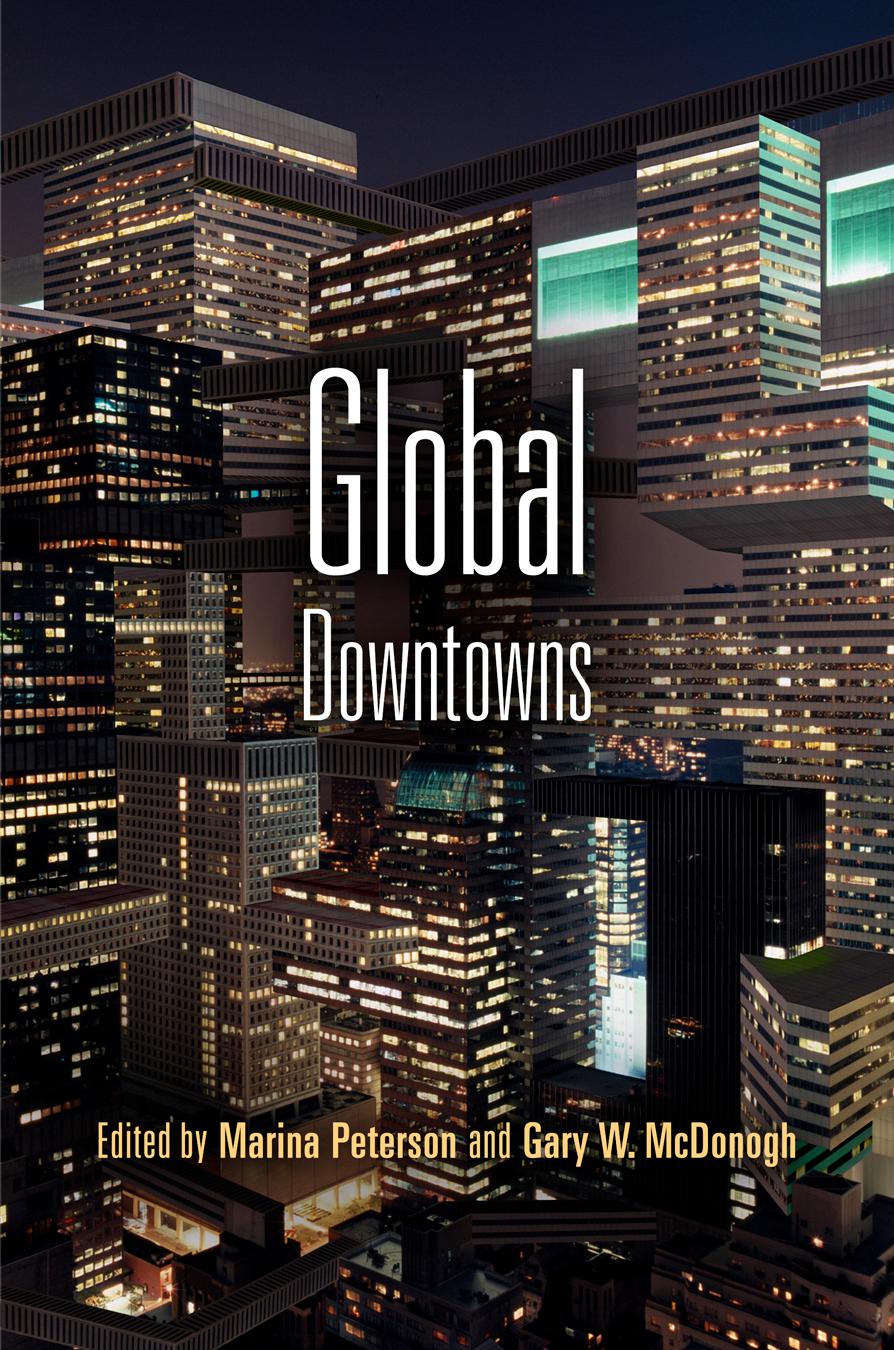
Global Downtowns reconsiders one of the defining features of urban life—the energy and exuberance that characterize downtown areas—within a framework of contemporary globalization and change. It analyzes the iconic centers of global cities through individual case studies from Europe, Asia, Africa, Latin America, and the United States, considering issues of function, population, imagery, and growth. Contributors to the volume use ethnographic and cultural analysis to identify downtowns as products of the activities of planners, power elites, and consumers and as zones of conflict and competition. Whether claiming space on a world stage through architecture, media events, or historical tourism or facing the claims of different social groups for a place at the center, downtowns embody the heritage of the modern city and its future.
Essays draw on extensive fieldwork and archival study in Beijing, Barcelona, New York, Los Angeles, Chicago, Dar es Salaam, Dubai, Nashville, Lima, Philadelphia, Mumbai, Havana, Beirut, and Paris, among other cities. They examine the visions of planners and developers, cultural producers, governments, theoreticians, immigrants, and outcasts. Through these perspectives, the book explores questions of space and place, consumption, mediation, and images as well as the processes by which urban elites learn from each other as well as contest local hegemony.
Global Downtowns raises important questions for those who work with issues of urban centrality in governance, planning, investment, preservation, and social reform. The volume insists that however important the narratives of individual spaces—theories of American downtowns, images of global souks, or diasporic formations of ethnic enclaves as interconnected nodes—they also must be situated within a larger, dynamic framework of downtowns as centers of modern urban imagination.
Pay easily by card, Klarna, Apple Pay or Google Pay. Not happy? You always have a 14-day money-back guarantee. Read more in our terms. If you have any questions, email us at hello@memmo.org.
Memmo makes studying easier – wherever you are in the world. We bring your course books and smart study tools together in one place: summaries, quizzes, podcasts and flashcards. Plus Ted, your study buddy who answers anything you wonder. Over 75,000 students already study here – built to help you learn faster and stress less.