
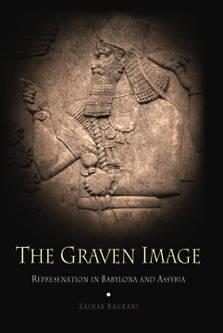
Mesopotamia, the world's earliest literate culture, developed a rich philosophical conception of representation in which the world was saturated with signs. Instead of imitating the natural world, representation—both in writing and in visual images—was thought to participate in the world and to have an effect upon it in natural, magical, and supernatural ways. The Graven Image is the first book to explore this tradition, which developed prior to, and apart from, the Greek understanding of representation.
The classical Greek system, based on the notion of mimesis, or copy, is the one with which we are most familiar today. The Assyro-Babylonian ontology presented here by Zainab Bahrani opens up fresh avenues for thinking about the concept of representation in general, and her reading of the ancient Mesopotamian textual and visual record in its own ontological context develops an entirely new approach to understanding Babylonian and Assyrian arts in particular.
The Graven Image describes, for the first time, rituals and wars involving images; the relationship of divination, the organic body, and representation; and the use of images as a substitute for the human form, integrating this ancient material into contemporary debates in critical theory. Bahrani challenges current methodologies in the study of Near Eastern archaeology and art history, introducing a new way to appreciate the unique contributions of Assyrian and Babylonian culture and their complex relationships to the past and present.
Pay easily by card, Klarna, Apple Pay or Google Pay. Not happy? You always have a 14-day money-back guarantee. Read more in our terms. If you have any questions, email us at hello@memmo.org.
Memmo makes studying easier – wherever you are in the world. We bring your course books and smart study tools together in one place: summaries, quizzes, podcasts and flashcards. Plus Ted, your study buddy who answers anything you wonder. Over 75,000 students already study here – built to help you learn faster and stress less.