
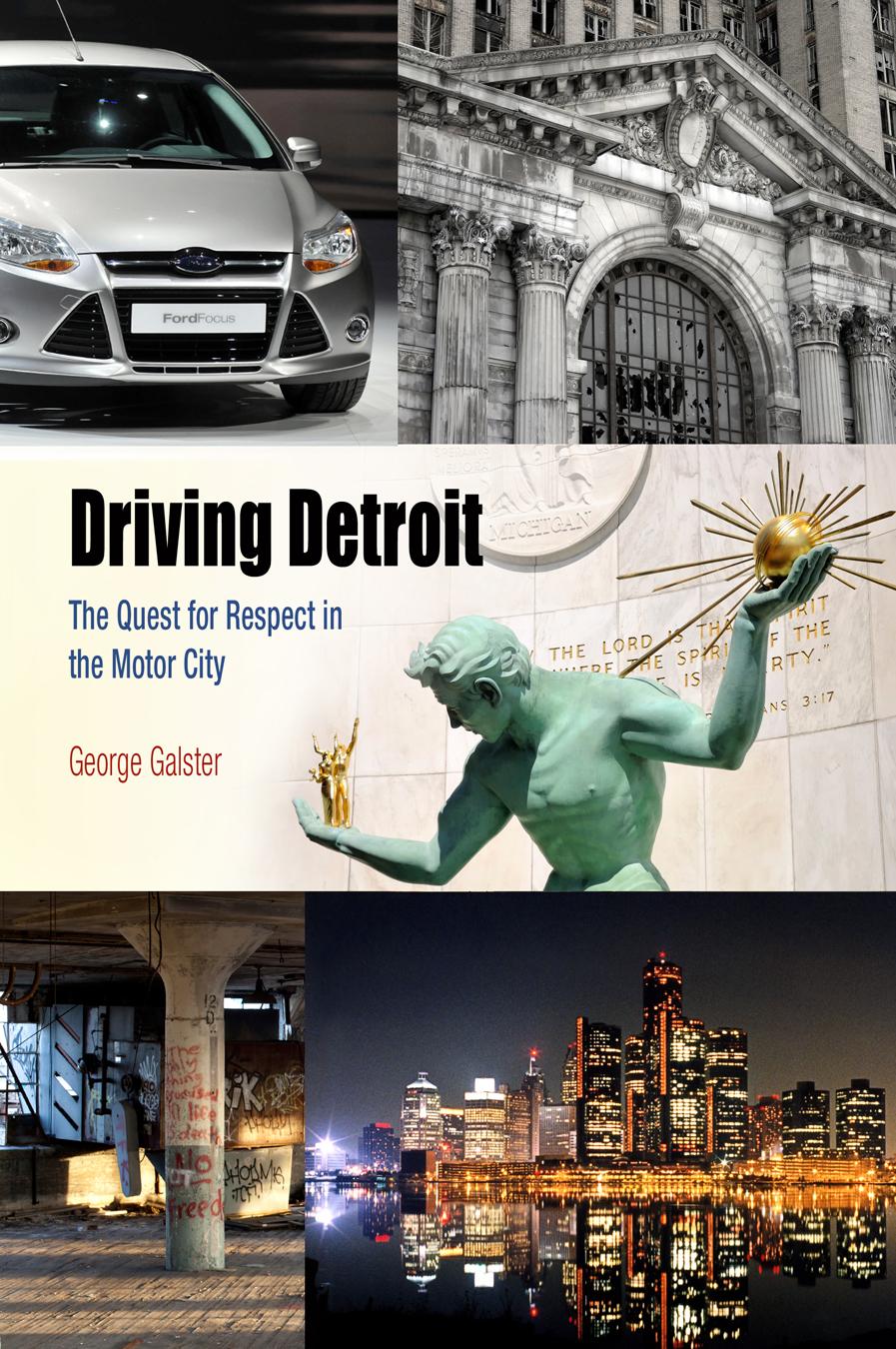
For most of the twentieth century, Detroit was a symbol of American industrial might, a place of entrepreneurial and technical ingenuity where the latest consumer inventions were made available to everyone through the genius of mass production. Today, Detroit is better known for its dwindling population, moribund automobile industry, and alarmingly high murder rate. In Driving Detroit, author George Galster, a fifth-generation Detroiter and internationally known urbanist, sets out to understand how the city has come to represent both the best and worst of what cities can be, all within the span of a half century. Galster invites the reader to travel with him along the streets and into the soul of this place to grasp fully what drives the Motor City.
With a scholar's rigor and a local's perspective, Galster uncovers why metropolitan Detroit's cultural, commercial, and built landscape has been so radically transformed. He shows how geography, local government structure, and social forces created a housing development system that produced sprawl at the fringe and abandonment at the core. Galster argues that this system, in tandem with the region's automotive economic base, has chronically frustrated the population's quest for basic physical, social, and psychological resources. These frustrations, in turn, generated numerous adaptations—distrust, scapegoating, identity politics, segregation, unionization, and jurisdictional fragmentation—that collectively leave Detroit in an uncompetitive and unsustainable position.
Partly a self-portrait, in which Detroiters paint their own stories through songs, poems, and oral histories, Driving Detroit offers an intimate, insightful, and perhaps controversial explanation for the stunning contrasts—poverty and plenty, decay and splendor, despair and resilience—that characterize the once mighty city.
Pay easily by card, Klarna, Apple Pay or Google Pay. Not happy? You always have a 14-day money-back guarantee. Read more in our terms. If you have any questions, email us at hello@memmo.org.
Memmo makes studying easier – wherever you are in the world. We bring your course books and smart study tools together in one place: summaries, quizzes, podcasts and flashcards. Plus Ted, your study buddy who answers anything you wonder. Over 75,000 students already study here – built to help you learn faster and stress less.