
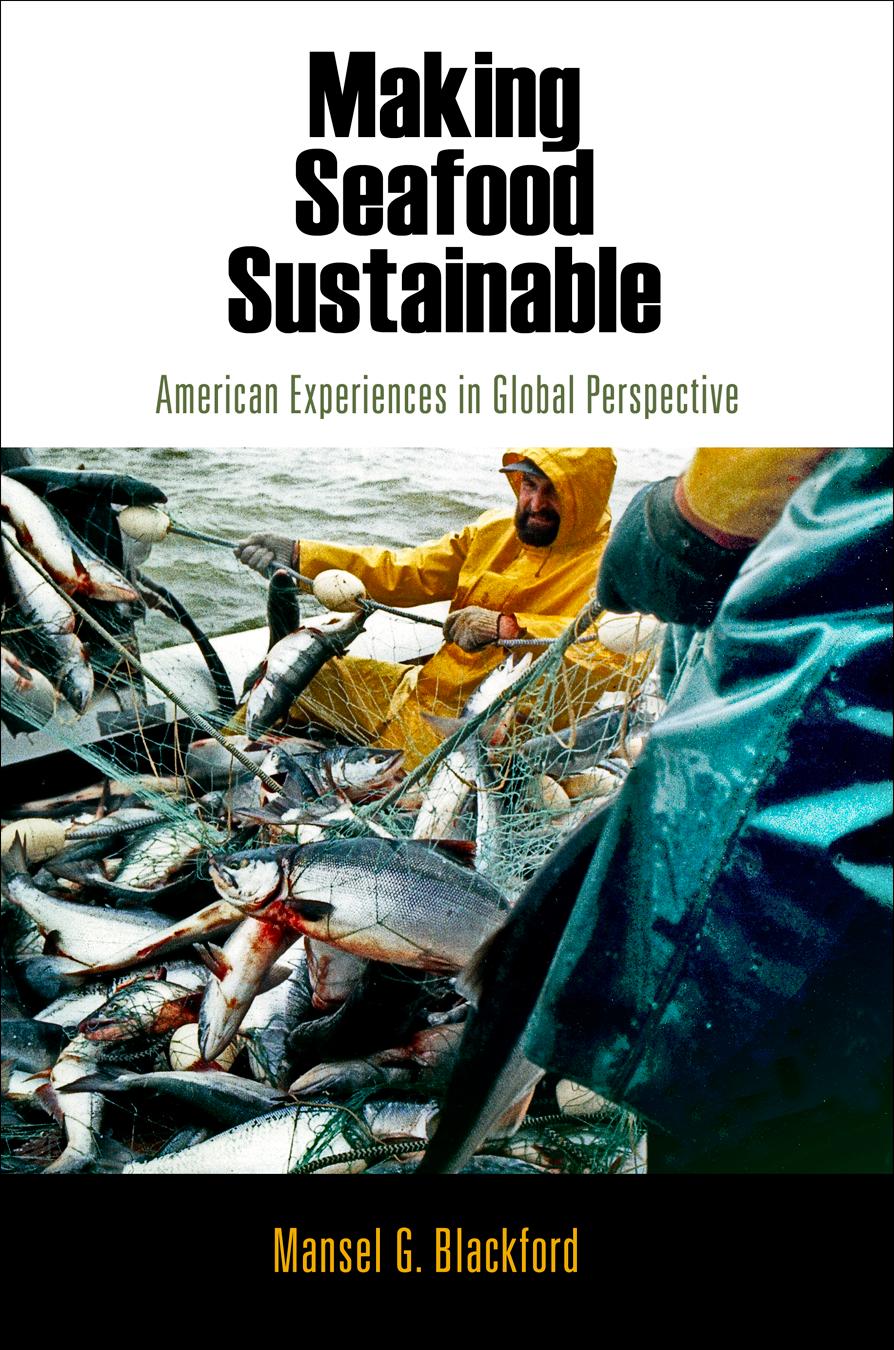
In the spring of 2007, National Geographic warned, "The oceans are in deep blue trouble. From the northernmost reaches of the Greenland Sea to the swirl of the Antarctic Circle, we are gutting our seas of fish." There were legitimate grounds for concern. After increasing more than fourfold between 1950 and 1994, the global wild fish catch reached a plateau and stagnated despite exponential growth in the fishing industry. As numerous scientific reports showed, many fish stocks around the world collapsed, creating a genuine global overfishing crisis.
Making Seafood Sustainable analyzes the ramifications of overfishing for the United States by investigating how fishers, seafood processors, retailers, government officials, and others have worked together to respond to the crisis. Historian Mansel G. Blackford examines how these players took steps to make fishing in some American waters, especially in Alaskan waters, sustainable. Critical to these efforts, Blackford argues, has been government and industry collaboration in formulating and enforcing regulations. What can be learned from these successful experiences? Are they applicable elsewhere? What are the drawbacks? Making Seafood Sustainable addresses these questions and suggests that sustainable seafood management can be made to work. The economic and social costs incurred in achieving sustainable resource usage are significant, but there are ways to mitigate them. More broadly, this study illustrates ways to manage commonly held natural resources around the world—land, water, oil, and so on—in sustainable ways.
Pay easily by card, Klarna, Apple Pay or Google Pay. Not happy? You always have a 14-day money-back guarantee. Read more in our terms. If you have any questions, email us at hello@memmo.org.
Memmo makes studying easier – wherever you are in the world. We bring your course books and smart study tools together in one place: summaries, quizzes, podcasts and flashcards. Plus Ted, your study buddy who answers anything you wonder. Over 50,000 students already study here – built to help you learn faster and stress less.