
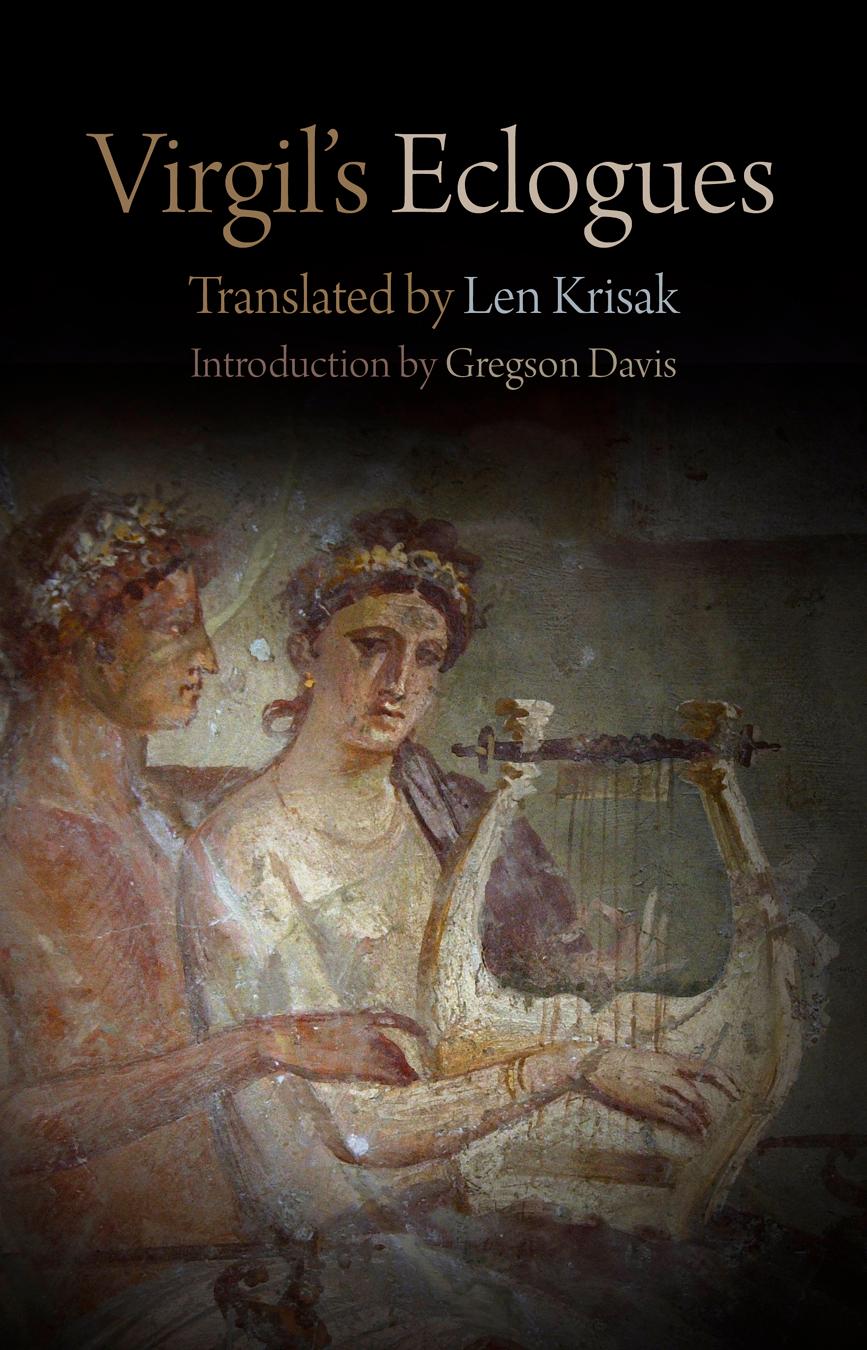
Publius Vergilius Maro (70-19 B.C.), known in English as Virgil, was perhaps the single greatest poet of the Roman empire—a friend to the emperor Augustus and the beneficiary of wealthy and powerful patrons. Most famous for his epic of the founding of Rome, the Aeneid, he wrote two other collections of poems: the Georgics and the Bucolics, or Eclogues.
The Eclogues were Virgil's first published poems. Ancient sources say that he spent three years composing and revising them at about the age of thirty. Though these poems begin a sequence that continues with the Georgics and culminates in the Aeneid, they are no less elegant in style or less profound in insight than the later, more extensive works. These intricate and highly polished variations on the idea of the pastoral poem, as practiced by earlier Greek poets, mix political, social, historical, artistic, and moral commentary in musical Latin that exerted a profound influence on subsequent Western poetry.
Poet Len Krisak's vibrant metric translation captures the music of Virgil's richly textured verse by employing rhyme and other sonic devices. The result is English poetry rather than translated prose. Presenting the English on facing pages with the original Latin, Virgil's Eclogues also features an introduction by scholar Gregson Davis that situates the poems in the time in which they were created.
Pay easily by card, Klarna, Apple Pay or Google Pay. Not happy? You always have a 14-day money-back guarantee. Read more in our terms. If you have any questions, email us at hello@memmo.org.
Memmo makes studying easier – wherever you are in the world. We bring your course books and smart study tools together in one place: summaries, quizzes, podcasts and flashcards. Plus Ted, your study buddy who answers anything you wonder. Over 50,000 students already study here – built to help you learn faster and stress less.