
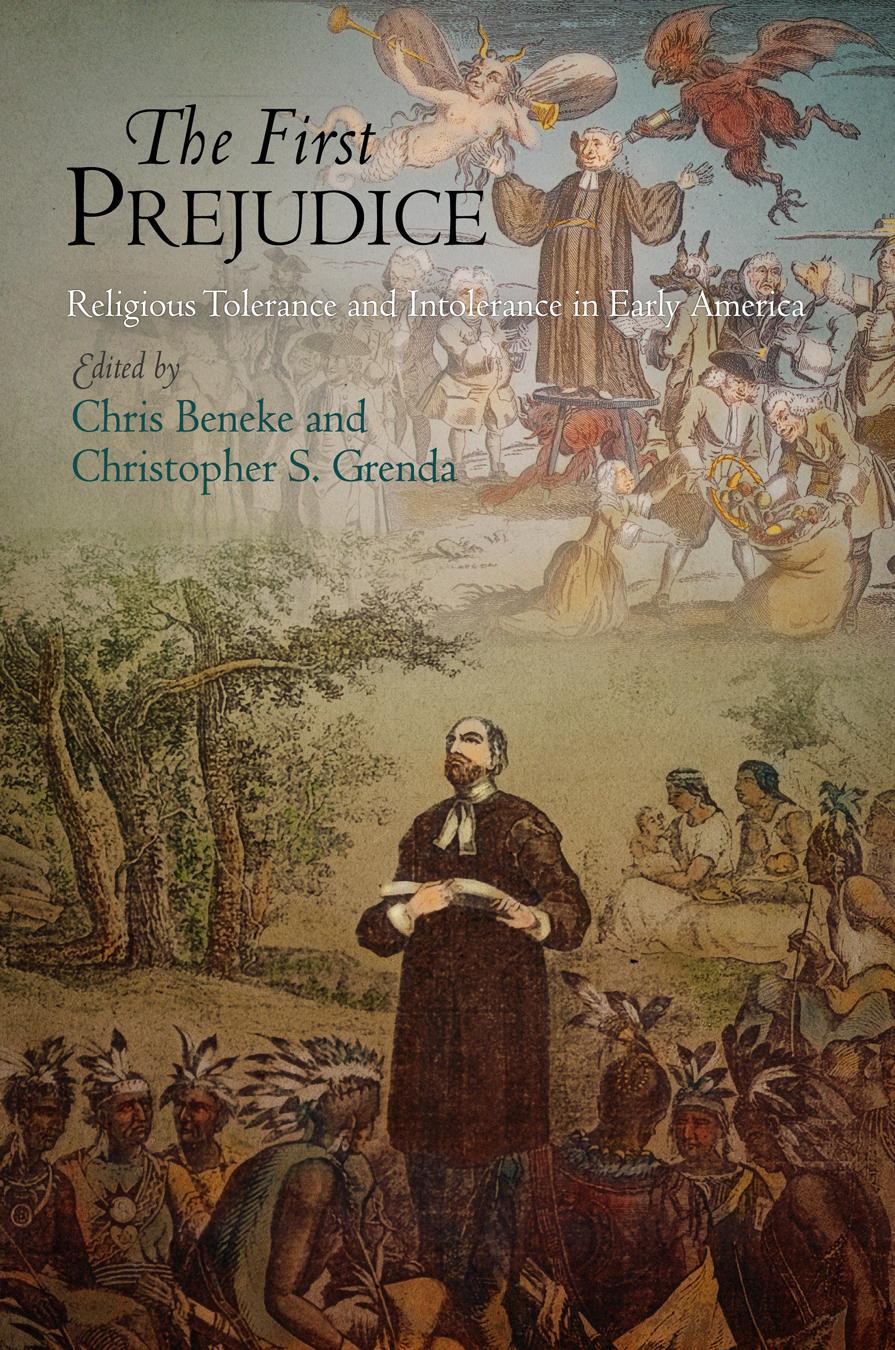
In many ways, religion was the United States' first prejudice—both an early source of bigotry and the object of the first sustained efforts to limit its effects. Spanning more than two centuries across colonial British America and the United States, The First Prejudice offers a groundbreaking exploration of the early history of persecution and toleration. The twelve essays in this volume were composed by leading historians with an eye to the larger significance of religious tolerance and intolerance. Individual chapters examine the prosecution of religious crimes, the biblical sources of tolerance and intolerance, the British imperial context of toleration, the bounds of Native American spiritual independence, the nuances of anti-Semitism and anti-Catholicism, the resilience of African American faiths, and the challenges confronted by skeptics and freethinkers.
The First Prejudice presents a revealing portrait of the rhetoric, regulations, and customs that shaped the relationships between people of different faiths in seventeenth- and eighteenth-century America. It relates changes in law and language to the lived experience of religious conflict and religious cooperation, highlighting the crucial ways in which they molded U.S. culture and politics. By incorporating a broad range of groups and religious differences in its accounts of tolerance and intolerance, The First Prejudice opens a significant new vista on the understanding of America's long experience with diversity.
Pay easily by card, Klarna, Apple Pay or Google Pay. Not happy? You always have a 14-day money-back guarantee. Read more in our terms. If you have any questions, email us at hello@memmo.org.
Memmo makes studying easier – wherever you are in the world. We bring your course books and smart study tools together in one place: summaries, quizzes, podcasts and flashcards. Plus Ted, your study buddy who answers anything you wonder. Over 50,000 students already study here – built to help you learn faster and stress less.