
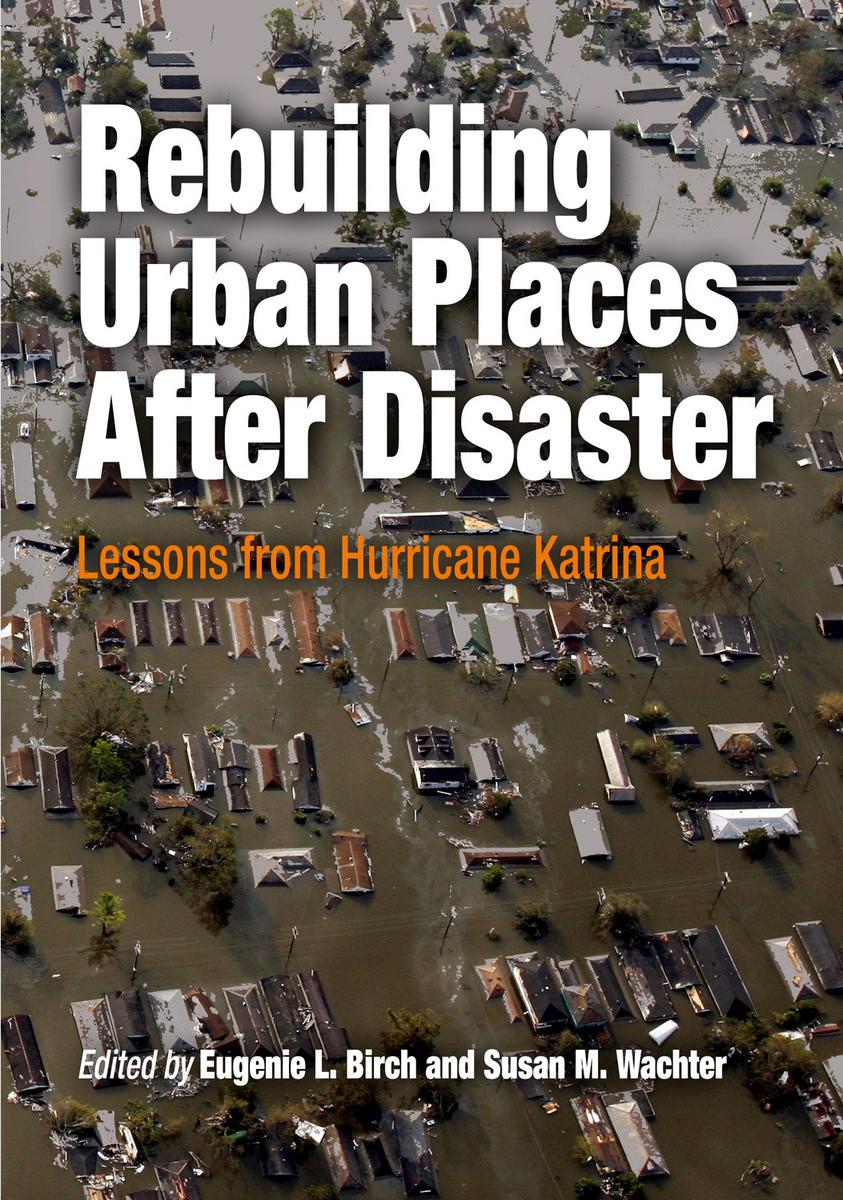
Disasters—natural ones, such as hurricanes, floods, or earthquakes, and unnatural ones such as terrorist attacks—are part of the American experience in the twenty-first century. The challenges of preparing for these events, withstanding their impact, and rebuilding communities afterward require strategic responses from different levels of government in partnership with the private sector and in accordance with the public will.
Disasters have a disproportionate effect on urban places. Dense by definition, cities and their environs suffer great damage to their complex, interdependent social, environmental, and economic systems. Social and medical services collapse. Long-standing problems in educational access and quality become especially acute. Local economies cease to function. Cultural resources disappear. The plight of New Orleans and several smaller Gulf Coast cities exemplifies this phenomenon.
This volume examines the rebuilding of cities and their environs after a disaster and focuses on four major issues: making cities less vulnerable to disaster, reestablishing economic viability, responding to the permanent needs of the displaced, and recreating a sense of place. Success in these areas requires that priorities be set cooperatively, and this goal poses significant challenges for rebuilding efforts in a democratic, market-based society. Who sets priorities and how? Can participatory decision-making be organized under conditions requiring focused, strategic choices? How do issues of race and class intersect with these priorities? Should the purpose of rebuilding be restoration or reformation? Contributors address these and other questions related to environmental conditions, economic imperatives, social welfare concerns, and issues of planning and design in light of the lessons to be drawn from Hurricane Katrina.
Pay easily by card, Klarna, Apple Pay or Google Pay. Not happy? You always have a 14-day money-back guarantee. Read more in our terms. If you have any questions, email us at hello@memmo.org.
Memmo makes studying easier – wherever you are in the world. We bring your course books and smart study tools together in one place: summaries, quizzes, podcasts and flashcards. Plus Ted, your study buddy who answers anything you wonder. Over 75,000 students already study here – built to help you learn faster and stress less.