
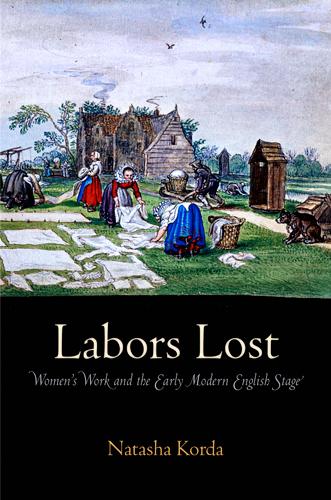
Labors Lost offers a fascinating and wide-ranging account of working women's behind-the-scenes and hitherto unacknowledged contributions to theatrical production in Shakespeare's time. Natasha Korda reveals that the purportedly all-male professional stage relied on the labor, wares, ingenuity, and capital of women of all stripes, including ordinary crafts- and tradeswomen who supplied costumes, props, and comestibles; wealthy heiresses and widows who provided much-needed capital and credit; wives, daughters, and widows of theater people who worked actively alongside their male kin; and immigrant women who fueled the fashion-driven stage with a range of newfangled skills and commodities.
Combining archival research on these and other women who worked in and around the playhouses with revisionist readings of canonical and lesser-known plays, Labors Lost retrieves this lost history by detailing the diverse ways women participated in the work of playing, and the ways male players and playwrights in turn helped to shape the cultural meanings of women's work. Far from a marginal phenomenon, the gendered division of theatrical labor was crucial to the rise of the commercial theaters in London and had an influence on the material culture of the stage and the dramatic works of Shakespeare and his contemporaries.
Pay easily by card, Klarna, Apple Pay or Google Pay. Not happy? You always have a 14-day money-back guarantee. Read more in our terms. If you have any questions, email us at hello@memmo.org.
Memmo makes studying easier – wherever you are in the world. We bring your course books and smart study tools together in one place: summaries, quizzes, podcasts and flashcards. Plus Ted, your study buddy who answers anything you wonder. Over 75,000 students already study here – built to help you learn faster and stress less.