
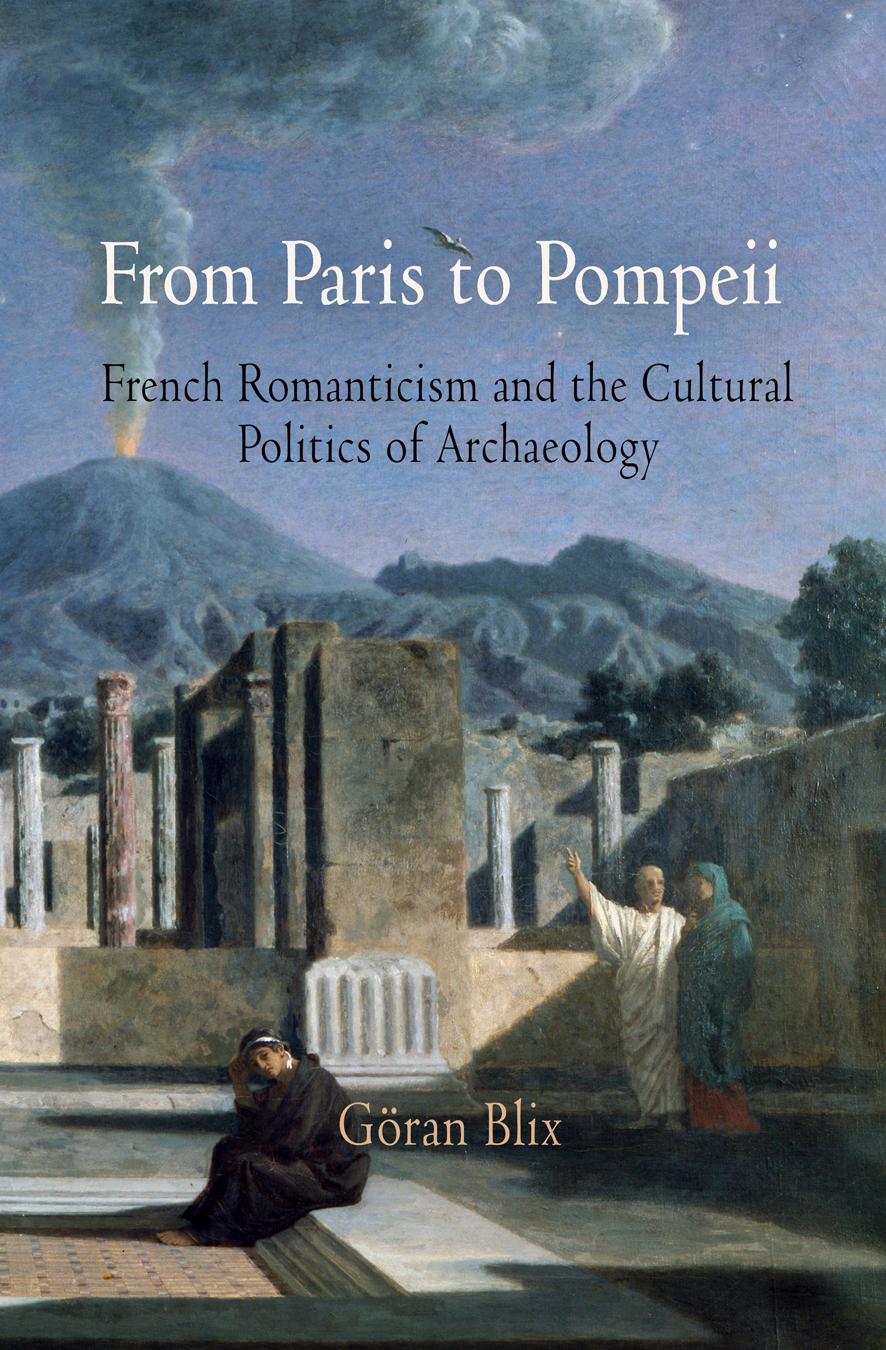
In the early nineteenth century, as amateur archaeologists excavated Pompeii, Egypt, Assyria, and the first prehistoric sites, a myth arose of archaeology as a magical science capable of unearthing and reconstructing worlds thought to be irretrievably lost. This timely myth provided an urgent antidote to the French anxiety of amnesia that undermined faith in progress, and it armed writers from Chateaubriand and Hugo to Michelet and Renan with the intellectual tools needed to affirm the indestructible character of the past.
From Paris to Pompeii reveals how the nascent science of archaeology lay at the core of the romantic experience of history and shaped the way historians, novelists, artists, and the public at large sought to cope with the relentless change that relegated every new present to history.
In postrevolutionary France, the widespread desire to claim that no being, city, culture, or language was ever definitively erased ran much deeper than mere nostalgic and reactionary impulses. Göran Blix contends that this desire was the cornerstone of the substitution of a weak secular form of immortality for the lost certainties of the Christian afterlife. Taking the iconic city of Pompeii as its central example, and ranging widely across French romantic culture, this book examines the formation of a modern archaeological gaze and analyzes its historical ontology, rhetoric of retrieval, and secular theology of memory, before turning to its broader political implications.
Pay easily by card, Klarna, Apple Pay or Google Pay. Not happy? You always have a 14-day money-back guarantee. Read more in our terms. If you have any questions, email us at hello@memmo.org.
Memmo makes studying easier – wherever you are in the world. We bring your course books and smart study tools together in one place: summaries, quizzes, podcasts and flashcards. Plus Ted, your study buddy who answers anything you wonder. Over 75,000 students already study here – built to help you learn faster and stress less.