
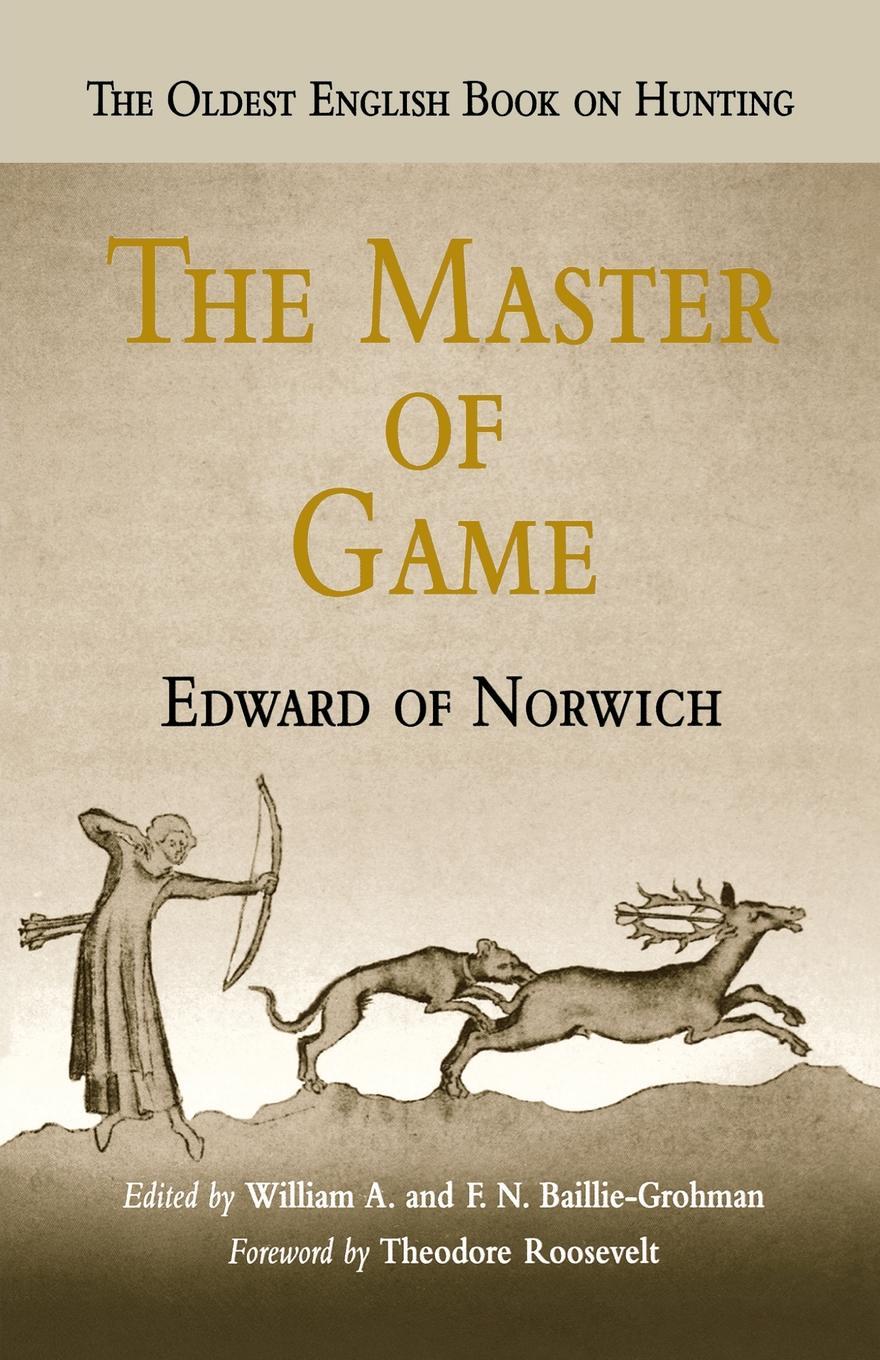
The Master of Game is the oldest and most important work on the chase in the English language. Based primarily on Gaston de Foix's Livre de chasse, originally composed in 1387, The Master of Game was written by Edward of Norwich at his leisure between 1406 and 1413, mostly while being held prisoner for having treasonous designs against his cousin, Henry IV. While much of the book is almost an exact translation of de Foix, Edward added five chapters of his own to form the major source for our knowledge of the medieval hunt.
The book begins with a description of the nature of popular quarry, such as the hare, deer, and badger, including their behavior, characteristics, and even smells, and then moves to a discussion of various hunting dog breeds and how to train them. The medieval chase was a ritual event, so the book continues with an explanation of the various rules and techniques for a successful hunt, including how food was to be distributed among the hunters, the support persons, and the dogs. Weapons and traps of choice are also described, as well as the different horn calls used for communication. The Master of Game is a unique text for naturalists, hunters, and persons interested in social history. Although hunting is nowadays far removed from most people's experience, it was of major interest in the time of Edward of Norwich for ritual, sport, and, of course, food. Some knowledge of the chase was essential for all persons of medieval times.
This edition, the first paperback ever of the original version edited in 1909, includes a hearty foreword by Theodore Roosevelt, who adds some important contextual information about the chase and draws on his own vast hunting experience. A delight to read, even for those who are not keen on the sport, The Master of Game has, as one review exclaimed," all Chaucer's freshness, love of the open sky and fragrant woodland."
Pay easily by card, Klarna, Apple Pay or Google Pay. Not happy? You always have a 14-day money-back guarantee. Read more in our terms. If you have any questions, email us at hello@memmo.org.
Memmo makes studying easier – wherever you are in the world. We bring your course books and smart study tools together in one place: summaries, quizzes, podcasts and flashcards. Plus Ted, your study buddy who answers anything you wonder. Over 75,000 students already study here – built to help you learn faster and stress less.