
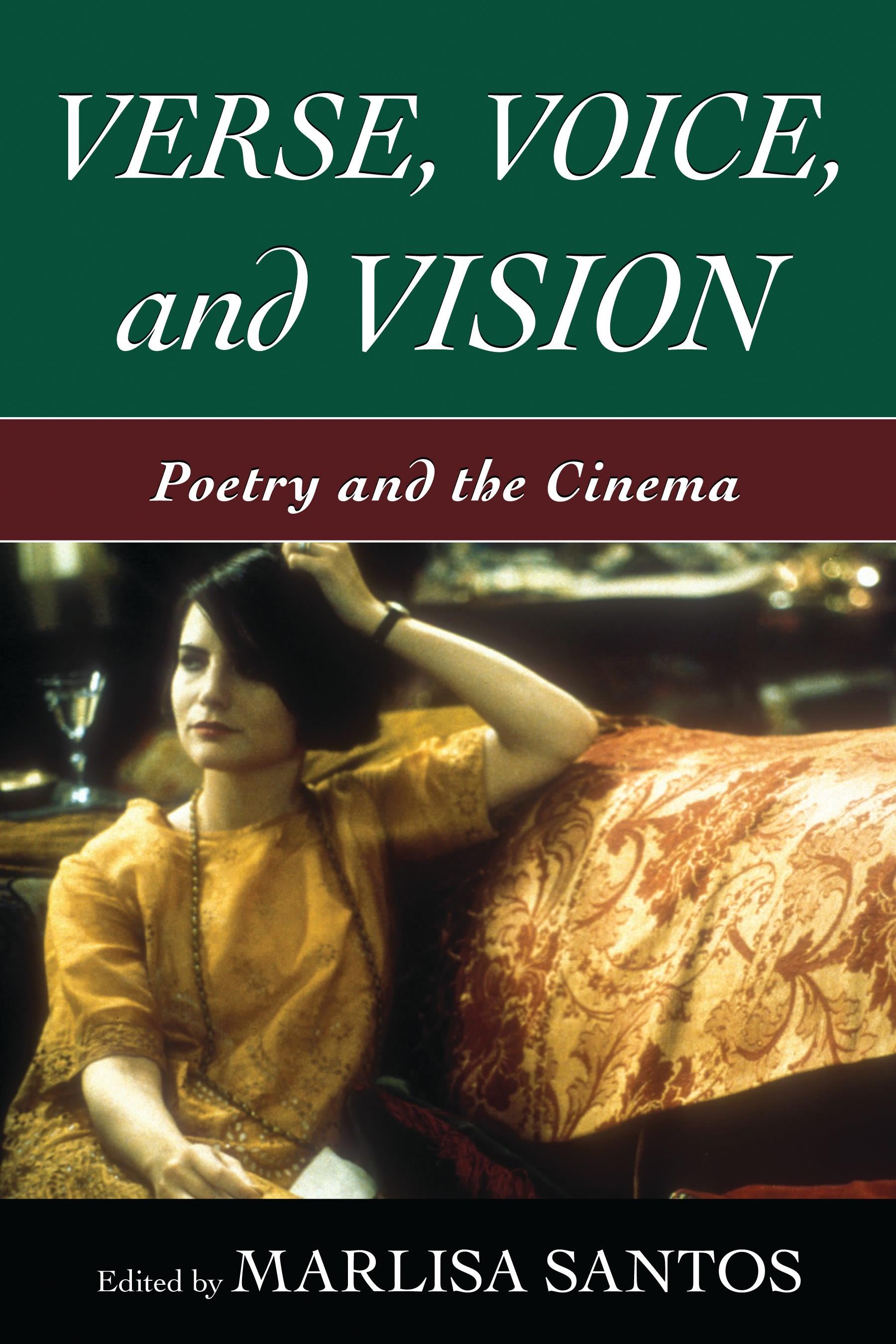
Although it is a somewhat underrepresented form of literature in popular sensibility, poetry finds relevance in the modern world through its appearance in cinema. Film adaptations of poems and depictions of poets on the screen date back to the silent era and continue to the present day. However, there have been few serious studies of how cinema has represented the world of poetic expression.
In Verse, Voice, and Vision: Poetry and the Cinema, Marlisa Santos has compiled essays that explore the relationship between one of the world’s oldest art forms—poetry—and one of the world’s newest art forms—film. The book is divided into three sections: poets on film, poetry as film, and film as poetry. Topics include analyses of poet biopics (such as Mrs. Parker and the Vicious Circle), filmic representations of poets or poetic studies (including Pyaasa), films inspired by particular poems (such as Splendor in the Grass), and the avant-garde phenomenon of the “poem-film” (such as The Tree of Life). Poetic influences considered in this volume range from William Shakespeare to e.e. cummings, and the films discussed hail from several different countries, including the U.S., the U.K., India, China, Italy, and Argentina.
Featuring a great diversity in the age, genres, and countries of origin of the films, these essays provide an in-depth look at how poetry has been interpreted on film over the years. By addressing a heretofore unexamined aspect of film studies, Verse, Voice, and Vision will appeal to fans and scholars of both literature and cinema.
In Verse, Voice, and Vision: Poetry and the Cinema, Marlisa Santos has compiled essays that explore the relationship between one of the world’s oldest art forms—poetry—and one of the world’s newest art forms—film. The book is divided into three sections: poets on film, poetry as film, and film as poetry. Topics include analyses of poet biopics (such as Mrs. Parker and the Vicious Circle), filmic representations of poets or poetic studies (including Pyaasa), films inspired by particular poems (such as Splendor in the Grass), and the avant-garde phenomenon of the “poem-film” (such as The Tree of Life). Poetic influences considered in this volume range from William Shakespeare to e.e. cummings, and the films discussed hail from several different countries, including the U.S., the U.K., India, China, Italy, and Argentina.
Featuring a great diversity in the age, genres, and countries of origin of the films, these essays provide an in-depth look at how poetry has been interpreted on film over the years. By addressing a heretofore unexamined aspect of film studies, Verse, Voice, and Vision will appeal to fans and scholars of both literature and cinema.
Pay easily by card, Klarna, Apple Pay or Google Pay. Not happy? You always have a 14-day money-back guarantee. Read more in our terms. If you have any questions, email us at hello@memmo.org.
Memmo makes studying easier – wherever you are in the world. We bring your course books and smart study tools together in one place: summaries, quizzes, podcasts and flashcards. Plus Ted, your study buddy who answers anything you wonder. Over 50,000 students already study here – built to help you learn faster and stress less.