
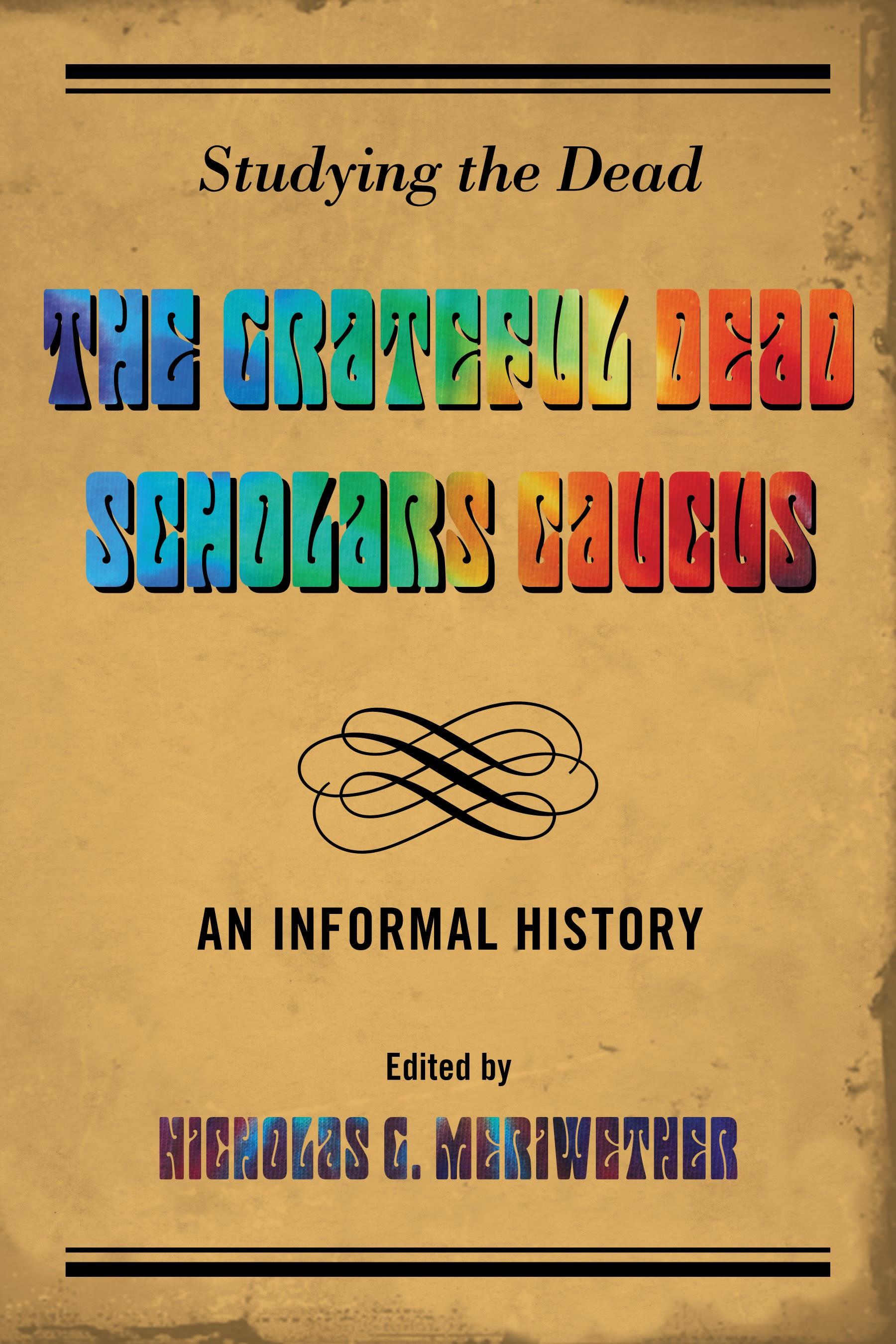
Although academic study of the Grateful Dead began shortly after the group’s formation, the dramatic growth of scholarly literature only occurred after the band’s formal retirement of the name in 1995. One major incubator of much of this work has been the Grateful Dead area of the Southwest/Texas Popular Culture and American Culture Association. Inaugurated as a separate section in 1998 and nicknamed the Grateful Dead Scholars Caucus, it has produced almost three hundred papers over fifteen years, nearly a third of which have been revised for publication. Caucus presenters have also edited a dozen books and periodical volumes, all of which have drawn on Caucus presentations, some almost exclusively.
Studying the Dead: The Grateful Dead Scholars Caucus provides an informal history of the Caucus and sketches its significance as a scholarly community, focusing on its increasing self-awareness, its ability to span diverse disciplinary and theoretical perspectives, and most of all, its contribution to our understanding of the Grateful Dead phenomenon. For the academy as a whole, the Caucus is a fascinating model for the development of discourse communities, from the role of orality to its interrogation of the texts that are derived from them.
Remarkable for its interdisciplinary dialogue, the Caucus demonstrates how the nature of the art—and the phenomenon that it studies—can shape these discourses. Though ostensibly aimed at scholars of the Grateful Dead, others who will find this book of interest include students and teachers of popular culture, as well as fans of the band.
Studying the Dead: The Grateful Dead Scholars Caucus provides an informal history of the Caucus and sketches its significance as a scholarly community, focusing on its increasing self-awareness, its ability to span diverse disciplinary and theoretical perspectives, and most of all, its contribution to our understanding of the Grateful Dead phenomenon. For the academy as a whole, the Caucus is a fascinating model for the development of discourse communities, from the role of orality to its interrogation of the texts that are derived from them.
Remarkable for its interdisciplinary dialogue, the Caucus demonstrates how the nature of the art—and the phenomenon that it studies—can shape these discourses. Though ostensibly aimed at scholars of the Grateful Dead, others who will find this book of interest include students and teachers of popular culture, as well as fans of the band.
Pay easily by card, Klarna, Apple Pay or Google Pay. Not happy? You always have a 14-day money-back guarantee. Read more in our terms. If you have any questions, email us at hello@memmo.org.
Memmo makes studying easier – wherever you are in the world. We bring your course books and smart study tools together in one place: summaries, quizzes, podcasts and flashcards. Plus Ted, your study buddy who answers anything you wonder. Over 75,000 students already study here – built to help you learn faster and stress less.