
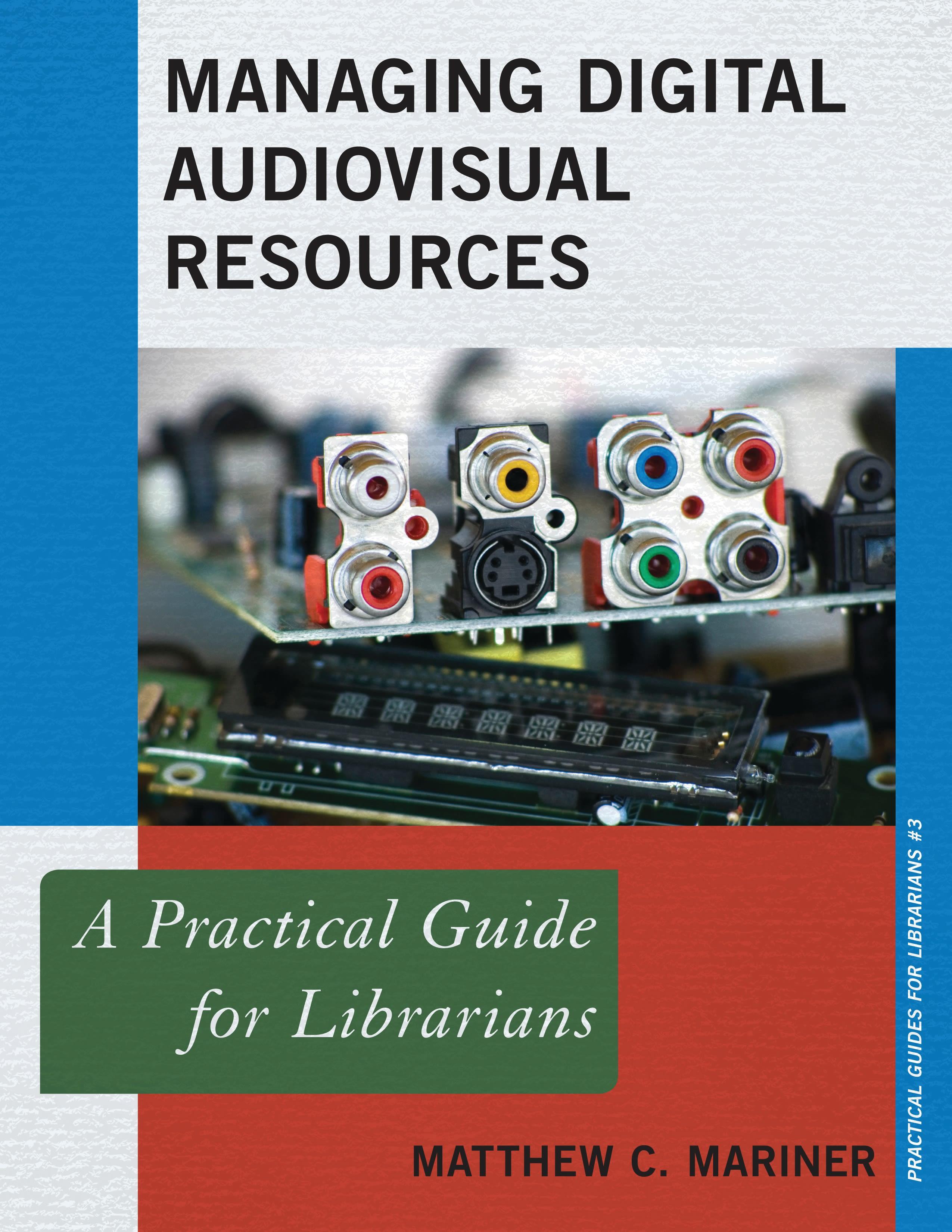
The demand from library users for audiovisual materials and remote access combined with the unceasing deterioration and inaccessibility of many audiovisual formats requires libraries to adapt their collections to meet current and future demands. While this changing landscape of digitization and resource management may seem daunting, it represents an opportunity to bolster a library’s relevancy and competitiveness.
Managing Digital Audiovisual Resources fills a gap as a single concise guide for real world basics, broad concepts, and practical needs from technologies to collections to promotion. The easy-to-read book is geared towards the ongoing management of digital audiovisual resources, presenting real world scenarios and ways to think through balancing all of the many factors and needs for these collections, dealing with limited resources, materials with different levels of significance, materials facing different levels of preservation risk, factors for decision making, and resources for other options.
The book takes a procedural and example-rich approach to the management of digital audiovisual resources. It covers:
the selection of resources for digitization; how to managedigitization of physical audiovisual collections; how to select the best platforms for preservation and presentation; and, how to market collections once they are accessible.Among other useful features, this guide will provide readers with:
Illustrated digitization workflows; Comprehensive lists and illustrated descriptions of equipment and formats;Real-world case studies;Common U.S. copyright situations; andResources for further study and assistance.
Managing Digital Audiovisual Resources fills a gap as a single concise guide for real world basics, broad concepts, and practical needs from technologies to collections to promotion. The easy-to-read book is geared towards the ongoing management of digital audiovisual resources, presenting real world scenarios and ways to think through balancing all of the many factors and needs for these collections, dealing with limited resources, materials with different levels of significance, materials facing different levels of preservation risk, factors for decision making, and resources for other options.
The book takes a procedural and example-rich approach to the management of digital audiovisual resources. It covers:
the selection of resources for digitization; how to managedigitization of physical audiovisual collections; how to select the best platforms for preservation and presentation; and, how to market collections once they are accessible.Among other useful features, this guide will provide readers with:
Illustrated digitization workflows; Comprehensive lists and illustrated descriptions of equipment and formats;Real-world case studies;Common U.S. copyright situations; andResources for further study and assistance.
Pay easily by card, Klarna, Apple Pay or Google Pay. Not happy? You always have a 14-day money-back guarantee. Read more in our terms. If you have any questions, email us at hello@memmo.org.
Memmo makes studying easier – wherever you are in the world. We bring your course books and smart study tools together in one place: summaries, quizzes, podcasts and flashcards. Plus Ted, your study buddy who answers anything you wonder. Over 50,000 students already study here – built to help you learn faster and stress less.