
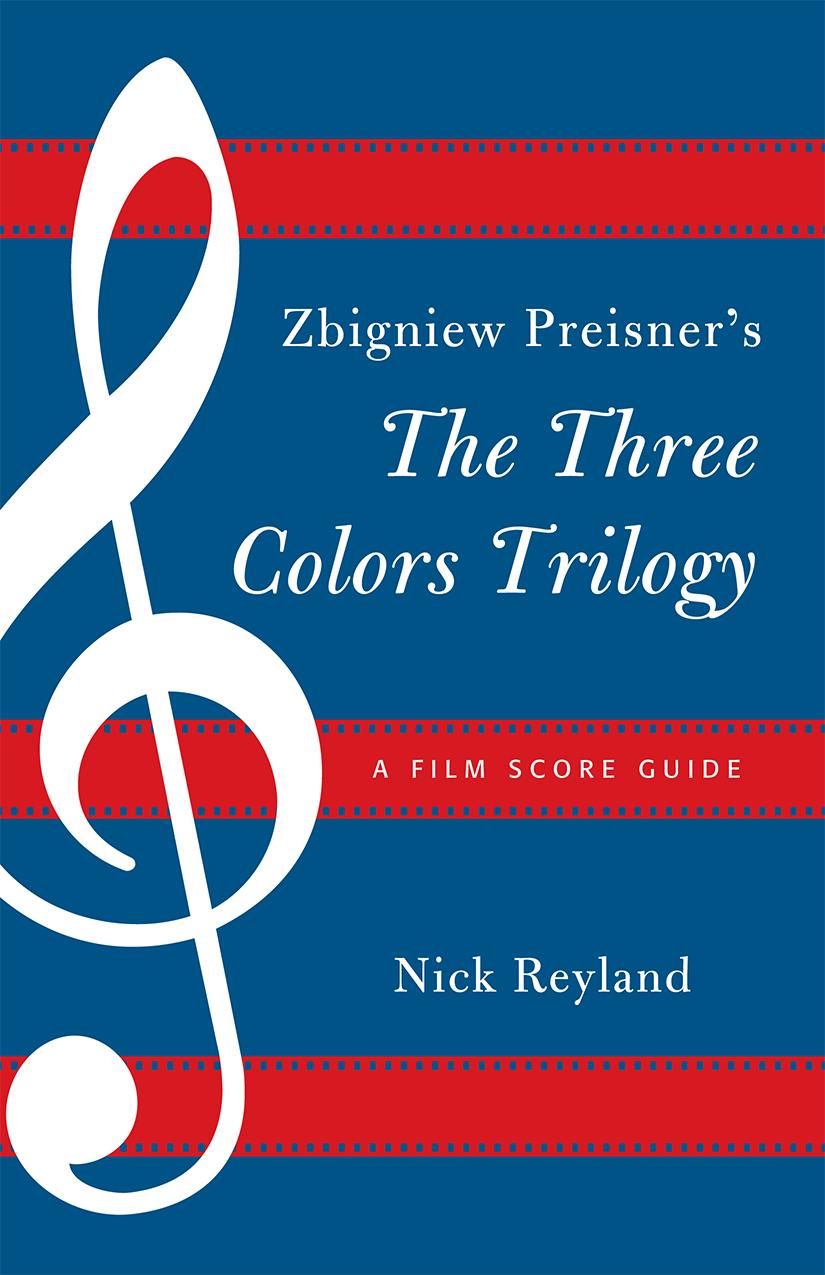
Director Krzysztof Kieslowski's Three Colors trilogy-Blue (1993), White (1993), and Red (1994)-is one of the great achievements of European film. A meditation on liberty, equality, and fraternity, these three films marked the culmination of the director's career, as well as the zenith of one of the most important creative collaborations in 20th-century cinema-between Kieslowski, scriptwriter Krzysztof Piesiewicz, and composer Zbigniew Preisner. Thanks to their close working relationship, music for the Three Colors trilogy achieves both a focal narrative and philosophical function. At times, Preisner's music advances the narrative independently of the films' other codes; at other times, it creates a metaphorical space into which the audience is invited in order to read for "deeper" messages.
As the first major scholarly treatment of Preisner's music, Nicholas Reyland's Zbigniew Preisner's Three Colors Trilogy: A Film Score Guide fills an important void in film score scholarship. In this guide, Reyland analyzes the historical context of the film scores, the life of the composer, the hermeneutic and narrative role of the music within the film, and the musical scoring techniques used for the trilogy.
This volume also draws on an interplay of established "classic" approaches to analyzing film music and more recent approaches in the exploration of its themes and readings. In addition, the composer's willingness to be interviewed by Reyland enhances the musicological scholarship of this book, giving the reader privileged access into the process of scoring. A significant contribution to both film studies and musicological literature, this book celebrates one of the great cinematic achievements of the last few decades.
As the first major scholarly treatment of Preisner's music, Nicholas Reyland's Zbigniew Preisner's Three Colors Trilogy: A Film Score Guide fills an important void in film score scholarship. In this guide, Reyland analyzes the historical context of the film scores, the life of the composer, the hermeneutic and narrative role of the music within the film, and the musical scoring techniques used for the trilogy.
This volume also draws on an interplay of established "classic" approaches to analyzing film music and more recent approaches in the exploration of its themes and readings. In addition, the composer's willingness to be interviewed by Reyland enhances the musicological scholarship of this book, giving the reader privileged access into the process of scoring. A significant contribution to both film studies and musicological literature, this book celebrates one of the great cinematic achievements of the last few decades.
Pay easily by card, Klarna, Apple Pay or Google Pay. Not happy? You always have a 14-day money-back guarantee. Read more in our terms. If you have any questions, email us at hello@memmo.org.
Memmo makes studying easier – wherever you are in the world. We bring your course books and smart study tools together in one place: summaries, quizzes, podcasts and flashcards. Plus Ted, your study buddy who answers anything you wonder. Over 50,000 students already study here – built to help you learn faster and stress less.