
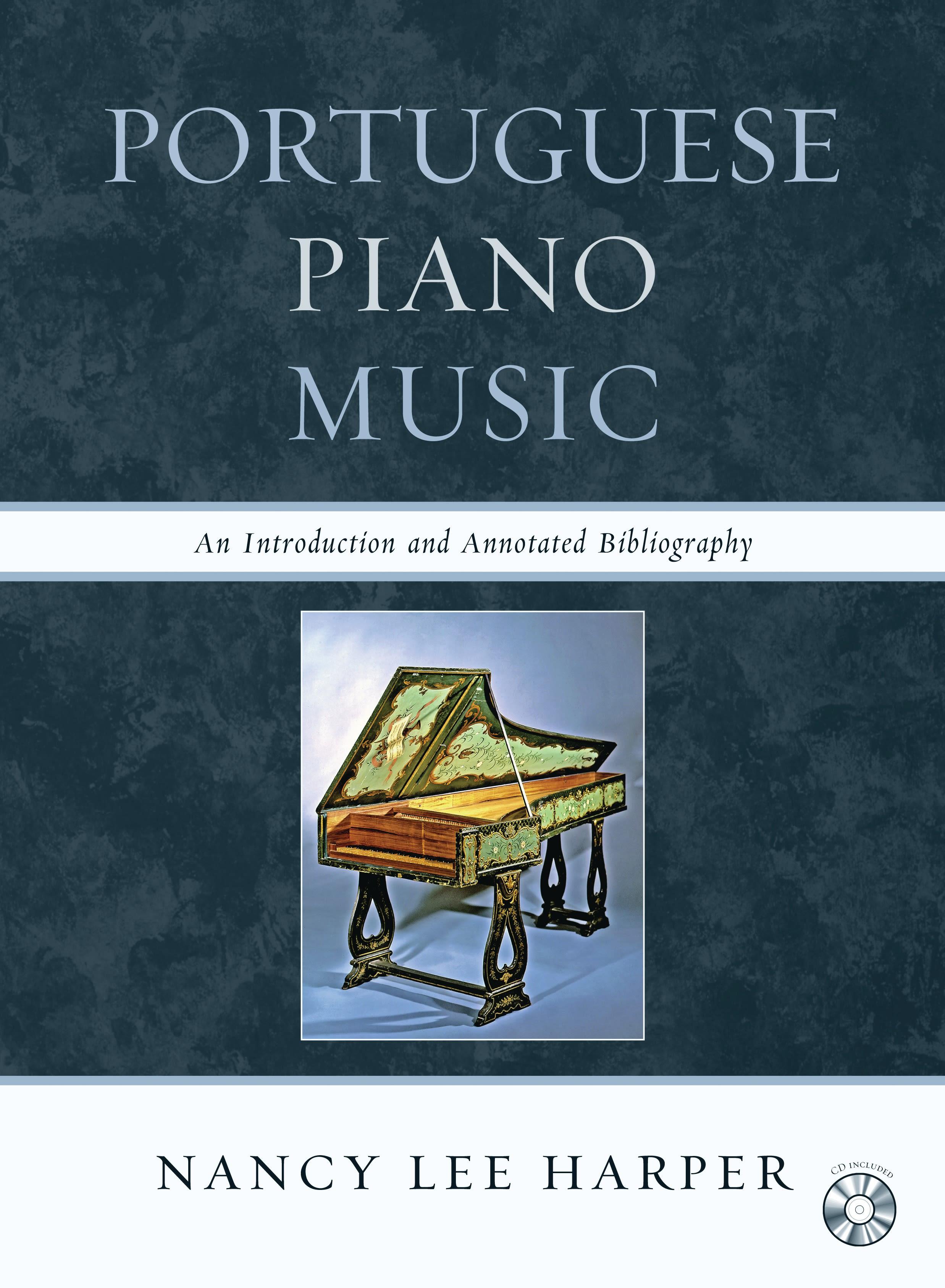
As the first book of its kind, Nancy Lee Harper’s Portuguese Piano Music: An Introduction and Annotated Bibliography fills the gap in the historical record of Portuguese piano music from its start in the 18th century to the present. While although Spanish piano music is well documented owing to the reputation of such composers as Isaac Albéniz, Enrique Granados, and Manuel de Falla, our knowledge of compositions in the tradition of Portuguese piano music has not fared as well, barring the work of Carlos Seixas (1704–1742). This obscurity, however, reflects poorly on the history of early piano music in light of the many compositions written for fortepiano on behalf of the Portuguese court during the first half of the 18th century. Indeed, it was in the royal halls of King John V during his reign from 1706 to 1750 where the early fortepiano was frequently heard.
In Portuguese Piano Music, Harper explores this rich musical tradition, offering a brief introduction to the pianistic history of Portugal and overviews of Portugal’s contributions to solo piano music, piano in instrumental chamber music, piano concerti, piano for multiple pianists including with works with electronics, and didactic piano. While paying close attention to female composers, Harper adds an annotated and graded bibliography that presents readers with a comprehensive inventory of compositions. Appendixes include a selected discography, list of publishers, and other types of critical source information. To further illustrate its contents, Portuguese Piano Music contains a CD on which Harper performs representative repertoire, some of which are world premieres.
This work is aimed at pianists, teachers, pupils, musicologists, and music lovers seeking to discover the remarkable world of Portuguese piano music.
In Portuguese Piano Music, Harper explores this rich musical tradition, offering a brief introduction to the pianistic history of Portugal and overviews of Portugal’s contributions to solo piano music, piano in instrumental chamber music, piano concerti, piano for multiple pianists including with works with electronics, and didactic piano. While paying close attention to female composers, Harper adds an annotated and graded bibliography that presents readers with a comprehensive inventory of compositions. Appendixes include a selected discography, list of publishers, and other types of critical source information. To further illustrate its contents, Portuguese Piano Music contains a CD on which Harper performs representative repertoire, some of which are world premieres.
This work is aimed at pianists, teachers, pupils, musicologists, and music lovers seeking to discover the remarkable world of Portuguese piano music.
Pay easily by card, Klarna, Apple Pay or Google Pay. Not happy? You always have a 14-day money-back guarantee. Read more in our terms. If you have any questions, email us at hello@memmo.org.
Memmo makes studying easier – wherever you are in the world. We bring your course books and smart study tools together in one place: summaries, quizzes, podcasts and flashcards. Plus Ted, your study buddy who answers anything you wonder. Over 50,000 students already study here – built to help you learn faster and stress less.