
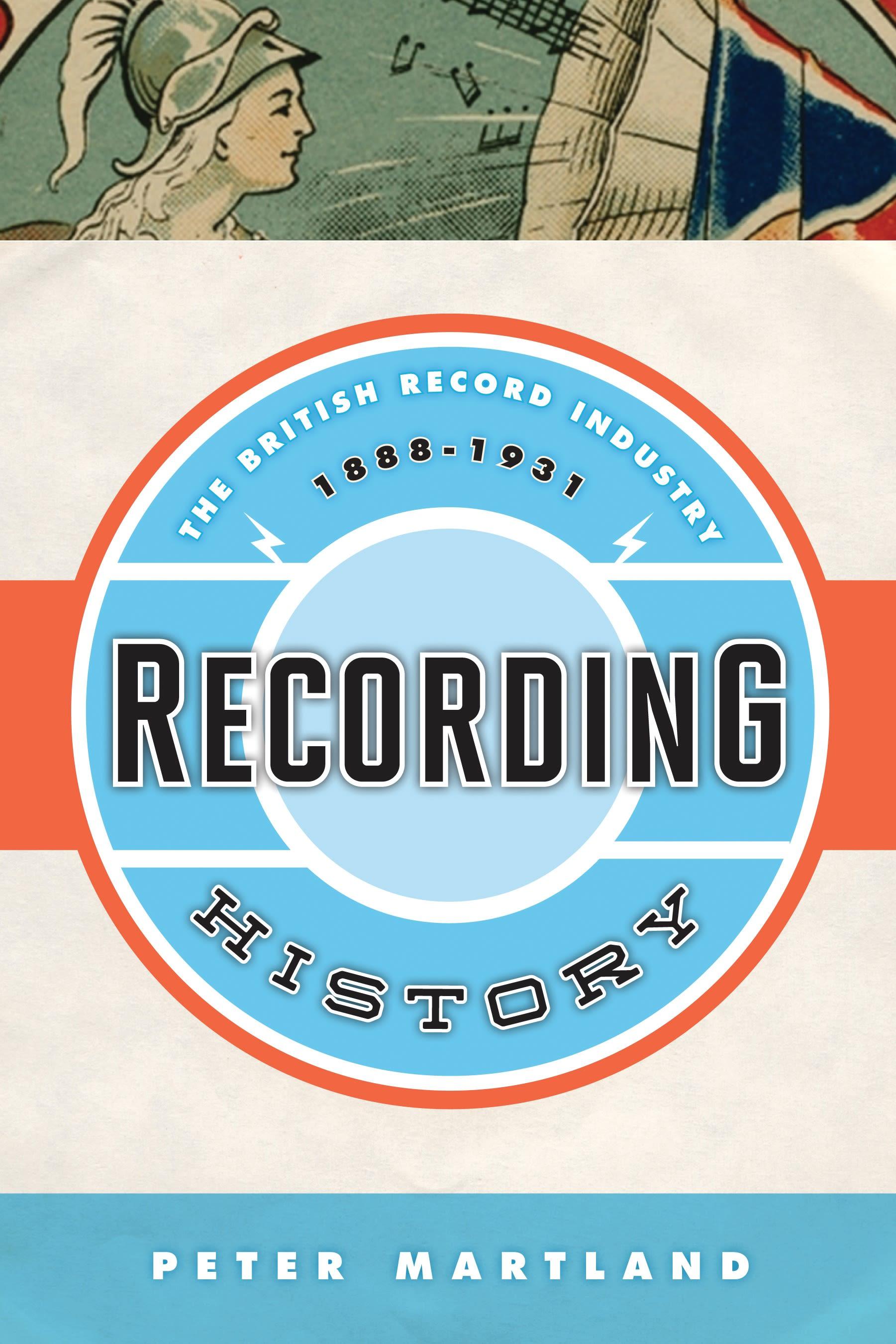
In Recording History, Peter Martlanduses a range of archival sources to trace the genesis and early development of the British record industry from1888 to 1931. A work of economic and cultural history that draws on a vast range of quantitative data, itsurveys the commercial and business activities of the British record industry like no other work of recording history has before.
Martland’s study charts the successes and failures of this industry and its impact on domestic entertainment. Showcasing its many colorful pioneers from both sides of the Atlantic, Recording History is first and foremost an account of The Gramophone Company Ltd, a precursor to today’s recording giant EMI, and then the most important British record company active from the late 19th century until the end of the second decade of the twentieth century. Martland’s history spans the years from the original inventors through industrial and market formation and final take-off—including the riveting battle in recording formats. Special attention is given to the impact of the First World War and the that followed in its wake.
Scholars of recording history will find in Martland’s study the story of the development of the recording studio, of the artists who made the first records (from which some like Italian opera tenor Enrico Caruso earned a fortune), and the change records wrought in the relationship between performer and audience, transforming the reception and appreciation of musical culture. Filling a much-needed gap in scholarship, Recording History documents the beginnings of the end of the contemporary international record industry.
Martland’s study charts the successes and failures of this industry and its impact on domestic entertainment. Showcasing its many colorful pioneers from both sides of the Atlantic, Recording History is first and foremost an account of The Gramophone Company Ltd, a precursor to today’s recording giant EMI, and then the most important British record company active from the late 19th century until the end of the second decade of the twentieth century. Martland’s history spans the years from the original inventors through industrial and market formation and final take-off—including the riveting battle in recording formats. Special attention is given to the impact of the First World War and the that followed in its wake.
Scholars of recording history will find in Martland’s study the story of the development of the recording studio, of the artists who made the first records (from which some like Italian opera tenor Enrico Caruso earned a fortune), and the change records wrought in the relationship between performer and audience, transforming the reception and appreciation of musical culture. Filling a much-needed gap in scholarship, Recording History documents the beginnings of the end of the contemporary international record industry.
Pay easily by card, Klarna, Apple Pay or Google Pay. Not happy? You always have a 14-day money-back guarantee. Read more in our terms. If you have any questions, email us at hello@memmo.org.
Memmo makes studying easier – wherever you are in the world. We bring your course books and smart study tools together in one place: summaries, quizzes, podcasts and flashcards. Plus Ted, your study buddy who answers anything you wonder. Over 50,000 students already study here – built to help you learn faster and stress less.