
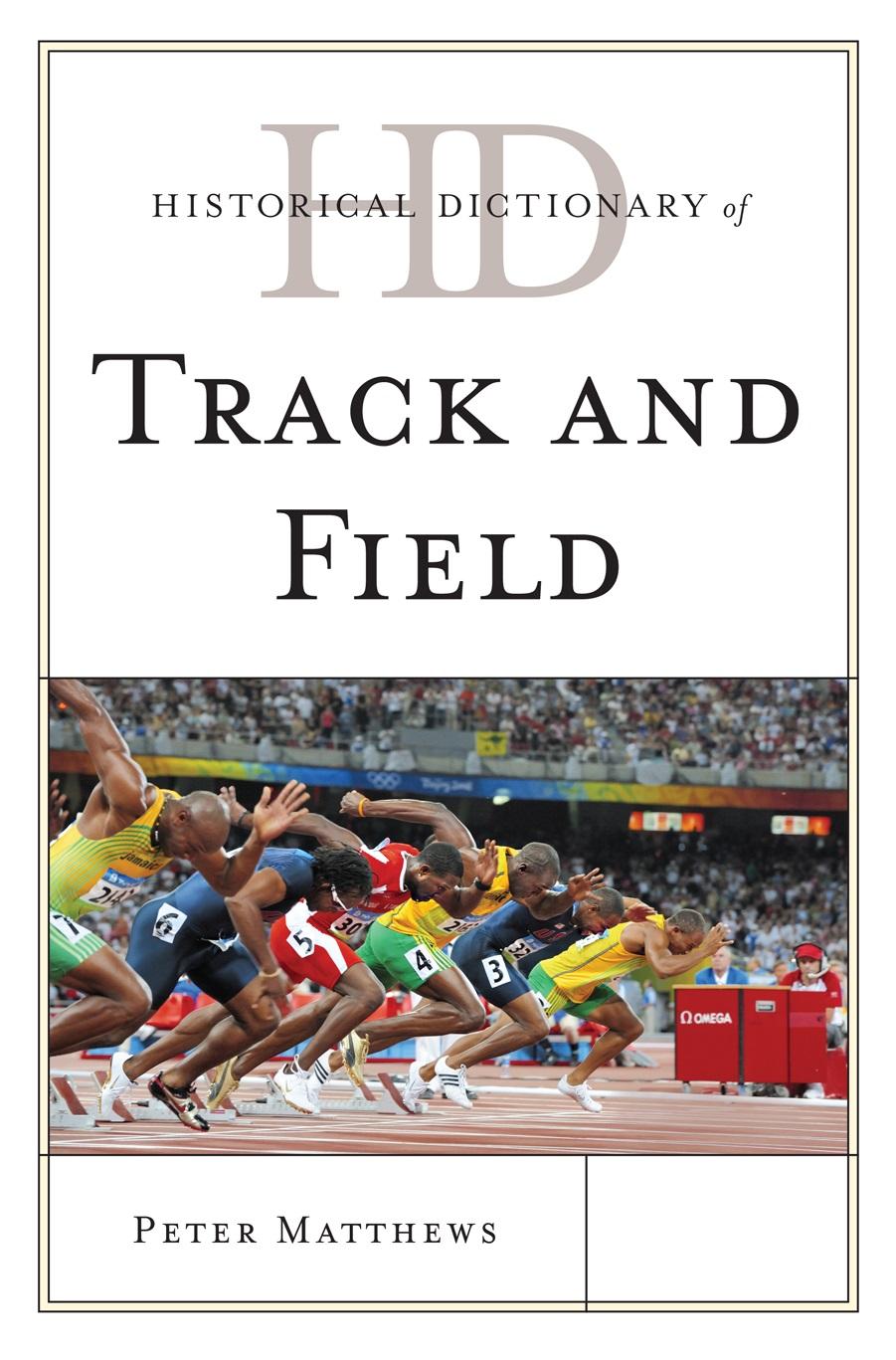
While the earliest evidence of organized running can be traced back to Egypt in 3800 BCE, the modern sport of track and field evolved from rural games and church and folk festivals, and rules were drawn up in the final quarter of the 19th century in those advanced societies where enough people had the leisure time to indulge their fancies. Today, in addition to the running events, track and field includes such events as the high jump, pole vault, long jump, shot, discus, javelin, hammer, and decathlon.
The Historical Dictionary of Track and Field covers the history of this sport through a chronology, an introductory essay, appendixes, and an extensive bibliography. The dictionary section has over 500 cross-referenced entries on key figures, places, competitions, and governing bodies within the sport. This book is an excellent access point for researchers, students, and anyone wanting to know more about the history of track and field.
The Historical Dictionary of Track and Field covers the history of this sport through a chronology, an introductory essay, appendixes, and an extensive bibliography. The dictionary section has over 500 cross-referenced entries on key figures, places, competitions, and governing bodies within the sport. This book is an excellent access point for researchers, students, and anyone wanting to know more about the history of track and field.
Pay easily by card, Klarna, Apple Pay or Google Pay. Not happy? You always have a 14-day money-back guarantee. Read more in our terms. If you have any questions, email us at hello@memmo.org.
Memmo makes studying easier – wherever you are in the world. We bring your course books and smart study tools together in one place: summaries, quizzes, podcasts and flashcards. Plus Ted, your study buddy who answers anything you wonder. Over 75,000 students already study here – built to help you learn faster and stress less.