
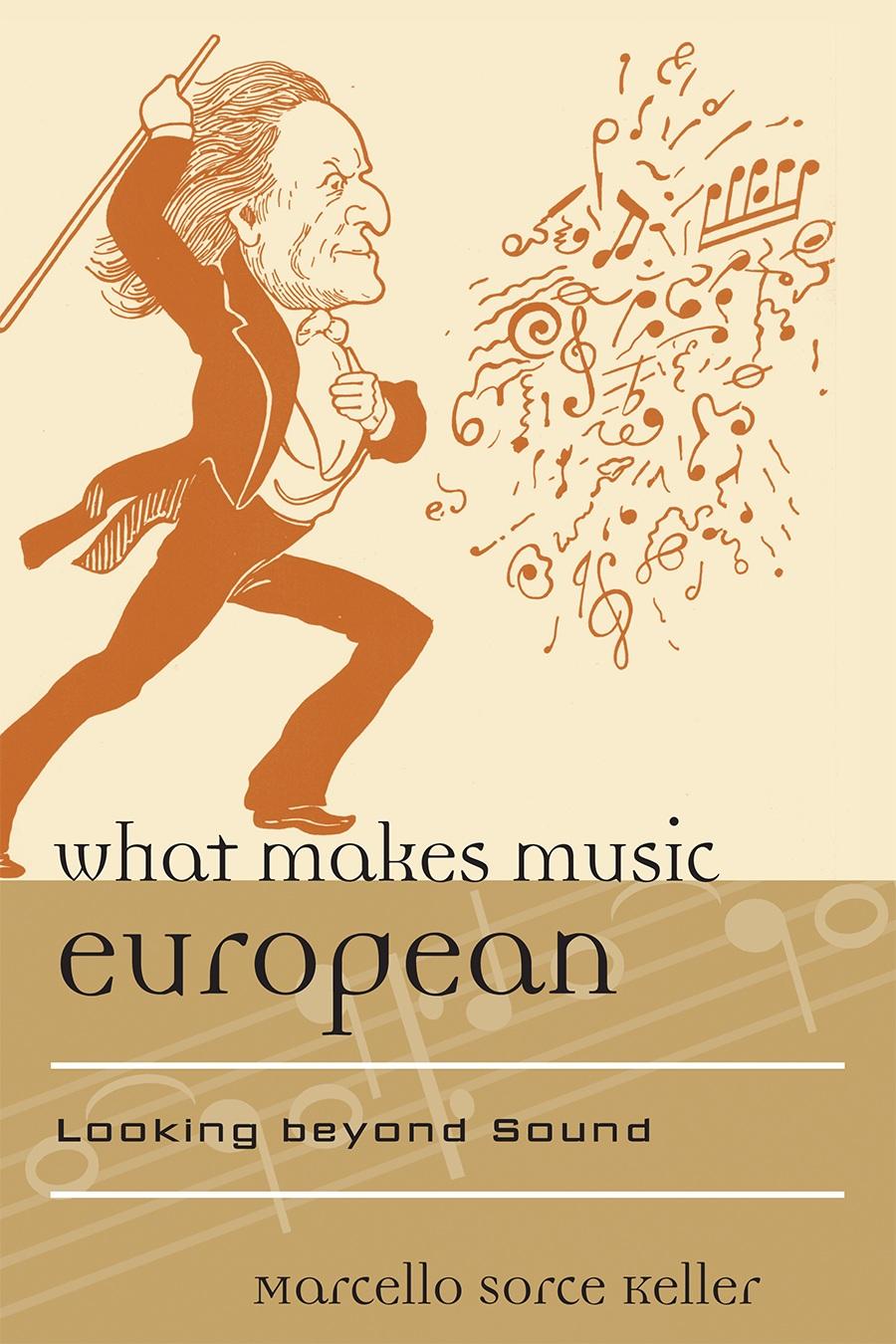
We seldom consider how much we mistakenly presume in hewing to definitions of music that differ dramatically from the standpoint of other cultures. In What Makes Music European, Marcello Sorce Keller examines the limitations of accepted wisdom about the concept of music in Euro-Western culture. His investigations of the conclusions reached by music researchers of the past several decades considerably upsets the concepts relied upon by the concert-going public. Sorce Keller insightfully asks: Who makes the music? Should music be original, and how much can it be? Why do people identify with songs, pieces, styles, and repertoire? Why is music so ideological? Why do we misunderstand the music of different times and places, and why do we enjoy doing so? He also explores the juxtaposition of economy, society, and music making, as well as the concept of "illegal harmonies."
In What Makes Music European, Sorce Keller addresses the little-discussed matters that are essential to an understanding of how music intersects with the life of so many people. Readers are offered an approach for thinking about music that depends as much on its history as on the concepts and attitudes of the social sciences. What Makes Music European concisely demonstrates, to those familiar with Western music, how peculiar Euro-Western concepts of music appear from a cross-cultural perspective. At the same time, it encourages ethnomusicologists to apply their knowledge to Western music and explain to its public how much of what listeners take for granted is, at the very least, highly debatable.
In What Makes Music European, Sorce Keller addresses the little-discussed matters that are essential to an understanding of how music intersects with the life of so many people. Readers are offered an approach for thinking about music that depends as much on its history as on the concepts and attitudes of the social sciences. What Makes Music European concisely demonstrates, to those familiar with Western music, how peculiar Euro-Western concepts of music appear from a cross-cultural perspective. At the same time, it encourages ethnomusicologists to apply their knowledge to Western music and explain to its public how much of what listeners take for granted is, at the very least, highly debatable.
Pay easily by card, Klarna, Apple Pay or Google Pay. Not happy? You always have a 14-day money-back guarantee. Read more in our terms. If you have any questions, email us at hello@memmo.org.
Memmo makes studying easier – wherever you are in the world. We bring your course books and smart study tools together in one place: summaries, quizzes, podcasts and flashcards. Plus Ted, your study buddy who answers anything you wonder. Over 50,000 students already study here – built to help you learn faster and stress less.