
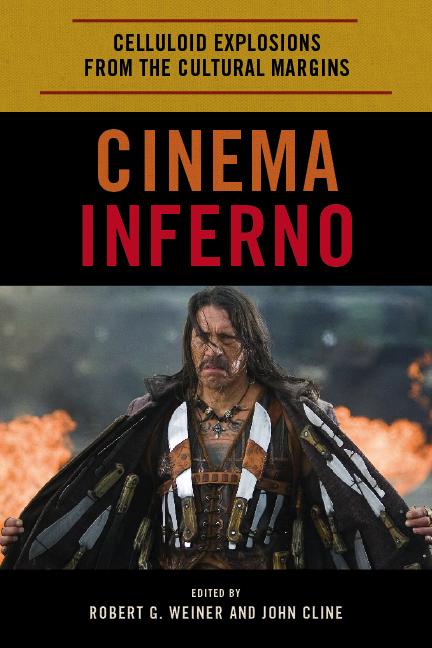
Cinema Inferno: Celluloid Explosions from the Cultural Margins addresses significant areas (and eras) of "transgressive" filmmaking, including many subgenres and styles that have not yet received much critical attention. This collection of essays covers both contemporary films and those produced in the last 50 years to provide a theoretical framework for looking at transgressive cinema and what that means.
This volume begins with a number of essays that examine the aesthetic of "realism," tracing it through the late Italian Neo-Realism of Pasolini, the early films of Melvin Van Peebles, and Canadian filmmaker Guy Maddin. Another section focuses on '70s Italian horror and thrillers, including a substantially different examination of filmmaker Dario Argento, as well as essays on critically underrepresented directors Lucio Fulci and Sergio Martino. A section on New York looks at both radical independents like Troma and Andy Milligan, as well as the social context from which a view of the metropolis-in-decay emerged. Sections also cover the experimental work of the Vienna Action Group and controversial filmmaker Michael Haneke, as well as films and genres too idiosyncratic and disturbing to fit anywhere else, including analyses of Nazi propaganda films, fundamentalist Christian "scare" movies, and postwar Japanese youth films. The final essays try to come to terms with a mainstream flirtation with "transgressive" film and Grindhouse aesthetics.
This volume begins with a number of essays that examine the aesthetic of "realism," tracing it through the late Italian Neo-Realism of Pasolini, the early films of Melvin Van Peebles, and Canadian filmmaker Guy Maddin. Another section focuses on '70s Italian horror and thrillers, including a substantially different examination of filmmaker Dario Argento, as well as essays on critically underrepresented directors Lucio Fulci and Sergio Martino. A section on New York looks at both radical independents like Troma and Andy Milligan, as well as the social context from which a view of the metropolis-in-decay emerged. Sections also cover the experimental work of the Vienna Action Group and controversial filmmaker Michael Haneke, as well as films and genres too idiosyncratic and disturbing to fit anywhere else, including analyses of Nazi propaganda films, fundamentalist Christian "scare" movies, and postwar Japanese youth films. The final essays try to come to terms with a mainstream flirtation with "transgressive" film and Grindhouse aesthetics.
Pay easily by card, Klarna, Apple Pay or Google Pay. Not happy? You always have a 14-day money-back guarantee. Read more in our terms. If you have any questions, email us at hello@memmo.org.
Memmo makes studying easier – wherever you are in the world. We bring your course books and smart study tools together in one place: summaries, quizzes, podcasts and flashcards. Plus Ted, your study buddy who answers anything you wonder. Over 50,000 students already study here – built to help you learn faster and stress less.